
Mind-blowing cost of running the Las Vegas Sphere every single day


The Sphere is Las Vegas, Nevada, first officially opened its doors to the public on September 29, 2023, with a concert residency from Irish rock band U2.
After the project was initially announced back in 2018, there was a lot of interest in the immersive video and audio capabilities of the venue, with it set to provide a unique experience for audiences.
However, the construction work didn’t come cheap, with the Sphere costing a whopping $2.3 billion to develop. This earned it the title of the most expensive entertainment venue built in the Las Vegas Valley.
Since then though, the arena has enjoyed a lot of success, including notable performances from Metallica, No Doubt, and the Backstreet Boys.
Advert
However, despite a lot of public coverage, there has also been talk of financial troubles for the Sphere.
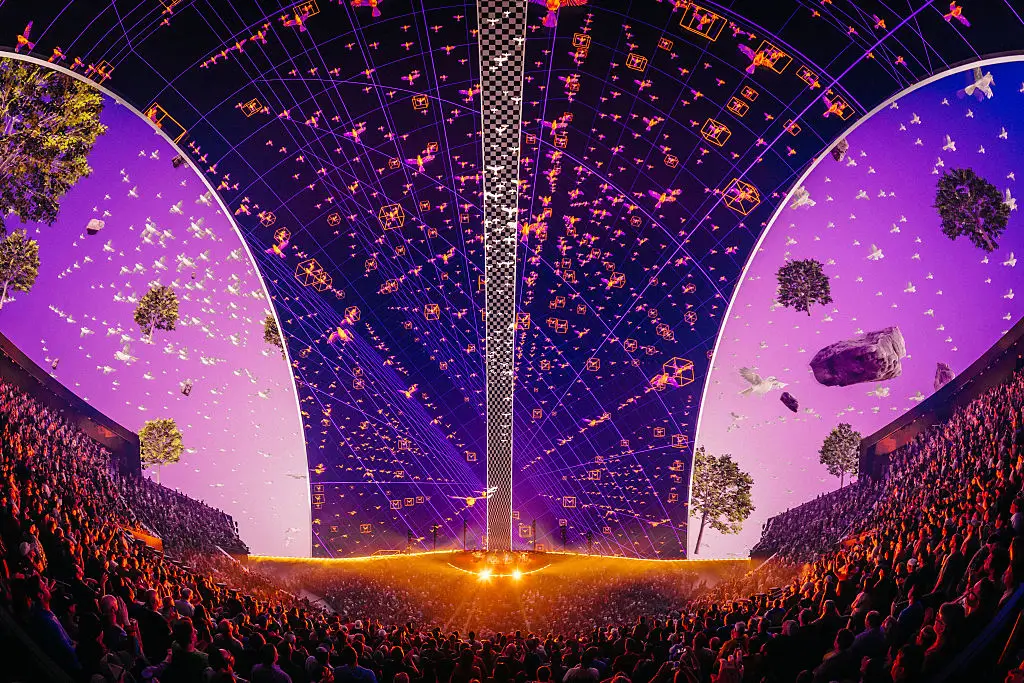
According to newsletter Huddle Up, during a financial quarter in 2025, the venue reported $174.1 million in revenue, but ‘still recorded an operating loss of $84.4 million’.
This is possibly due to its high operating costs, with the baseline cost to run the arena for one day being in the tens of thousands of dollars, although more actual costs do fluctuate depending on the event they are holding.
The construction of the Las Vegas Sphere
Construction of the project was expected to be completed by 2021 but in March 2020, it was announced that work on the building would be halted due to the Covid-19 pandemic. Instead, it was rescheduled to open in 2023.
The roof of the Sphere has been documented as being one of the most complicated parts of the construction work to finish, with the venue boasting a 13,000-ton steel-domed roof.
The arena is particularly known for its exosphere, which is completely made of LED light panels that are visible from several miles away.

Many people took to social media to share their own thoughts on the venue’s bills, with one user writing on Reddit: “Monthly it consumes about 7,800 MWh At the current rate of power in Vegas which is .058 per kwh, that translate to about $58 per megawatt hour
“And then if we multiply the commercial supply rate with the consumption rate we get around $460,000 a month for power consumption. (I have rounded numbers for simplicity sake)”
Another said: “Ima be honest, that’s a whole lot better than I would expect.”
And a third person added: “If they are using that much power they probably have another $50 grand in demand charges.”