uniladtech homepage
  • News
    • Tech News
    • AI
  • Gadgets
    • Apple
    • iPhone
  • Gaming
    • Playstation
    • Xbox
  • Science
    • News
    • Space
  • Streaming
    • Netflix
  • Vehicles
    • Car News
  • Social Media
    • WhatsApp
    • YouTube
  • Advertise
  • Terms
  • Privacy & Cookies
  • LADbible Group
  • LADbible
  • UNILAD
  • SPORTbible
  • GAMINGbible
  • Tyla
  • FOODbible
  • License Our Content
  • About Us & Contact
  • Jobs
  • Latest
  • Archive
  • Topics A-Z
  • Authors
Facebook
Instagram
X
TikTok
Snapchat
WhatsApp
Submit Your Content
Humanoid robot expert reveals the biggest challenges we face with AI bots in the future

Home> News> AI

Published 09:00 28 Apr 2024 GMT+1

Humanoid robot expert reveals the biggest challenges we face with AI bots in the future

AI isn't capable of replacing us just yet.

Rebekah Jordan

Rebekah Jordan

google discoverFollow us on Google Discover
Featured Image Credit: ktsimage / Yuichiro Chino / Getty
AI
Science

Advert

Advert

Advert

Is AI up to scratch to really replace our everyday tasks?

Well, the answer is simply no - not yet.

As artificial intelligence continues to evolve, the integration of AI with humanoid robotics is expected to enhance their capabilities. But there are still some barriers to overcome.

Professor Robert Reiner at the Department of Health Sciences and Technology, ETH Zurich explained that humanoid robots can be hard to control.

Advert

Giving examples of the types of robots that are hard to control, the professor said: "Sensors, actuators, and computers have to collaborate in a fast manner to produce successful, smooth, functional movements."
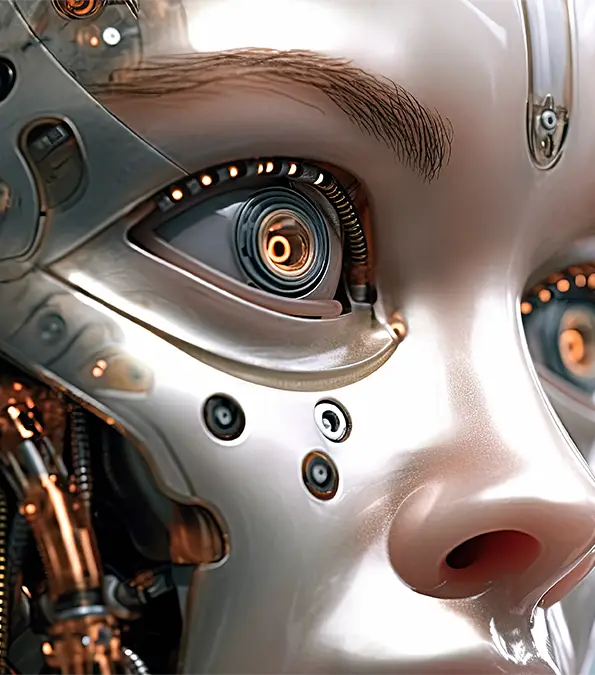
ktsimage / Getty
ktsimage / Getty

Another issue is the limited battery power of the AI robots.

"Batteries get empty after 1-2 hours," stated Reiner.

"We have to make the machines more energy efficient – or tether them."

The problem with tethering the robots to power cables, however, is that it would limit their ability to mimic human behaviour. Essentially, humans don't tend to be attached to cables.

Moreover, the robots wouldn't be much good for 'outdoor use', the humanoid robot expert explained.

Optimisation is another recognised problem when working with AI robots.

In the words of Reiner: "To merge the structural components into one small and mobile system is not yet solved.

"We have to reduce size and energy consumption, but not on the cost of movement performance, where AI can help us."

Despite the challenges, the expert believes that we will one day see humanoid robots superior to us in many ways.
Yuichiro Chino / Getty

"I do think so. It is only a matter of time. However, it will take longer than most people think," Reiner claimed.

"We have already better technical components that outperform human structures."

So, no need to worry just yet.

Furthermore, Reiner has stated in the past that the impact of superior humanoids could be concerning in the near future, leaving some jobs obsolete.

Some workforces and skills could become redundant.

"Humans and their work power get obsolete. This will lesser be an economic problem rather than a psychological one," the expert concluded.

"What shall we do with our time and how will we feel, if we don’t have a task, and no satisfaction at work anymore?".

Choose your content:

9 mins ago
2 days ago
  • - / Contributor / Getty
    9 mins ago

    Symptoms of deadly hantavirus as outbreak claims three lives on Atlantic cruise ship

    The World Health Organization is launching a full investigation into the MV Hondius

    Science
  • Bloomberg / Contributor / Getty
    2 days ago

    Sam Altman in honest OpenAI admission as Elon Musk court case rears its head

    The world's richest man is seeking $150 billion from Altman and OpenAI

    News
  • YouTube / BBC
    2 days ago

    Fascinating simulation shows exactly how sperm is attacked when entering the female reproductive system

    There's a one in 250 million chance that we're ever even born

    Science
  • Randy Brooke/Getty Images
    2 days ago

    Leading scientist reveals disturbing theory on what happens when we die

    According to the expert, our molecules don't disappear when we die

    Science
  • Trump official denies sugar daddy profile, but Seeking's new AI face-mapping might have the receipts
  • Musk makes terrifying claim about future of AI humanoid robots that sees human population 'threatened'
  • Man with highest IQ in the world reveals reason why AI could never 'human' attain emotional intelligence
  • Phone company unveils its first humanoid robot that comes with an unexpected feature