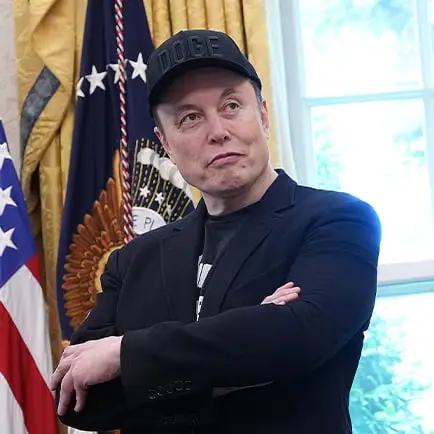
Elon Musk lands new job in Trump administration


Nearly 18 months after Elon Musk announced he was departing from his position at DOGE, a temporary federal initiative created by President Donald Trump, the Tesla boss now has a new job in the administration.
It was at the beginning of Trump’s second term when Musk was announced at the head of the new Department of Government Efficiency (DOGE), where his goal was to cut trillions of dollars from federal spending.
However, in May 2025, the Tesla boss revealed he was leaving his role, triggering a spat between him and the president where the pair hurled insults at one another over social media.
Despite this, it seems the two have since made amends, with the tech mogul joining Trump on his state visit to China earlier this year.
Advert
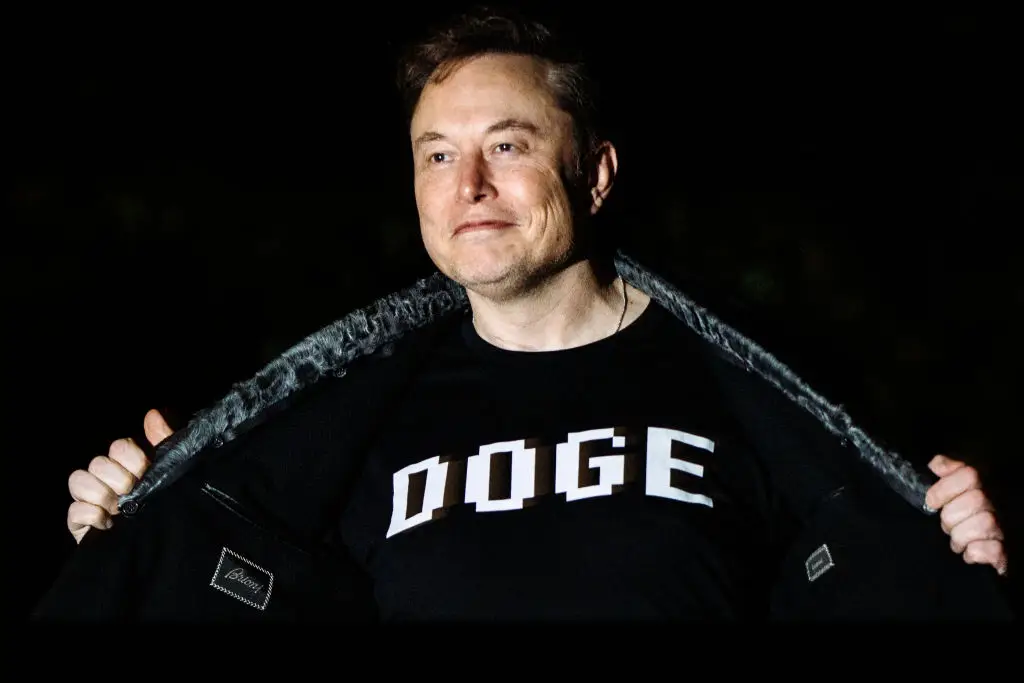
But that’s not all because Musk has also now taken on a new role within the US government as part of Project Meridian.
What is Project Meridian?
The initiative was set up by the Pentagon in order to look into future operational environments and identify technologies, weapons, and military capabilities potentially needed for future wars.
This is according to Defense Secretary Pete Hegseth, who on Wednesday (September 30) said: “Project Meridian, the future of warfare, is not about developing new strategies or new policies.”
Instead, he claimed that it is meant to ‘identify the domains that we must conquer, and capabilities we must master’.
Hegseth continued: “The best forecasters of future conflict do not solely reside inside the Pentagon. There are obvious biases and risks to asking ourselves to both ask the questions and answer them.”
In order to accomplish this, the Trump administration is enlisting the help of SpaceX CEO Musk as well as defense tech entrepreneur and Anduril co-founder Palmer Luckey and former House Speaker Newt Gingrich.

Elon Musk joins US government initiative
The project will run for 120 days where the likes of Musk will be tasked with attempting to ‘ruthlessly map the trajectory of wars, domains and technologies’ and will create an unclassified public report of recommendations.
Hegseth added: “We are witnessing rapid advances in artificial intelligence, autonomy, directed energy, robotics, biotechnology, among other critical high-tech areas. Combined, these new domains, new ways of fighting, and technological developments will profoundly alter the character of warfare.
“To maintain global dominance, the United States must anticipate future operational environments and act decisively to develop the tools to dominate in them.”