
Ivy League professor caught massive AI cheating scandal after ChatGPT left a weird 'fingerprint' on exams


An Ivy League professor says he caught a massive AI cheating scandal after exam results from one of his classes started to look seriously suspicious.
Artificial intelligence has already caused plenty of headaches for schools and universities, with students now able to turn to chatbots for essays, homework and even complex exam answers in seconds. The situation in the industry has even seen a Columbia University student get suspended for creating an AI that could help you cheat in the job market.
That has left teachers trying to work out where useful study support ends, and outright cheating begins.
It is an especially difficult problem at universities built around trust and honour codes, where students are often expected to complete work honestly without somebody looking over their shoulder.
Advert
However, one professor says the warning signs in his own class become so apparent, he simply couldn’t ignore them.
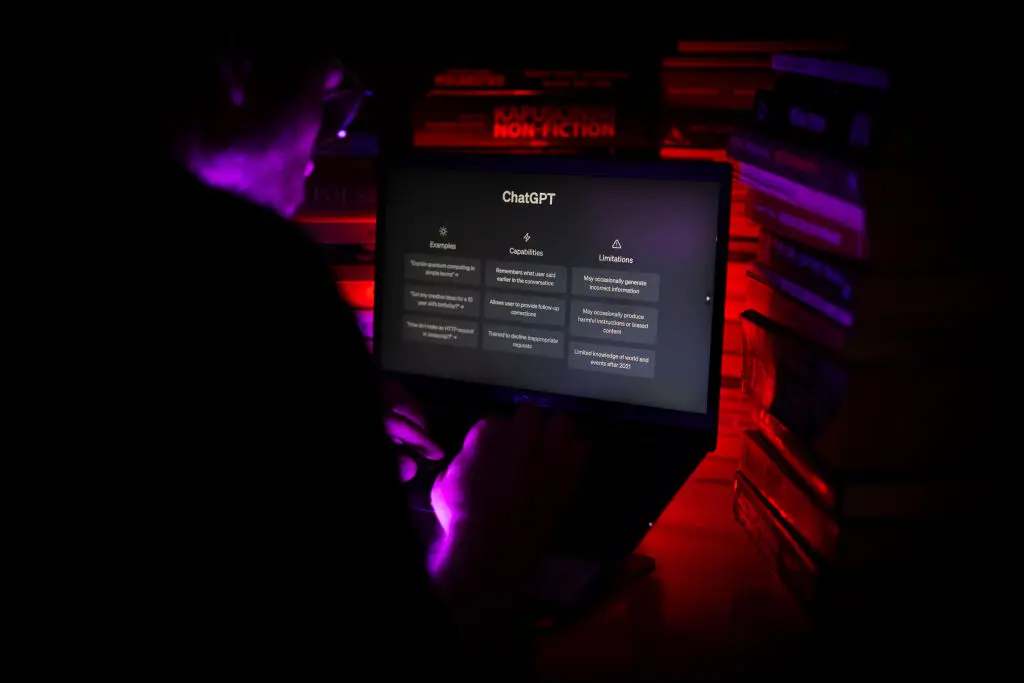
The case involves Brown University economics professor Roberto Serrano, who told El País he detected what he believes was mass AI fraud in ECON 1170, an advanced undergraduate mathematical economics course.
The issue centred on a take-home, closed-book midterm exam held in March.
The results were unusually high, with the class average reportedly reaching 96 out of 100. Even more strikingly, 40 students scored a perfect 100. Whilst that alone would draw attention, Serrano said there was another clue hiding in the answers themselves.
According to the professor, some of the work appeared to contain strange wording that matched what appeared when the questions were put through ChatGPT.
As noted by Futurism, he said: "Some answers contained unusual passages that coincided with results obtained after running the questions through ChatGPT."
Serrano did not immediately cancel the midterm result, but he did change the final exam.
Students were told the final would be held in person and would count for 50% of the overall grade. He also warned that if the results did not follow a similar pattern to the midterm, only the final exam would count.
Looking at the results, the numbers shifted enough that his suspicions looked to be true; the average score on the in-person final shockingly dropped from 96 to 48 out of 100.
El País also reported that 27 students did not even show up for the final, and 22 of those had previously scored a perfect 100 on the midterm.
Serrano said: "The empirical evidence of fraud is overwhelming."
The professor has now decided to stop using take-home exams altogether. He also said weekly exercises will no longer count towards final grades, because they can be completed using AI.
Serrano has argued that universities need to take the issue seriously, rather than leaving individual teachers to deal with it alone.
He added: "Academic integrity is a value worth defending. The faculty cannot be left on its own in a battle that is decisive if we want to preserve the future of higher education."
The row comes as other elite universities are also rethinking old traditions, with Princeton ending its 133-year practice of unproctored exams under its Honor Code.
Serrano also said to El País: "If we no longer defend truth and decency and honesty, then what kind of credibility are we going to have as academics?"