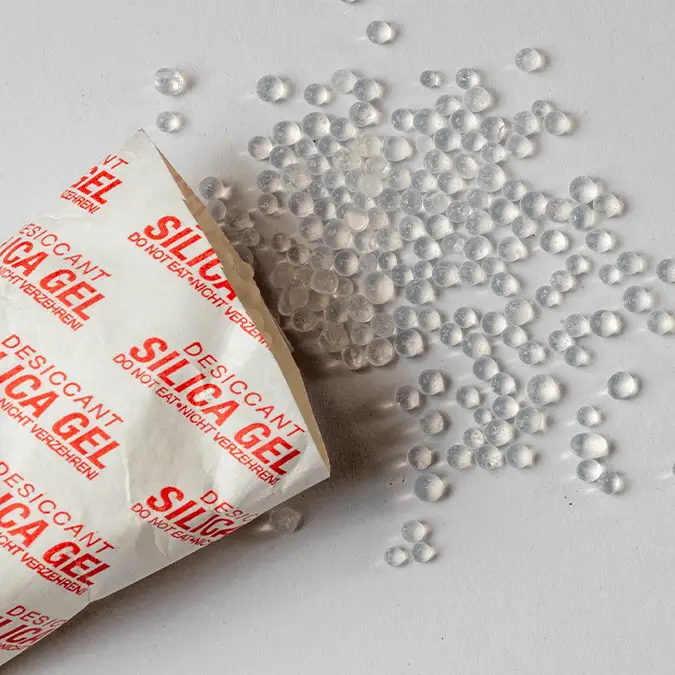
What would actually happen if you ate a silica gel packet marked 'do not eat'


Humans are notoriously likely to do exactly the opposite of what you tell them to, and that's why putting the words 'do not eat' explicitly on the packaging of one commonly found item has left many curious as to exactly what would happen.
If you've opened pretty much any package there's a good chance you've been greeted with a mysterious pack of silica gel, yet few people understand its purpose and why it comes with a clear warning.
Emblazoned on the side of the small packet is a warning telling you not to eat what's found inside, and while that's as clear as a skull and crossbones on a hazardous bottle, it doesn't half make you wonder why the contents inside are considered to be bad for your health.
Advert
Thankfully the phenomenon has been explained in a handy video by TED-Ed, as Vivian Jiang lets you discover why it's for the best that you continue your abstinence from silica gel-based meals.
What is silica gel?
Silica gel starts merely as silica, which is a raw sand found within Earth's crust that's also referred to as silicon dioxide or SiO2, and it's then washed, dried, sifted, and chemically treated to become mixed with sodium carbonate.
This combination is then heated to mix the particles into a 'jelly-like matrix', which maintains the structure and gives silica gel its sand-like look despite being porous in structure.
Silica gel attracts polar substances within its atmosphere, one of which includes water which relates to the primary purpose of the gel within packages that you're sent.
Water vapor within a humid environment is pulled into the grains through capillary condensation, which keeps everything dry despite the conditions the package might be found within.
It's not just water that silica gel attracts, however, as it's also able to pull in ammonia and sulfur dioxide alongside several other gases, and it can even be reused by drying the beads out inside of an oven.
What would happen if you ate it?
All in all that sounds like something you understandably wouldn't want to consume, abiding by the strict warnings on the packets themselves, but you might be surprised to find out that very little would actually happen if you did consume it in most cases.
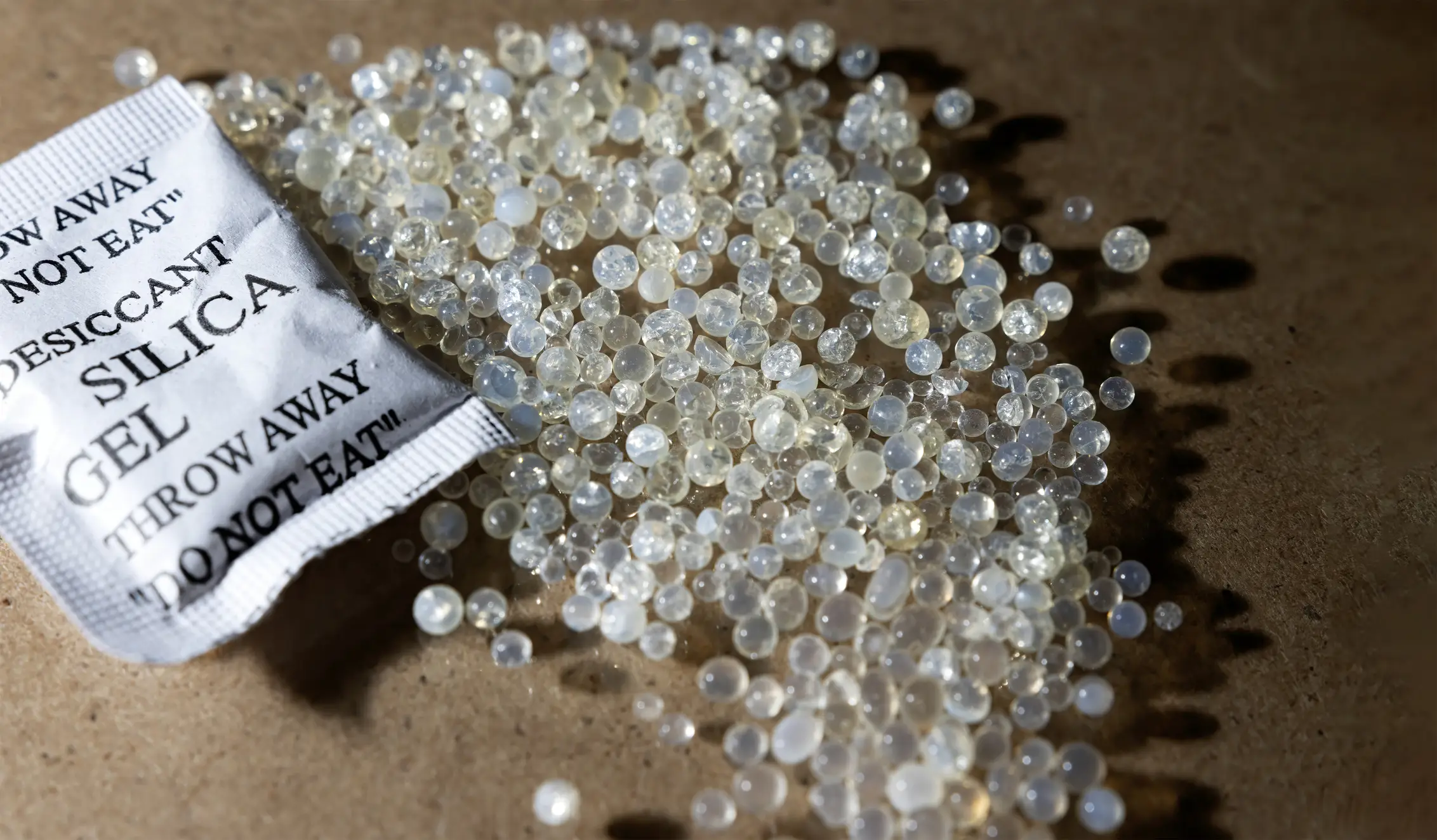
The warnings are more there to prevent any choking hazards, whereas many incorrectly believe it's to do with the potentially hazardous properties of the beads themselves or what they might do within your body.
While silica is able to consume roughly 40 per cent of its weight in water, this amounts to only around two grams per packet, which would be inconsequential compared to the sheer amount of liquid found inside your body.
Of course, this doesn't mean that you should go out and start cramming packets down your throat as the aforementioned choking risk still persists, and it could dry up the mucous membranes alongside your digestive tract, leading to an upset stomach and even diarrhoea — and some silica beads are coated with cobalt chloride which is indeed a toxic substance.