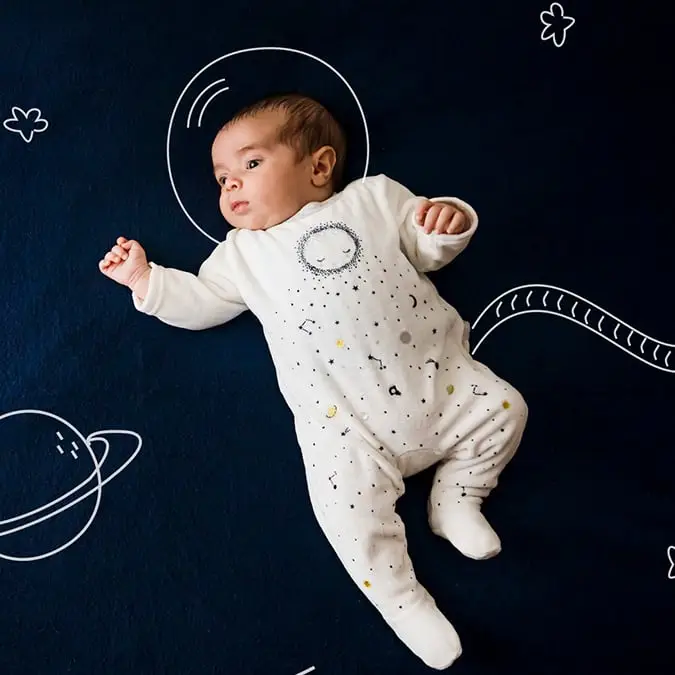
Scientists reveal exactly what would happen if a baby was born in space


A lot of people dream about what life is like beyond our atmosphere but very few will experience it.
This means that a lot of us have questions about real-life scenarios that could technically happen in space.
For the most part, astronauts don’t spend enough time in space to enable them to get pregnant and carry a baby to full term - unless something happens and they end up stranded on the International Space Station, of course.
But as experts continue to set their sights on Mars, it becomes more and more likely that astronauts may eventually spend extended periods of time away from Earth.
Advert
With the possibility of pregnancies occurring in space becoming more likely in the future, scientists have revealed why life in orbit and having babies is a bad combination.
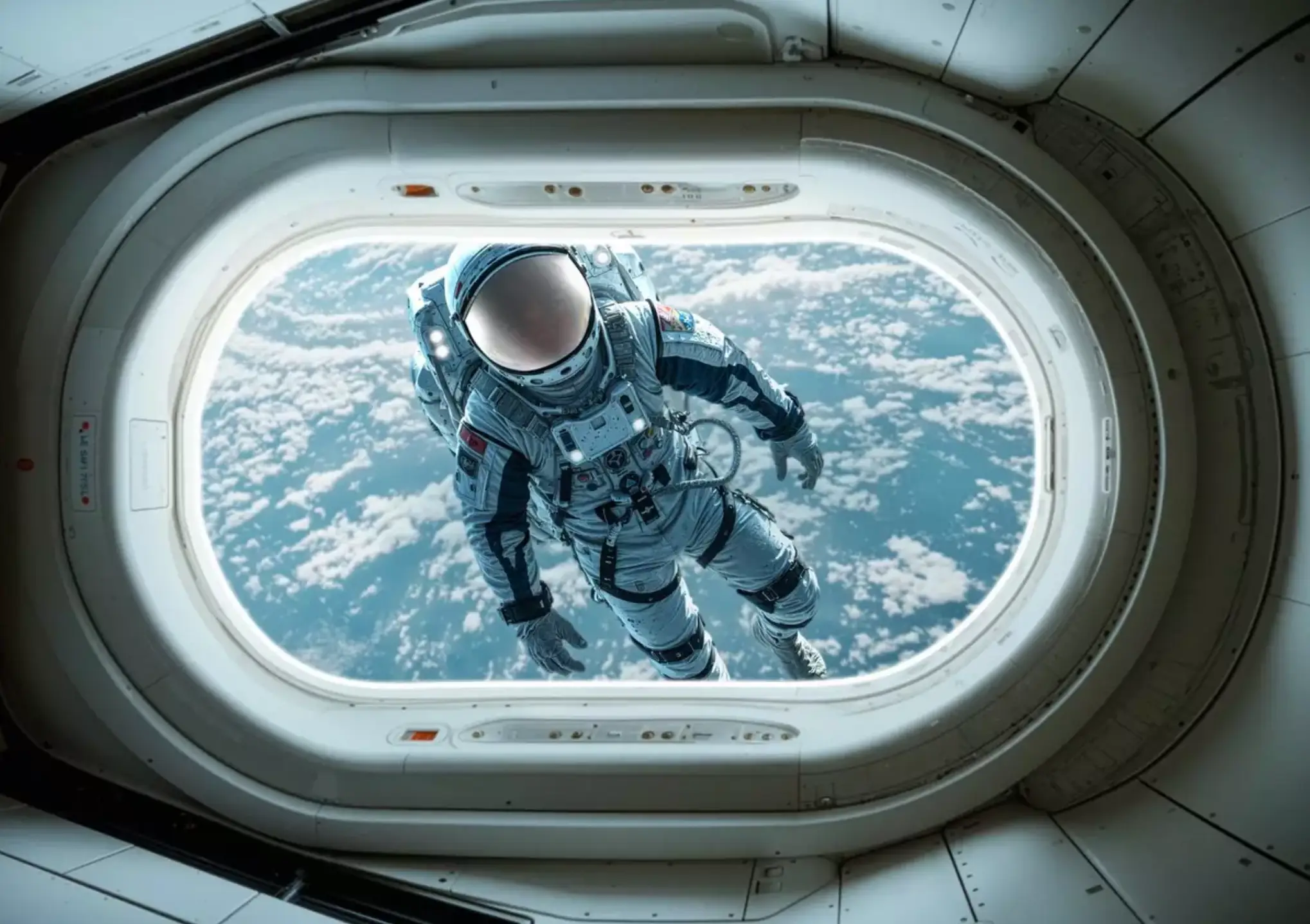
According to a report by The Conversation, a major issue for babies being born in space is cosmic radiation.
While on solid ground down here on Earth, we’re safe from the majority of radiation coming in from beyond our planet because of the Earth’s ‘thick atmosphere’, but once astronauts venture out into space, that safety net is gone.
Too much radiation exposure can seriously impact a fetus’s development, putting the baby at risk of developing mutations, causing premature labor and other health issues… not to mention giving birth in space sounds like a logistical nightmare.
A previous study shared information about the possibility of babies one day traveling on commercial space flights, with the report having been produced by an international expert group consisting of reproductive medicine, aerospace health, and bioethics experts.
Calling space ‘a hostile environment’ for human biology thanks to its altered gravity, radiation exposure, and circadian cycle disruption, the nine authors wrote that despite animal models showing short-term exposure to radiation messes with female menstrual cycles, there is no such data available when it comes to astronauts and their fertility.
“As human presence in space expands, reproductive health can no longer remain a policy blind spot,” said Dr Fathi Karouia, senior author of the study and a research scientist at NASA.
“International collaboration is urgently needed to close critical knowledge gaps and establish ethical guidelines that protect both professional and private astronauts - and ultimately safeguard humanity as we move toward a sustained presence beyond Earth.”
The report claimed that ‘extended time in space poses potential hazards to the reproductive function of female and male astronauts, including exposure to cosmic radiation, altered gravity, psychological and physical stress, and disruption to circadian rhythm’, which needs to be researched before making ‘space babies’.