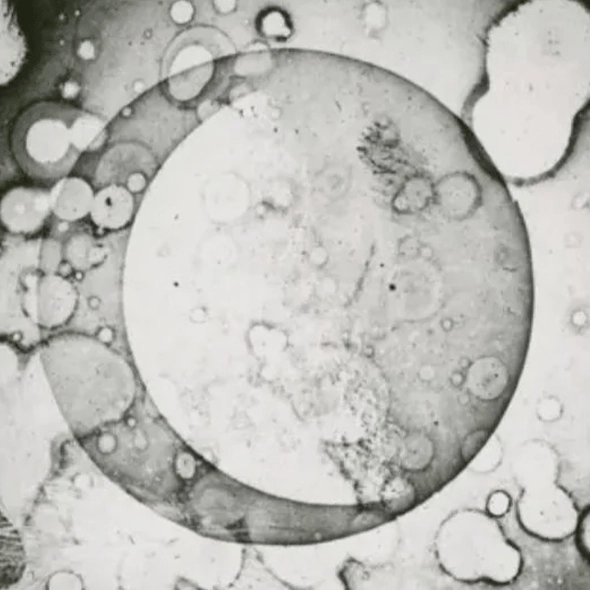
The 'oldest surviving photograph of the Moon' is drastically different to what we see today


Images of the Moon have been delighting and interesting humans, whether they're scientists or not, for centuries.
But it was only able to recreated with true accuracy once we started to develop photographic techniques. While these would eventually lead us to create near-perfect high-resolution space imagery, the early days were a whole lot blurrier.
When photographs were still a lengthy and involved process involving the daguerreotype technique, in the mid-19th century, it didn't take long for some enterprising souls to decide to point their lenses up at the Moon to see what they could make of it.
One such person was American philosopher and physician John W. Draper, who took a series of photographs of the Moon in the 1840s, some of which still survive - as demonstrated by this incredible bit of vintage imagery.
It shows what looks like a blotchy and blurry mess around a circular shape. It dates back to March 26, 1840, when Draper took it from an observatory in New York.
Advert
The debate still rages about exactly what photograph is the first ever taken of the Moon (not least because there's a strong chance that whatever photo it might be no longer survives), but this is thought to possibly be the first detailed image of the moon.
That word, 'detailed' has spurred on some interesting debate under a Reddit post in the subreddit Damnthatsinteresting this week, with some observers questioning just how much detail you can really see in the photo.
One wrote: "Looks like my kitchen sink", summing up that skepticism. However, while the image is indeed pretty basic to look at, in reality it's been warped heavily by the time taken since it was captured.
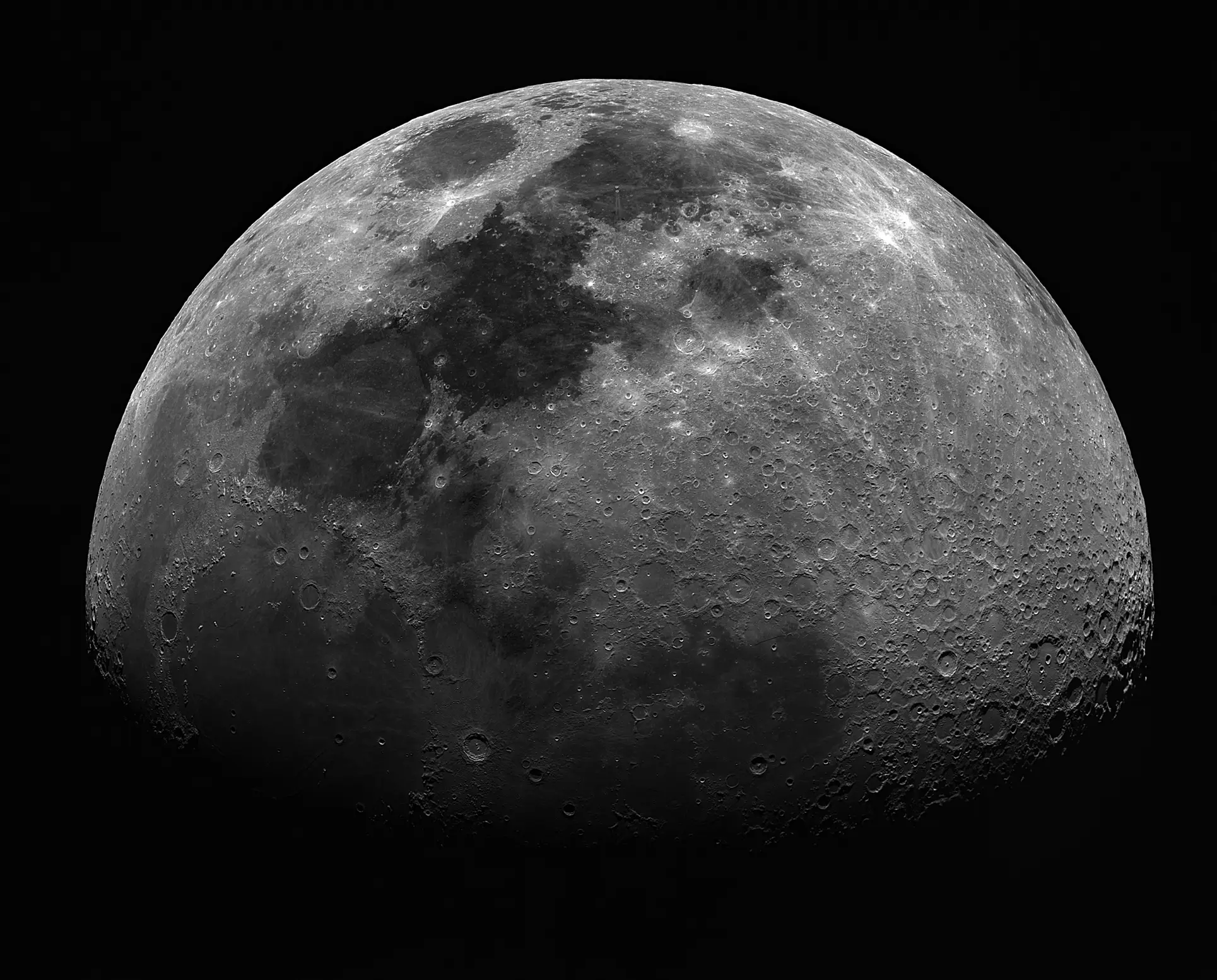
The daguerreotype process involves chemicals that don't stay stable forever, making many older photographs less than pristine, and this image is merely what was able to be captured many years later on a more modern camera.
In fact, documentation from Draper's time shows that his images were much easier to pick out details in - they even provided an accompanying key showing which dots were craters, for example.
This is demonstration enough that the image was more detailed than it might now look, but this is all complicated by the fact that we don't have access to the original plate any more - it's been lost. Either way, though, this is a valuable little bit of astronomical history.