
$4.3 billion telescope producing '3D space movies' now complete despite efforts from Trump to cancel


NASA has just announced the completion of one of its most expensive projects yet, as it has finally assembled the Nancy Grace Roman Space Telescope — a $4.3 billion project that can create '3D movies' of the Milky Way.
The space agency's existing telescopes are arguably the most valuable tools at the world's disposal when it comes to our exploration of the universe, and while there's nothing quite like getting first-hand experience with astronauts, that's become an extreme rarity in recent decades.
NASA's Hubble Telescope has managed to reveal a wide variety of marvellous discoveries across space, including a planet where it rains glass and a 'strangely alive' green blob, and the James Webb Telescope has remained our best tool in analysing approaching objects like the potentially threatening asteroid 2024 YR4 and the mysterious 'alien-like' comet 3I/ATLAS.
What is the Roman Telescope?
Advert
The completion of the Nancy Grace Roman Telescope only adds to the space agency’s already impressive repertoire. Although it's far less complex than its fellow telescopes – measuring three times smaller than the Webb – Ars Technica reports that it can see a far wider picture of the sky.
It's apparently able to see billions of stars and galaxies, going to a point that theoretically covers the known universe, and could prove vital in research into dark matter and dark energy — two concepts that continue to mystify scientists and astronomers.
Another key feature of this telescope is its Roman Coronagraph, which has masks, filters, and adaptive optics that allow the apparatus to see planets and objects that are 100 million times fainter than their stars. These would previously have been obscured by glare.
Compared to the Hubble and Webb, the Roman can perform anywhere between 100 and 1,000 times better in this form of photography, and it could afford the discovery of objects that we had no idea about.
What will the Roman Telescope do?
"With Roman's construction complete, we are poised at the brink of unfathomable scientific discovery," explained Julie McEnery, the telescope's senior project scientist.
"In the mission's first five years, it's expected to unveil more than 100,000 distant worlds, hundreds of millions of stars, and billions of galaxies. We stand to learn a tremendous amount of new information about the universe very rapidly after Roman launches."
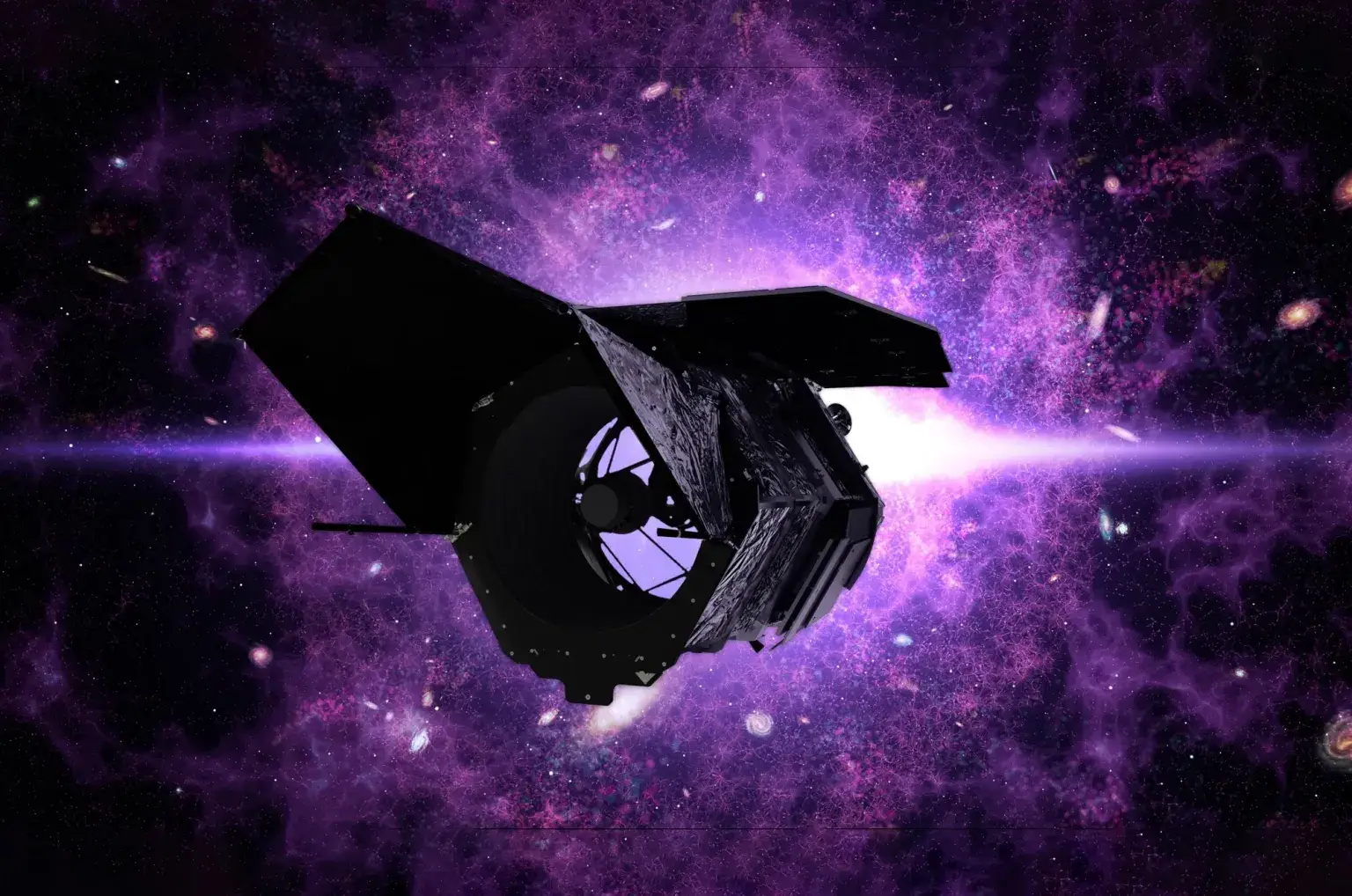
Jackie Townsend, the Roman's observatory's deputy project manager, also added that it will allow the team to "do fundamentally different science," illustrating that "in some subset of our observations, we're going to be making 3D movies of what is going on in the Milky Way galaxy and in distant galaxies. That is just something that's never happened before."
How was Trump involved?
This all came very close to a shutdown, though, as there were multiple attempts by Donald Trump during his first term as president to completely cancel this mission, presumably as a cost-saving measure.
He continued attempts to remove the mission from NASA's operations upon his return to office this year, just before the project was about to be completed, albeit his 2026 fiscal year budget called for funding cuts, but not a complete cancellation.