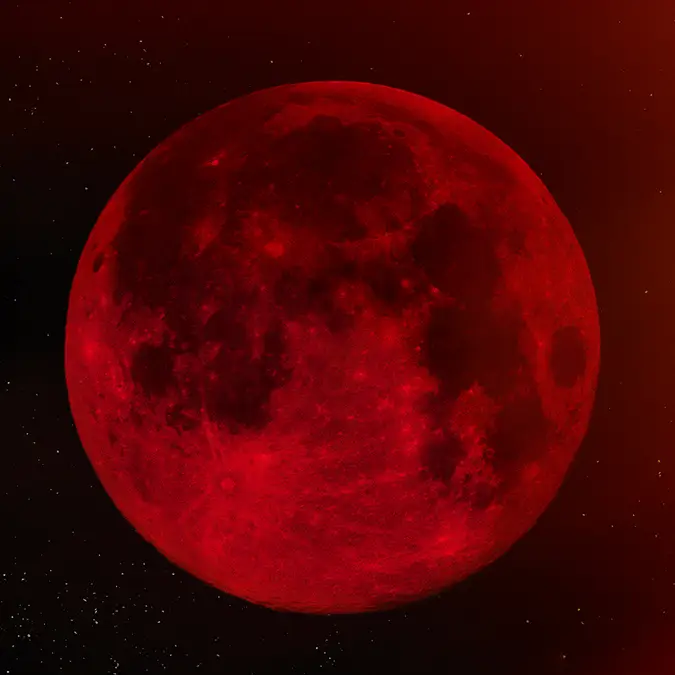
How to see menacing 'bloody Moon' that will turn red in the sky this weekend


Solar eclipses might get all of the attention and headlines, but an upcoming lunar equivalent might be worth paying attention to as it creates a menacing 'bloody Moon' that you might be able to see for yourself this upcoming weekend.
There have been a number of occasions across the last few years especially where a solar eclipse has taken over people's lives, causing many to travel potentially hundreds of miles to catch a glimpse of the rare totality.
While lunar eclipses might not be quite as rare they're definitely equally as impressive, and something you won't want to miss out on seeing every time it rolls around.
Thankfully the stars have lined up – quite literally in this case – and it's nearly time for another lunar eclipse in certain parts of the world, letting you catch a glimpse of the ominously red Moon from the comfort of your home this weekend.
When will the lunar eclipse happen this weekend?
As reported by the Independant, the latest lunar eclipse is set to take place on Sunday, September 7, and it's the first time an event like this has been visible for over three years.
Advert
According to a map from Time and Date, this particular upcoming lunar eclipse will be visible across most of Asia, Europe, and Africa, with the former being treated with the 'fullest' experience possible.
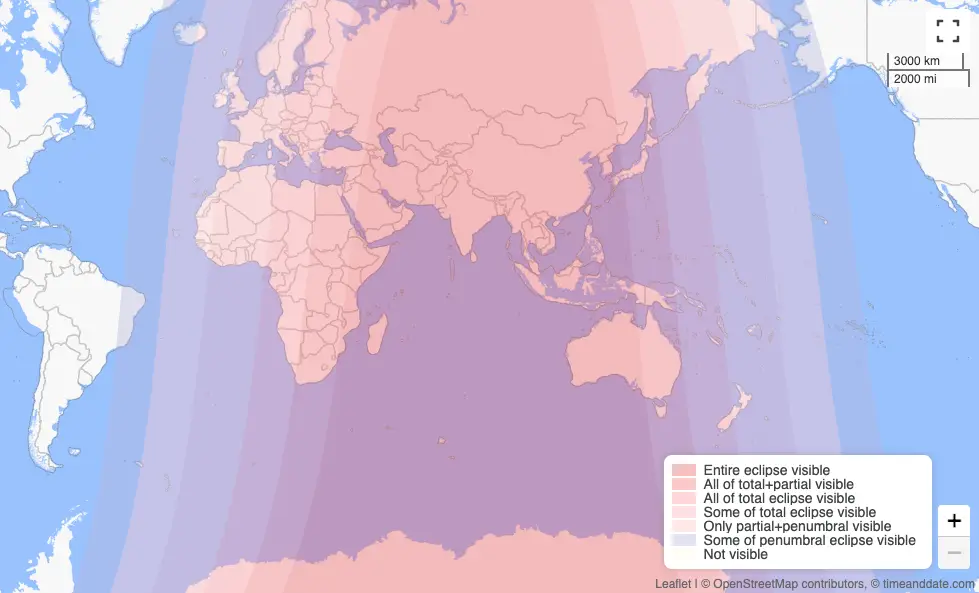
For example, those across most of Russia, China, and India will have the 'entire eclipse visible' according to the map, whereas people in the United Kingdom and eastern Australia will only have some or partial parts of the total eclipse.
If you're in the United Kingdom then the lunar eclipse is expected to start at roughly 4:28pm BST, although the full effects of the eclipse won't be visible until around an hour later.
The next total lunar eclipse is set to take place in early March next year according to scientific predictions, although this one will primarily affect America's west coast and eastern parts of Russia and Australia.
What causes a lunar eclipse?
Lunar eclipses are caused when Earth lines up perfectly between the Sun and the Moon, causing light from the former to be blocked from reaching the latter.
As a consequence, the Moon is solely lit up by light reflecting from the Earth's surface, causing it to appear red with an ominous glow when viewed from our perspective.
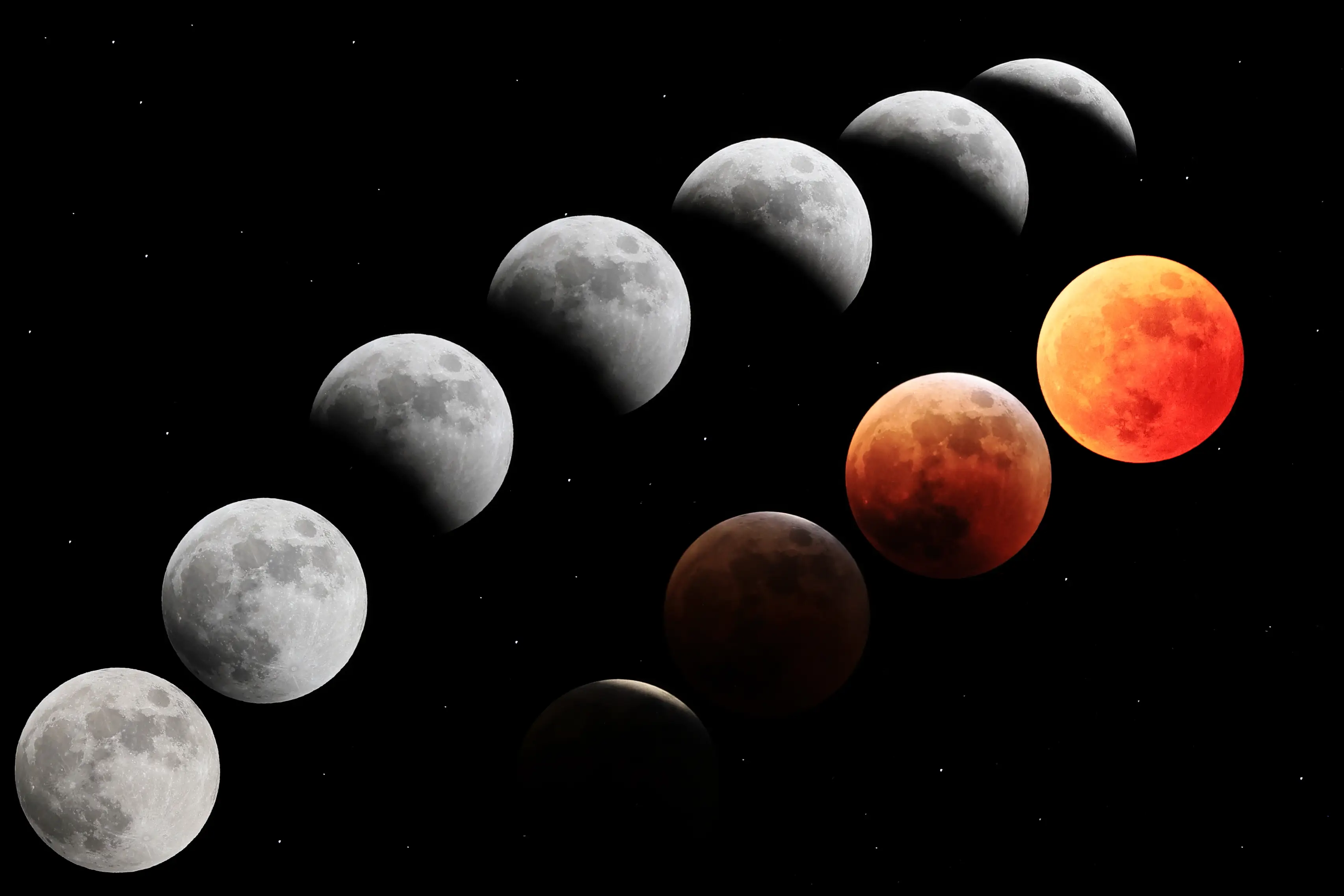
Unlike a solar eclipse, which often requires special or auxiliary equipment to be viewed properly, you can see a lunar eclipse with your own eyes and it's completely safe to look up and marvel in the relatively rare spectacle.
Just make sure that you're ready to watch it happen at the right time because it's only there for a a couple of hours at most, and head up to a high vantage point if you want the best possible view.