uniladtech homepage
  • News
    • Tech News
    • AI
  • Gadgets
    • Apple
    • iPhone
  • Gaming
    • Playstation
    • Xbox
  • Science
    • News
    • Space
  • Streaming
    • Netflix
  • Vehicles
    • Car News
  • Social Media
    • WhatsApp
    • YouTube
  • Advertise
  • Terms
  • Privacy & Cookies
  • LADbible Group
  • LADbible
  • UNILAD
  • SPORTbible
  • GAMINGbible
  • Tyla
  • FOODbible
  • License Our Content
  • About Us & Contact
  • Jobs
  • Latest
  • Archive
  • Topics A-Z
  • Authors
Facebook
Instagram
X
TikTok
Snapchat
WhatsApp
Submit Your Content
January 2025 will see 6 planets visible in the night sky in extremely rare must-see event

Home>Science>Space
Published 13:10 18 Nov 2024 GMT

January 2025 will see 6 planets visible in the night sky in extremely rare must-see event

You won't want to miss this celestial spectacle

Rikki Loftus

Rikki Loftus

google discoverFollow us on Google Discover
Featured Image Credit: NEMES LASZLO/SCIENCE PHOTO LIBRARY/forplayday/Getty Images
Space
Science
Moon
Sun
Earth

Advert

Advert

Advert

The new year will bring us an incredibly rare event that experts are saying is a must-see.

In January 2025, six planets will be visible in the night sky at the same time.

The planets in question are Venus, Mars, Jupiter, Saturn, Neptune and Uranus, making for an incredible sight down on Earth.
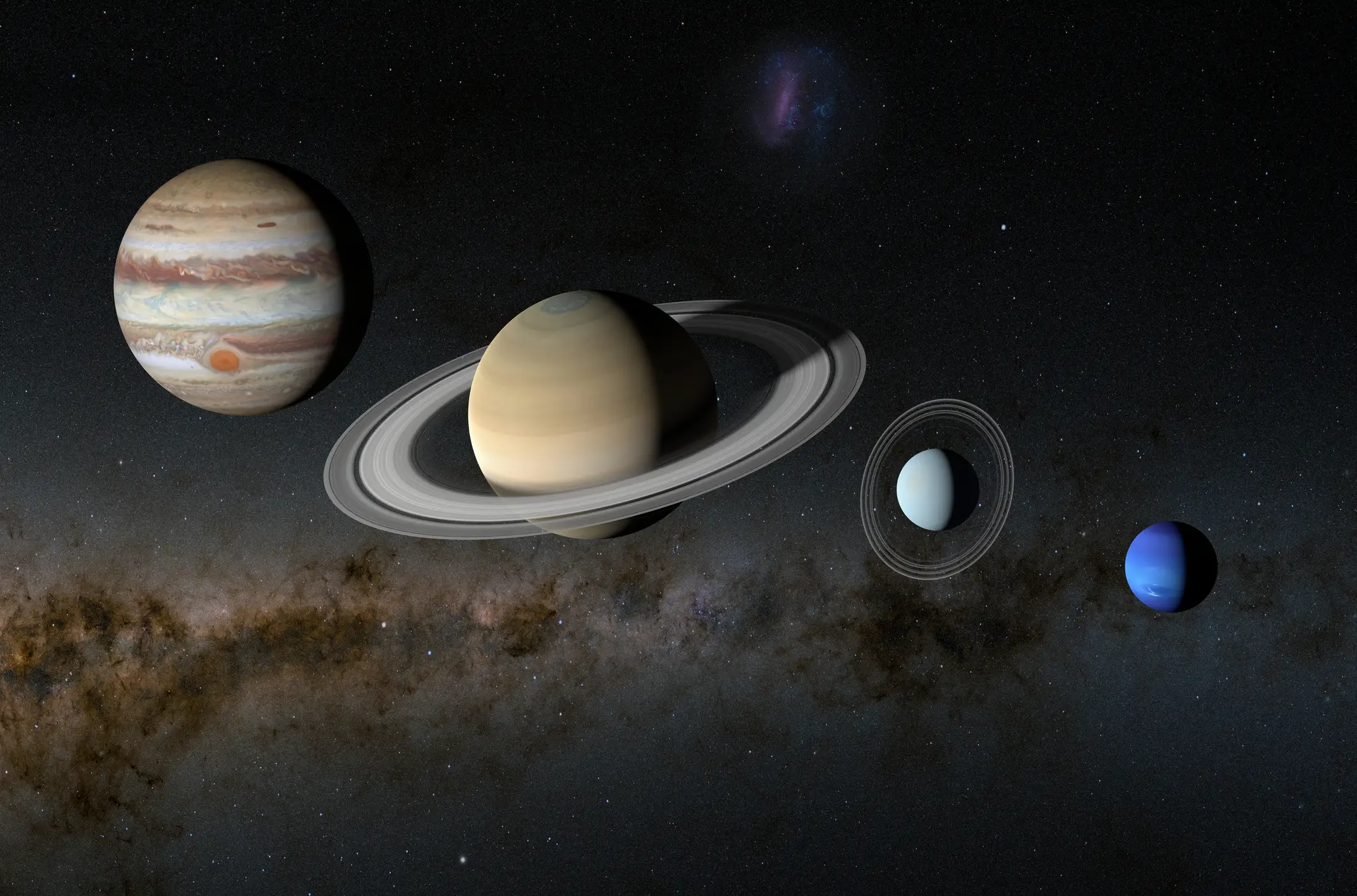
The planets will be visible to the naked eye (NEMES LASZLO/SCIENCE PHOTO LIBRARY/Getty Images)

Advert

They will all line up in the sky which is an extremely rare occurrence.

This planetary alignment happens when the planets are all on the same side of the sun.

The astronomical term is used to describe the event where the planets gather closely and appear to form a line in the night sky.

And you won’t even need a telescope to catch a glimpse of this phenomenon.

It will start from around January 21 and they will be visible for about four weeks, until roughly February 21.

Spotting Mars, Venus, Jupiter and Saturn will be possible without any equipment but if you want to see the full set, then you’ll need to get your hands on a telescope or a pair of high powered binoculars.

This is because the more distant planets, which are Uranus and Neptune, will be too faint to see with the naked eye.

Your best bet at catching them is just after sunset.

And the celestial wonder doesn’t stop there.
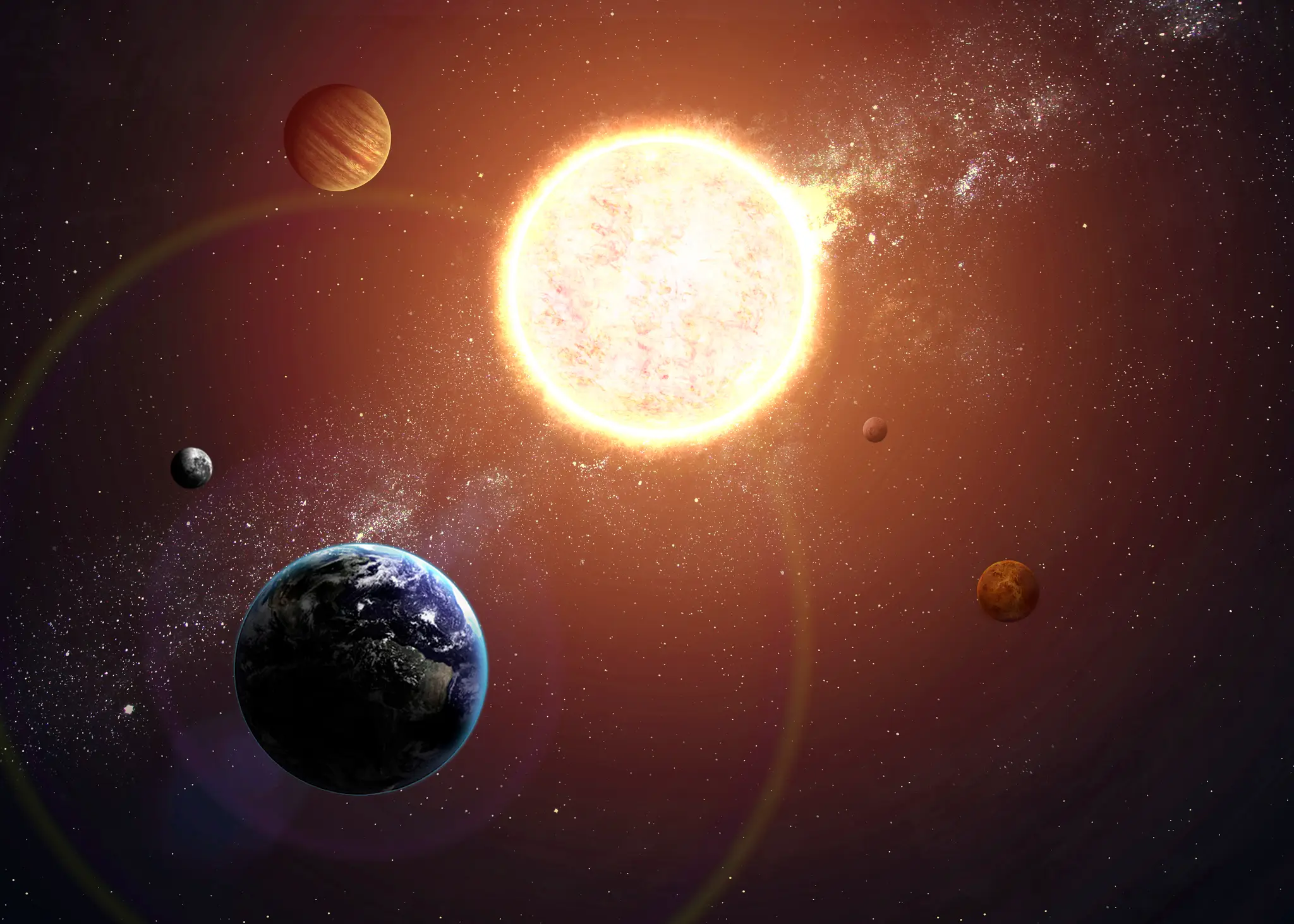
This rare event is a must-see (forplayday/Getty Images)

For a brief period of time, a seventh planet will also be visible in the line-up, which is Mercury.

However, it will be difficult to stop all seven planets at once because Mercury, Saturn and Neptune will all be near the sun during sunset, and might be hidden by the sunlight.

They’ll also be moving closer to the sun over time and by March, there won’t be much visibility left at all for these three planets.

Where can we spot the planet alignment?

There are multiple locations where this event will be visible, but you’re most likely to be in luck if you’re based in the US, Canada, Mexico or India.

To increase your chances, choses somewhere spacious like a field or a shoreline for your stargazing.

And avoids areas like mountains, forests and cities that can block the view of the horizon.

A similar event occurred earlier this year in August 2024, where the night sky was a spectacle.

In the line up, people could see the moon, Mercury, Mars, Saturn, Jupiter, Uranus and Neptune - although Neptune was only visible through a telescope.

Choose your content:

16 hours ago
20 hours ago
a day ago
  • NASA/Southwest Research Institute
    16 hours ago

    SETI combs 74 million radio signals for final verdict on interstellar 3I/ATLAS 'alien tech'

    The mysterious comet was scanned with intriguing results

    Science
  • NASA/Bryan Allen via Getty
    20 hours ago

    NASA's $1 billion plan to destroy ISS explained after astronauts put on 'evacuation alert'

    The station's 25-year stay in space is coming to an end soon

    Science
  • Douglas Sacha / Getty
    a day ago

    Worrying 'ominous blob' spotted by meteorologists poses a major risk to several US states

    Weather experts have cautioned about growing storms in America's southwest

    Science
  • Mitchell Pettigrew/Getty Images
    a day ago

    ‘Godzilla’ El Niño thought to be imminent as Atlantic Ocean recorded to be 5°C hotter than usual

    The El Niño is expected to ‘influence weather and climate patterns around the world in the months ahead’

    Science
  • Artemis 2 astronauts become first humans in history to witness 'indescribable' event in space
  • Mind-blowing amount of time it would take to notice if the sun suddenly vanished from sky
  • How to see menacing 'bloody Moon' that will turn red in the sky this weekend
  • Chinese scientists discover extremely rare and valuable meteorite hiding on the far side of the Moon