
uniladtech homepage
  • News
    • Tech News
    • AI
  • Gadgets
    • Apple
    • iPhone
  • Gaming
    • Playstation
    • Xbox
  • Science
    • News
    • Space
  • Streaming
    • Netflix
  • Vehicles
    • Car News
  • Social Media
    • WhatsApp
    • YouTube
  • Advertise
  • Terms
  • Privacy & Cookies
  • LADbible Group
  • LADbible
  • UNILAD
  • SPORTbible
  • GAMINGbible
  • Tyla
  • FOODbible
  • License Our Content
  • About Us & Contact
  • Jobs
  • Latest
  • Archive
  • Topics A-Z
  • Authors
Facebook
Instagram
X
TikTok
Snapchat
WhatsApp
Submit Your Content
Experts say microscopic paint flecks could bring the internet down without warning

Home> Science> Space

Published 16:59 19 Dec 2025 GMT

Experts say microscopic paint flecks could bring the internet down without warning

Experts are warning about just how dangerous space junk could become

Rikki Loftus

Rikki Loftus

google discoverFollow us on Google Discover
Featured Image Credit: courtneyk/Getty Images
Science
News
Space

Advert

Advert

Advert

Experts have revealed that microscopic paint flecks could bring the internet down without warning.

This comes as a major issue facing scientists at the moment is the accumulation of space junk floating around above our atmosphere.

There are millions of pieces of trash floating in orbit around Earth traveling at speeds so quick, they are moving around seven times faster than a bullet.

Speaking to Metro, Dr Penelope Wozniakiewicz shared that she had received funding for a project to show just how dangerous this space junk could become.

Advert

She explained: “Space debris is one of the fastest-growing threats to the future of space exploration.”

In order to prove this, a team of researchers at the University of Kent will simulate collisions that could occur in space.
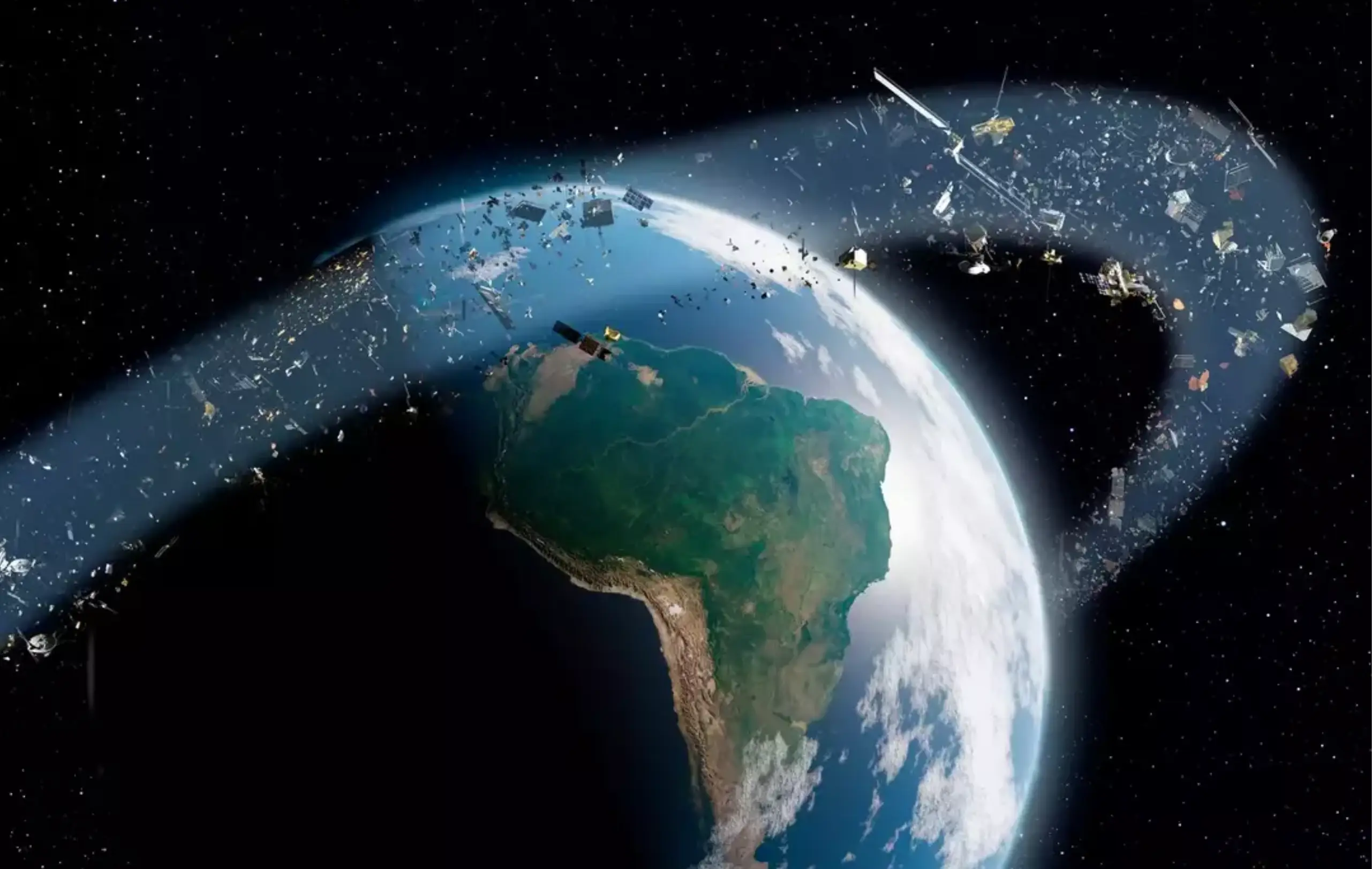
If the Kessler Syndrome is proven true, we could end up in a dire situation (MARK GARLICK/SCIENCE PHOTO LIBRARY/Getty Images)

Using things like aluminium plates, rods and spheres traveling into each other at very high speeds, the experts will be able to safely replicate the types of satellite crashes we face in orbit.

Wozniakiewicz continued: “With this project, we can generate the high-precision data that agencies and companies worldwide need to build a safer, cleaner and more sustainable space environment.”

Fears have grown in recent years that the Kessler Syndrome could one day become a reality.

The Kessler Syndrome is a scenario that was first thought up in 1978 by two NASA scientists - Donald Kessler and Burton Cour-Palais.

The theory is that, if we keep sending more and more spacecraft into space, then the space around Earth is going to become overcrowded.

NASA said: “Spent rockets, satellites and other space trash have accumulated in orbit increasing the likelihood of collision with other debris.

Too much space junk in orbit could impact our internet on Earth (courtneyk/Getty Images)

“Unfortunately, collisions create more debris creating a runaway chain reaction of collisions and more debris known as the Kessler Syndrome after the man who first proposed the issue, Donald Kessler.”

In the worst case scenario, a chain reaction of collisions could be caused that has the potential to destroy essential communications satellites around the planet.

In this case, the situation will then become so volatile that we can't successfully send up new satellites to replace the broken ones due to the area of space in which they orbit becoming unstable and full of fast-moving debris.

This debris will smash anything new into a thousand pieces.

There are currently more than 10,000 satellites orbiting the Earth and more than 100 trillion pieces of old satellites still circling the planet, with parts occasionally falling into Earth's atmosphere over time and burning up.

Choose your content:

2 hours ago
3 hours ago
4 hours ago
  • NASA/Getty Images
    2 hours ago

    NASA paid $26.6M to families after seven astronauts died just 16 minutes from Earth after history-making mission

    The problem with the spacecraft was initially very small

    Science
  • Anna Moneymaker / Staff / Getty
    3 hours ago

    Sam Altman has signed up to procedure that is '100% lethal' but will preserve his brain forever

    One step closer to making billionaires immortal

    Science
  • Bill Ingalls/NASA/Getty Images
    3 hours ago

    How much Artemis 2 astronauts will get paid after making history with lunar mission

    Many wonder how well they'll be compensated for the history-making trip

    Science
  • Getty Stock
    4 hours ago

    Scientists discover 'world's oldest octopus' is actually something else entirely

    Researchers unveiled 'hidden anatomical characteristics'

    Science
  • Senator Elizabeth Warren issues blunt 5-word message to MrBeast that could bring down YouTube King
  • This common everyday tech habit could quietly be ruining your sperm quality experts warn
  • Artemis 2 astronauts could be about to undergo the most dangerous 14 minutes of their lives
  • Scientists reveal when terrifying 'Big Crunch' could bring entire universe to the end