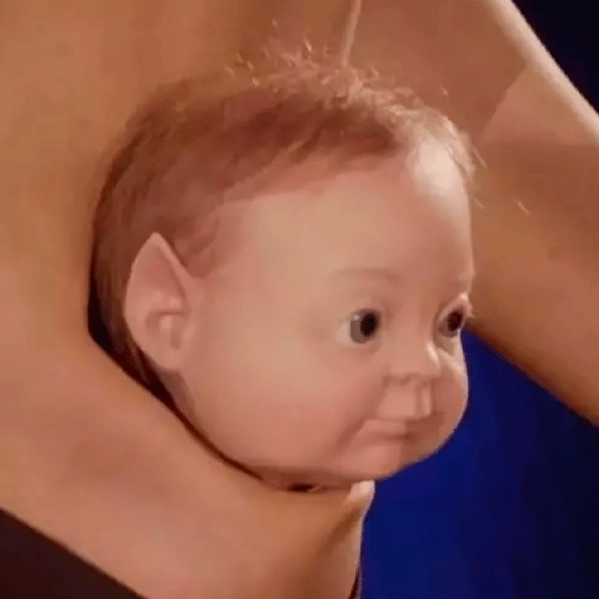
Biologists created the 'perfect human body' - and it's seriously creepy


When you think of the 'perfect human body', your mind might turn to an athlete or supermodel - not emu legs and a baby's head sticking out of your stomach.
And yet that's exactly what a team of anatomists suggest make up the ideal form, without any human imperfections.
The creepy clip comes from a BBC Four show from 2018 called Can Science Make Me Perfect?, and it's been doing the rounds on social media.
Advert
It showed anatomist Alice Roberts' attempts to make the perfect human body - and it really was the stuff of nightmares.
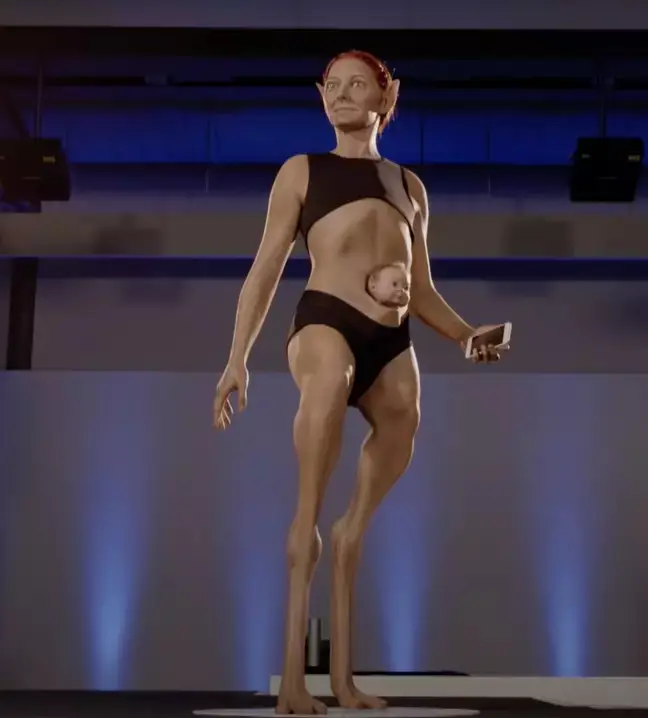
The body, modelled on her own, was affectionately known as Alice 2.0 - but very little of it could be seen as 'perfect'.
In the clip, Roberts - before unveiling the Alice 2.0 to an audience - said it's "been an extraordinary project" and she was "terribly excited" to see the results.
When Alice 2.0 was finally revealed, she was met with disgust from the crowd - followed by peals of laughter.
"Oh no, I can't look at it," was Roberts' unfortunate response.
The body had long, strong-looking legs, a baby's head protruding from its stomach, pointed ears and more - and everything had a biological purpose.
"The baby's the weirdest thing. That is the weirdest thing, but it's very cute at the same time," Roberts said.
The baby was meant to symbolise the idea of a pain-free childbirth - which sounds great in theory, but not necessarily in practice.
Roberts explained that some of the more unusual features of Alice 2.0 - including a "chimp's sturdy lower back", designed to "counter the faults of our flawed transition to standing upright".
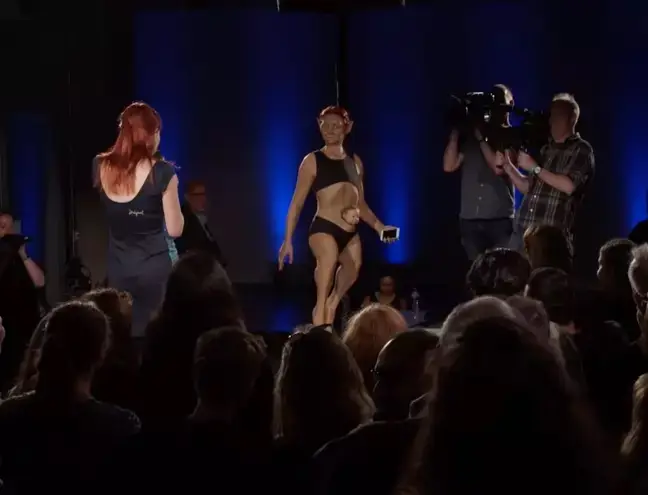
She also had the "shock-absorbing legs of an emu", along with "tiny pumps in her thighs" - supposedly to "improve blood circulation".
And the weird and wonderful features of Alice 2.0 don't stop there, with Roberts taking inspiration from the wider animal kitchen.
"Beneath her breast-less chest lies the reliable heart of a dog and the graceful lungs of a swan," Roberts explained.
We're not sure where that came from - who has ever wished they had swan lungs or a dog's heart?
One thing that does feel true to life is the iPhone Alice 2.0 had glued to her hand - that is our idea of the perfect extra appendage.
While Alice 2.0 won't be winning any beauty pageants anytime soon, she'd be the perfect candidate for an MMA fight.
After all, with those legs, lungs and the added bonus of a "choke-proof windpipe", we certainly wouldn't want to take her on.