uniladtech homepage
  • News
    • Tech News
    • AI
  • Gadgets
    • Apple
    • iPhone
  • Gaming
    • Playstation
    • Xbox
  • Science
    • News
    • Space
  • Streaming
    • Netflix
  • Vehicles
    • Car News
  • Social Media
    • WhatsApp
    • YouTube
  • Advertise
  • Terms
  • Privacy & Cookies
  • LADbible Group
  • LADbible
  • UNILAD
  • SPORTbible
  • GAMINGbible
  • Tyla
  • FOODbible
  • License Our Content
  • About Us & Contact
  • Jobs
  • Latest
  • Archive
  • Topics A-Z
  • Authors
Facebook
Instagram
X
TikTok
Snapchat
WhatsApp
Submit Your Content
Incredible reason why the heart is the only muscle to never get tired

Home>Science
Published 16:46 29 Jan 2024 GMT

Incredible reason why the heart is the only muscle to never get tired

Science explains why there's no breaks for the heart.

Rebekah Jordan

Rebekah Jordan

google discoverFollow us on Google Discover
Featured Image Credit: Noctiluxx/SCIEPRO/Science Photo Library/Getty Images
Science

Advert

Advert

Advert

The human heart is an incredibly powerful organ.

It beats about 60-100 times a minute, tallying up 100,000 times a day, at the force equivalent to squeezing a tennis ball.

Unlike the rest of our muscles, the heart keeps going, non-stop, all day, every day, for your entire life. So, how does it not get tired?

A viral Instagram post is shocking people with the science behind our amazing heart muscles.

Advert
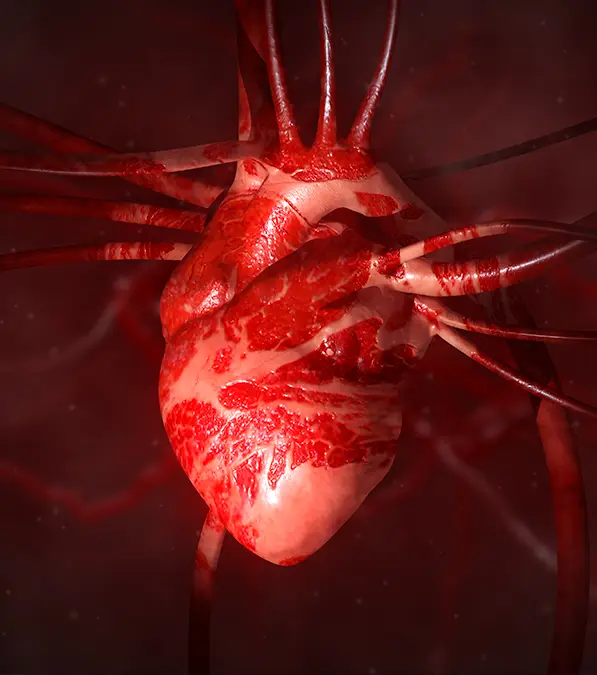
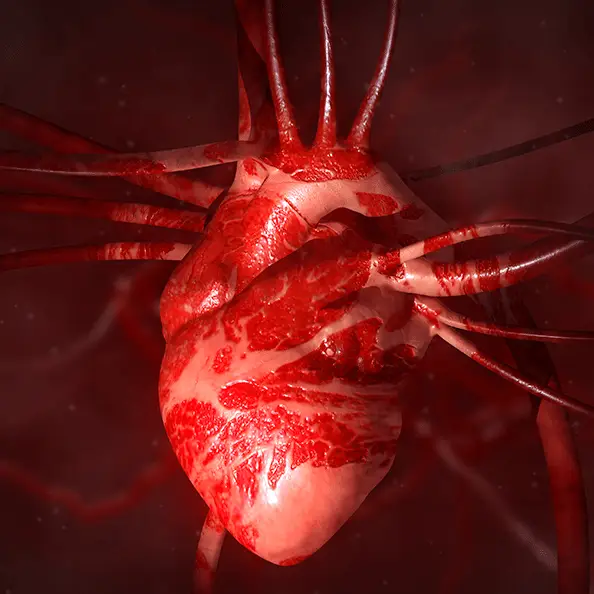
Cardiac muscle is different to other types of muscles in the body / Noctiluxx/SCIEPRO/Science Photo Library/Getty Images

In the post, it highlights that our hearts are made up of cardiac muscle which, of course, only exists in the heart. And because of this unique muscle structure, it doesn't tire like other skeletal muscles do.

It operates automatically and continuously with no breaks or pauses. The only time it does pause is in the unfortunate event of a cardiac arrest.

Without getting too science-y, cardiac muscle is made up of cells called cardiomyocytes which are primarily powered by mitochondria (you know, the powerhouse of the cell), just like your other muscles.

And the rule is the more mitochondria, the more energy available for the muscle.

Cardiomyocytes have as much as 10 times the density of mitochondria than skeletal muscles, giving them an insanely high energy output.

In total, the volume of the heart contains 30-35% mitochondria. Because of so many powerhouses at its disposal, it regularly receives energy (in the form of ATP), more so than other muscles and so, no breaks or time-outs are needed.
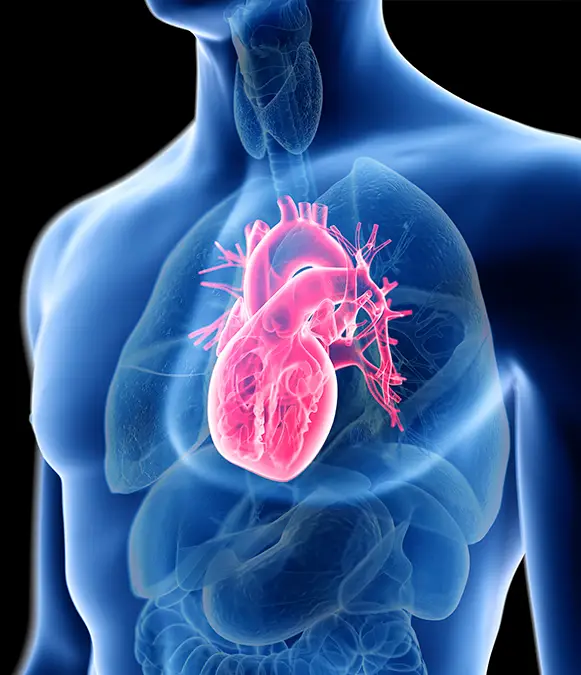
The heart's contains far more mitochondria than skeletal muscles / Noctiluxx/SCIEPRO/Science Photo Library/Getty Images

Alongside this, the heart also has a steady supply of blood bringing it oxygen and nutrients so it can carry on beating.

The viral post is causing some social media users to wonder what our lives would be like if all of our muscles were made of cardiac muscles.

As super-powerful as we can imagine ourselves to be, it wouldn't work as all of our movements would be involuntary, so something as simple as walking would no longer be an option.

Despite its resiliency, we must remember that the human heart is not invincible.

In situations of extreme exercise intensity, or prolonged periods, the heart can actually get tired and suffer damage, especially in environments with low oxygen such as high altitudes.

Moreover, factors like poor diet, lack of exercise, and chronic stress can all take a toll on the heart over time, leading to an increased risk of heart disease and other cardiovascular problems.

Healthy lifestyle choices, including regular exercise, a balanced diet, and stress management, are vitally important for a healthy heart.

Choose your content:

8 hours ago
9 hours ago
a day ago
  • RJ Sangosti/MediaNews Group/The Denver Post via Getty Images / Contributor
    8 hours ago

    Symptoms of 'valley fever' as horrifying fungal storms sweep southern US states

    Dust storms bring out fungal spores from the dirt and spread them across America

    Science
  • Heather Paul / Getty
    9 hours ago

    These countries will go completely dark during the next major solar eclipse

    Europe's last full solar eclipse ocurred in 1999

    Science
  • Tero Vesalainen / Getty
    a day ago

    Infectious disease doctor urges Americans to avoid these certain foods as cyclosporiasis outbreak spreads

    There are nearly 7,000 reported cases of the illness that can cause 'explosive diarrhea'

    Science
  • Gifford et al., Radiology
    a day ago

    We’re one step closer to Mars after astronauts successfully perform historic medical first

    The test could make future Mars missions much safer

    Science
  • Muscle-building expert reveals exactly how long it takes to lose muscle
  • Muscle-building expert reveals the best foods to eat to grow
  • Man with highest IQ in the world reveals reason why AI could never 'human' attain emotional intelligence
  • The simple reason NASA’s chief says Flat Earthers won't exist by the end of the decade