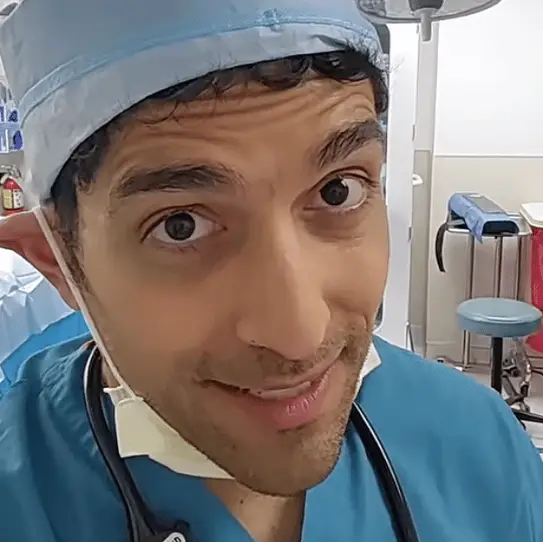
People disturbed after doctor reveals what anesthesia really does to your body


While we're not here to scare you with horror stories, we are here to blow your minds by shattering some of the myths about anesthesia.
You might think you're happily away in the Land of Nod when going under the knife, but in reality, the truth is far from it.
Posting on the Medical Secrets YouTube channel, Dr. Anthony Kaveh explains how anesthesia really works and what happens when you count down from 10.

Advert
Kaveh reiterates that you aren't 'asleep' on the table, saying: "We give you medication that turns off your brain, making you completely unconscious so you can't perceive pain."
There are three main components of anesthesia, with analgesia to reduce pain or remove it altogether, amnesia to wipe your memory, and muscle relaxation for paralysis.
As for the forgetting your surgery bit, Kaveh adds: "We also give some medications to wipe your memory so that you're less anxious, and so that we minimize the risk of PTSD under anesthesia.”
Four kinds of anesthesia are available, with a general anesthetic rendering someone completely 'unconscious' and being administered by an IV or inhaled through the nose and mouth. While under general anesthetic, a tube is placed down the throat to help the patient breathe.
Sedation anesthesia is used on minimally invasive procedures and includes light-to-moderate sedation where you breathe independently.
Local anesthetic involves the numbing of a relatively small area, while regional anesthesia is typically used for the likes of an epidural during childbirth to numb a large area of the body. You remain ‘awake’ during the final two.
Despite the first recorded use of general anesthetic being under Japanese physician Seishu Hanaoka in 1804, we still know relatively little about how it works. It's a careful balancing act of drugs, with the biggest risk of general anesthesia (although rare) being death.
As part of anesthesia's mysteries, it's estimated that 22% of people dream under general anesthesia. If you weren't already spooked, a couple of cases in every thousand have reports of 'anesthesia awareness' where the patient has some consciousness.
For those who aren't scared witless, check out 2007's Awake starring Star Wars' Hayden Christensen and Jessica Alba.
Responding to Dr. Kaveh's video, one scared patient wrote: "Sounds so much more scary when you describe it that way."
Another added, "I am an anaesthesiologist and always explain to patients that as a side effect of our pharmaceuticals, they will stop breathing under general anesthesia, which is why we secure their airway and ventilate them. I find this important to understand why the procedure is invasive, because ultimately it is for patient safety."
When one comment said it's more horrifying to know the truth, someone else concluded: "But necessary! Waking up during surgery or even being conscious enough to perceive the pain is more common than you think. Thankfully you won’t remember any of it."
Next time there's a quiz question on anesthesia, you can teach your teammates a thing or two.