This app shows you what the climate will be in your area in 2084


On the topic of websites to cure boredom, here's another one to add to the list.
Okay so it's not the most cheerful - but it sure is interesting.
The new interactive map from The Future Urban Climates, allows you to explore your home's climate 60 years from now.
Did you know more than half of our planet is predicted to shift into new climate zones by the end of the century?
Advert
Using data from the Intergovernmental Panel on Climate Change (IPCC), Matthew Fitzpatrick a spatial ecologist at the University of Maryland matched 40,581 places around the globe to nearby locations currently experiencing their future predicted climate in 2080.
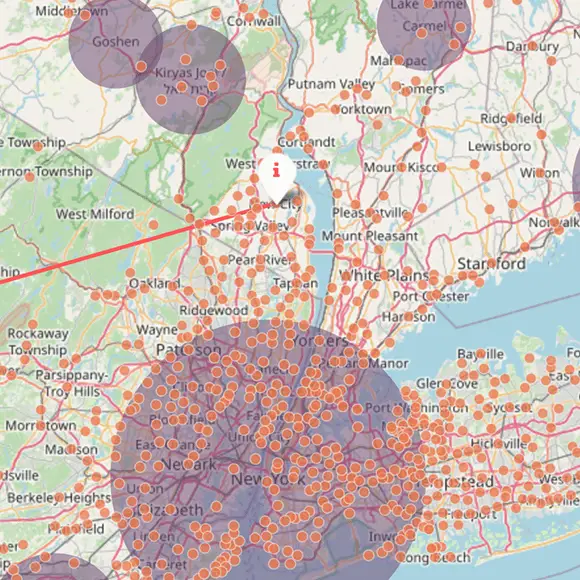
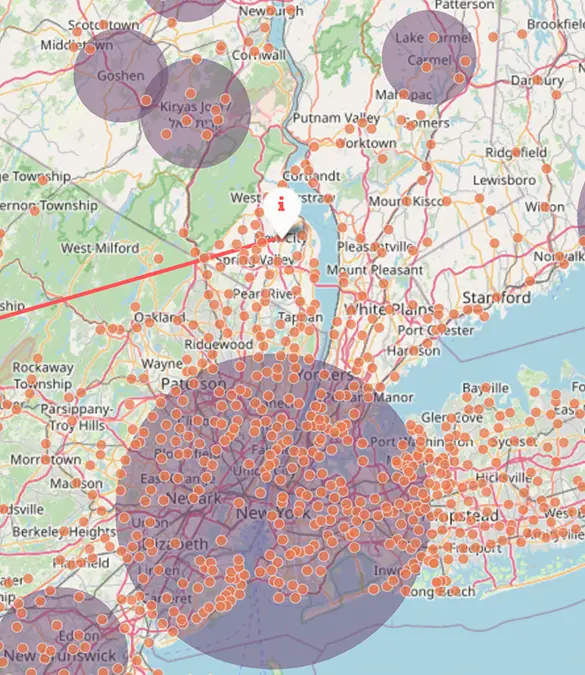
You can use the website to type in or click on your city on the map. The website tells you what kind of climate your city is expected to have in 2080. Try it out here.
For example, New York City is expected to have the climate of today's northern Mississippi by 2080.
'In 50 years, the northern hemisphere cities to the north are going to become much more like cities to the south,' explained Fitzpatrick.
'Everything is moving towards the equator in terms of the climate that's coming for you.'
By 2010, already 6% of Earth's land area had shifted to warmer and drier climates compared to 1950.
The most significant changes can be seen in North America, Europe, and Oceania.
The new map shows what our world will look like in 2080 if current trends continue, but it also shows a lower emissions scenario if we manage to turn things around.
With an alarming 6 °C (11 °F) of warming, Washington, DC, will feel like current-day North Louisiana.
'The closer you get to the equator there are fewer and fewer good matches for climates in places like Central America, south Florida, and northern Africa,' warned Fitzpatrick.
'There is no place on Earth representative of what those places will be like in the future.'
About 40% of the global population lives in these equatorial regions which means more than 3.3 billion people will face a more extreme climate than anywhere we live today.
People are already dying from the extreme temperatures.
The problem is that the predictions are seeming increasingly likely as there are no signs that governments and industries are putting any significant breaks on the fossil fuel emissions causing the problem.
Fitzpatrick concluded: 'I hope that it continues to inform the conversation about climate change.
'I hope it helps people better understand the magnitude of the impacts and why scientists are so concerned.'