‘Big Short’ investor reveals where he'd invest $1,000 today and what he'd avoid


As we've seen with the recent minting of millionaires and billionaires, the stock market can be a lucrative industry...if you can master it. It's obviously not that simple, with a recent tech wipeout and fears that the artificial intelligence bubble is overinflated leaving some people's stocks in tatters.
Then again, the co-founders of Anthropic and even Ashton Kutcher have supposedly struck it rich from the AI giant's long-awaited IPO. There are plenty of success stories about being in the right place at the right time, like NFL star Rob Gronkowski making a $69,000 punt on Apple, but that's nothing compared to Steve Eisman predicting the 2008 financial crisis. Eisman has proven he's something of a money man, but what would he do with $1,000 in 2026? He told Steven Bartlett on the latest episode of Diary of a CEO.
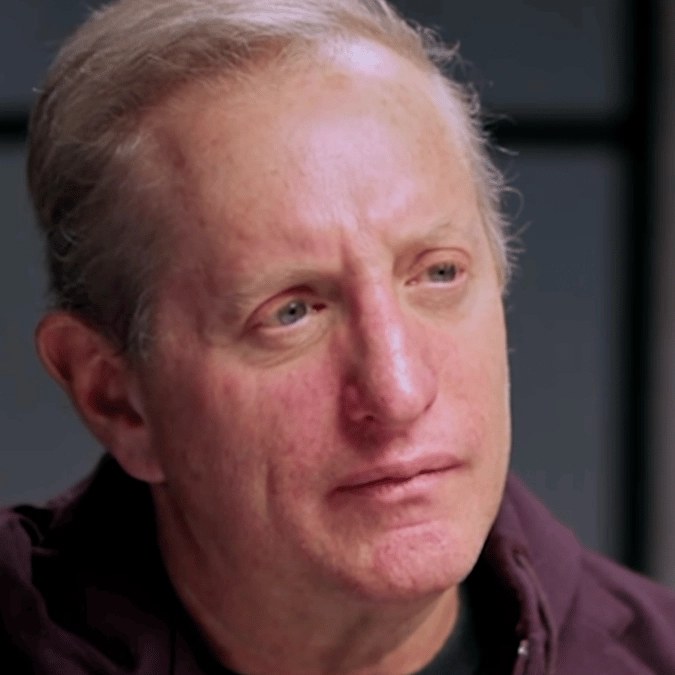
Who is Steve Eisman?

For those who don't know, Eisman bet heavily against collateralised debt obligations (CDOs) tied to the housing market ahead of the 2008 crash. While managing a financial services fund at FrontPoint Partners, Eisman and his team used public data and field research to find a flaw in the housing boom. When millions of homeowners stopped paying their mortgages and loans collapsed, the insurance policies Eisman and his small team held meant the banks had to pay them out.
Advert
His fund made about $1 billion, and the team walked away with around $100 million in personal profit. Eisman's story was chronicled in Michael Lewis' 2010 book called The Big Short, while Steve Carell played a fictionalized version of Eisman (called Mark Baum) in Adam McKay's 2015 movie adaptation.
Since then, Eisman founded Emrys Partners and then joined Neuberger Berman as a Managing Director and Portfolio Manager. After being placed on indefinite leave from the latter in 2024, Eisman has offered his own advice via The Real Eisman Playbook, a money-centric podcast and Substack.
He's now told Americans where they should be investing their money in 2026.
Where does Steve Eisman think you should invest $1,000 in 2026?
Speaking to Steven Bartlett, Eisman said he had very simple advice. Given a mythical $1,000, he says you should look at the United States as the most dynamic economy in the world, explaining: "You want to invest in it, but you don't want to pick stocks. So take your thousand dollars and buy the S&P 500 index."
As the S&P covers around 80% of the USA's total stock market cap and spans all 11 market sectors ranging from tech to healthcare, it means you aren't putting all your eggs in one basket.
Eisman continued: "Every month, or two months, or three months, whatever it is that you've saved some money that you can afford to invest, buy some more. Three months later, buy some more and forget about it."
Specifically aiming his advice at the younger generation, Eisman said: "If you're young, your time horizon is 40, 50 years. If you keep doing that, at the end of the day, you will have a very nice nest egg."
He still issued a warning as he concluded: "Don't try and time the market. Don't sell your index and buy it back. Don't trade. Don't do options. Just buy the index and keep buying it over time, and don't even look at it."
When Bartlett asked whether people should invest in a "little bit of crypto", a defiant Eisman simply said, "NEVER, absolutely never."
Bartlett pushed Eisman on why we shouldn't invest in cryptocurrency, with the latter saying he listened to plenty of podcasts during COVID-19, with most coming from Wall Street guys he knew and had left following the financial crisis.
Eisman said the answer to why you should invest in crypto was always the same, with all these podcasts claiming there's been a debasement of government currency, there's too much debt, and the whole system will crash one day.
Reminding us that crypto is hedging against that as an end-of-days-type scenario, Eisman suggested that on days when the NASDAQ is down and interest rates are up, crypto should be soaring. The same should be true on days when Nvidia and the like are up, where crypto should be down. Instead, "your asset [crypto] acts inversely to your thesis," which Eisman branded as 'nonsense'. Whereas he thinks stablecoins might have some value, Eisman thinks general cryptocurrency is nothing.
While we know he wouldn't be investing $1,000 in crypto, the S&P 500 is where Eisman would put his money in 2026.