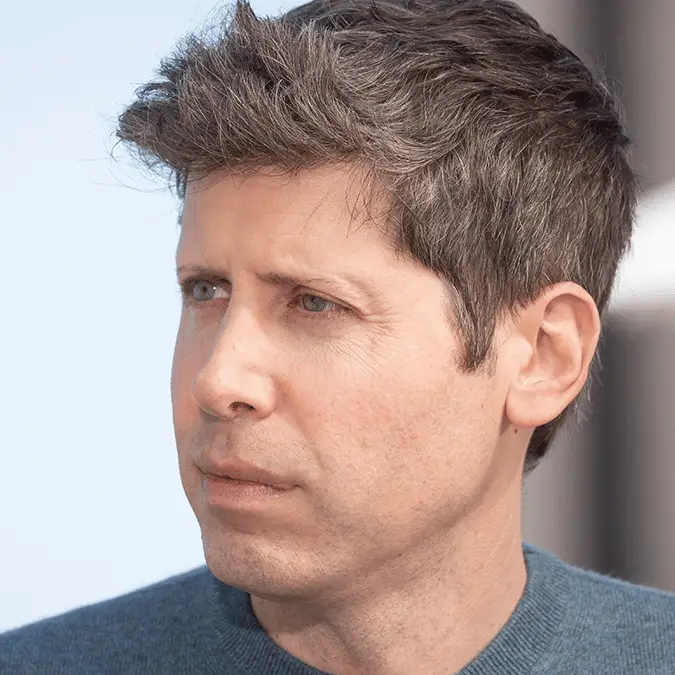
Sam Altman breaks silence on death of woman who used ChatGPT to 'edit her suicide note'

Warning: This article contains discussion of suicide, which some readers may find distressing.
Sam Altman has addressed the topic of deaths linked to ChatGPT in a potentially hard-hitting interview with Vanity Fair. The first entry in a two-part exclusive interview is titled “Sam Altman Sees the Future. Are We In It?” and has editorial director Mark Guiducci directly ask Altman about the deaths of 29-year-old Sophie Rottenberg.. Here, the OpenAI CEO got honest about the controversial topic of deaths linked to ChatGPT in a video interview.
There's been an alarming number of cases about people who have confided in ChatGPT about mental health— sometimes with life-threatening results. An October 2025 report published in the British Medical Journal claimed that around 0.15% of weekly users have conversations with indicators of potential suicidal planning. That works out to about 1.2 million people, but adding a further 560,000 people who show possible signs of mental health emergencies, 1.7 million active weekly users could be exhibiting signs of severe mental distress or suicidal intent.
The Social Media Victims Law Center and Tech Justice Law Project filed seven wrongful death and negligence lawsuits against OpenAI in November 2025 alone.
Who is Sophie Rottenberg?
Rottenberg's mother is journalist Laura Reiley, who wrote an August 2025 op-ed for The New York Times titled "What My Daughter Told ChatGPT Before She Took Her Life."
Advert
Here, Reiley said that her daughter confided in ChatGPT and used it as a 'therapist', even asking the AI chatbot for help in writing her suicide note.
When Vanity Fair’s Guiducci asked whether Altman knew who Reiley was, the tech mogul admitted he didn't. It was here that an OpenAI publicist interjected from the sidelines and tried to move the conversation on while claiming the pair only had two minutes of the interview left.
While Guiducci tried to press Altman on the matter, the latter said he was willing to answer the question, saying: “Let me answer that one."
The Vanity Fair journalist mentioned Rottenberg's final chat logs and how he'd spoken to her mother, asking Altman whether logs can be used as "real-time road maps of how people come to the decision to take their own lives and how that information could shape policy and therapeutic approaches, mental health education."
The OpenAI co-founder explained how questions like these are some of the hardest those developing technology can face: "We try to rely on expert opinion as much as we can, but experts also aren’t sure what to do. This is just like, this is new."
Altman added in the interview that those in a moment of need or those who don't want to talk to a therapist can find help, continuing: "Clearly people think there’s a version of this that is good. There are also clearly versions of it that are bad."
He paused on the idea of releasing the private data of some people's hardest moments to researchers, concluding that it shouldn't be done without their consent, "or I should say not without their consent."
Altman reiterated that OpenAI wants to find a way to work with the community to address the mental health crisis and for the company's products to be helpful.
Sam Altman splits opinions of ChatGPT's mental health stance
Some praised Altman for giving a seemingly candid response to such a hotly contested issue, whereas others branded the interview as ‘dystopian’. Replying to the Vanity Fair interview on X, one person wrote: "Sam once again proves he doesn't shy as way from hard questions. That's an important trait for someone leading something that has ginormous effect in global economy today.
Another added: "We don't usually get a behind-the-scenes look at a comms pro intervening during a tough line of questioning!
“Yes, it's awkward. But ultimately, I don't think it hurts Sam's credibility. If anything, he looks more impressive for overriding her and answering thoughtfully."
Others were more critical of both sides, arguing that Guiducci failed to use his time to really press Altman on the issues surrounding suicide and people turning to chatbots in their darkest moments.
Critiquing the whole thing, someone else said: "Guiducci tees this up to be a hard-hitting question about the links between ChatGPT & suicide only to land on giving Altman a softball about how the tool can be helpful with future research. 'I know this means a lot to you ☺️.' Not impressed."
If you or someone you know is struggling or in a mental health crisis, help is available through Mental Health America. Call or text 988 or chat 988lifeline.org. You can also reach the Crisis Text Line by texting MHA to 741741.
If you or someone you know needs mental health assistance right now, call National Suicide Prevention Helpline on 1-800-273-TALK (8255). The Helpline is a free, confidential crisis hotline that is available to everyone 24 hours a day, seven days a week.