How much money businesses could be losing from global Microsoft outage


Friday the 13th is supposed to be unlucky, but for some, they're feeling pretty smug as they get to kick back and stare at an empty inbox thanks to Microsoft suffering global issues with a whole host of services.
Everything from Outlook to Teams, Copilot to OneDrive, has been affected, and with it, Microsoft is expected to feel the pinch financially. Businesses are sure to be affected by delayed emails leading to lost sales, employee downtime, and operational disruption to the likes of manufacturing and logistics, but what about Microsoft itself?
At the time of writing, it's been 17 hours and counting since Downdetector reported a spike in issues relating to Microsoft, and although the tech giant's latest update reassures concerned users that it's "made additional progress toward service recovery,' there are still issues as traffic is being gradually restored in the Asia Pacific Region. Spare a thought for other regions like the USA.
How much money could the Microsoft outage cost the economy?
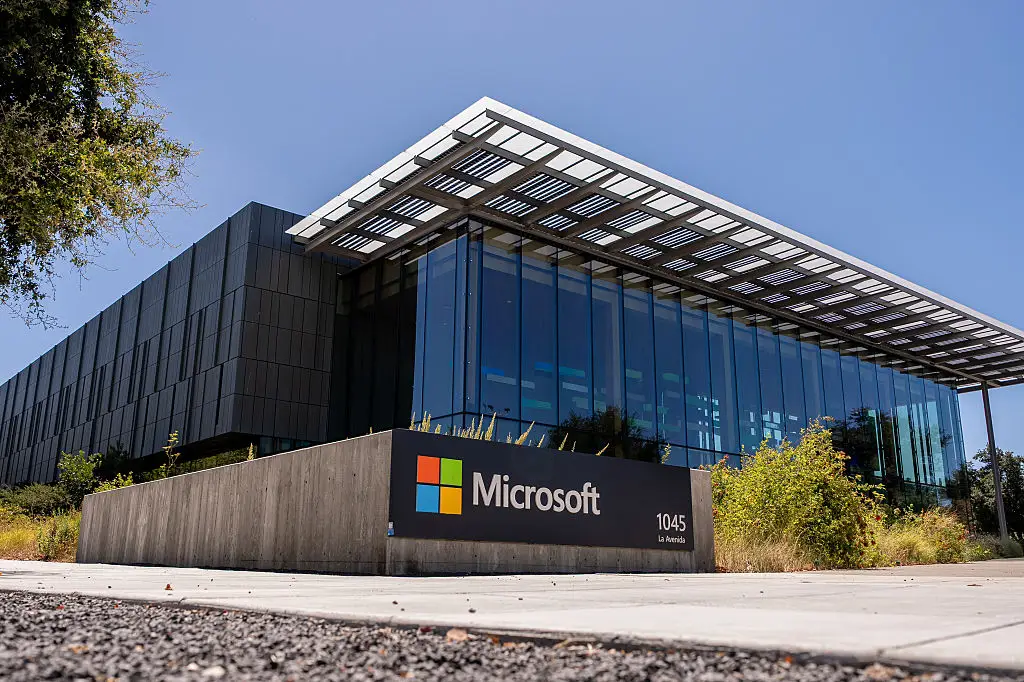
The USA is a key area for Microsoft's operations, namely because its headquarters are there. The company operates over 300 Azure data centers across 60 active cloud regions and more than 35 countries, but again, America is considered a hub as it accounts for roughly 260 operational, under-construction, or planned facilities.
Advert
America is important because the outage was first reported there on November 12, and at its peak, there were 130,000 points of problems. More than 97,000 reports were for Outlook alone, showing how much we rely on the email service.
In the immediate aftermath, many Americans were unable to complete their working day, which is an issue that's rolled on into November 13. US industrial technology company Workhorse Group postponed its quarterly earnings conference call because of the outage,
We used AI to predict what kind of losses the U.S. economy could incur, and assuming that workers were paid $40 per hour, 10 million workers being affected for just four hours would equate to $1.6 billion.
Going with that math, it's already well over $18.4 billion.
Speaking to ABC News, RSM Australia Risk Advisory partner Ashwin Pal suggested that the cost to professional businesses like lawyers and accountants could be hundreds of thousands of dollars an hour: "It's not just the initial downtime, it's more actually about then the catch up effort because that costs money.
"Because now when things do normalise, you're going to have to spend money to actually catch up because of all the backlog."
This has supposedly been amplified by 3.9 million businesses around the world using the Microsoft suite, which might not have backup systems.
Using the 2024 CrowdStrike Outage, risk firm Parametrix claims that incident cost Fortune 500 companies a whopping $5.4 billion.
How much money could Microsoft lose?

In terms of Microsoft itself, it’s apparently already feeling the fallout of investor confidence.
Following the outage, shares fell almost 2% at the start of November 13, so using a market value of approximately $3.88 trillion, that already works out to $77.6 billion.
Liam Jones from the Australian Chamber of Commerce & Industry also said the outage might lead to businesses reconsidering using Microsoft, which could have a knock-on effect on its financials: "Businesses are constantly assessing which providers are going to give them the security and the reliability that they need...This is a reminder of just the increasingly digital nature of the modern economy and disruptions like this can occur."
Microsoft might also be held financially liable for losses, but it's not as simple as companies 'suing' over lost time and money. The company could be sued over negligence if it can be proved that Microsoft's internal processes caused avoidable damage, a potential breach of contract if it failed to meet commitments, financial damages if companies can establish a legally recoverable loss, and there could also be regulatory scrutiny over Microsoft's obligations.
Microsoft has some wiggle room thanks to its Services Agreement, with service-level agreements typically providing business customers with credits instead of financial reimbursement over lost sales and profits.
The Service Agreement for the USA specifically states that any basis for recovering damages is "up to an amount equal to your Services fee for the month during which the loss or breach occurred (or up to $10.00 if the Services are free)." It clarifies: "You can't recover any other damages or losses, including direct, consequential, lost profits, special, indirect, incidental, or punitive."
The CrowdStrike incident led to Delta Air Lines claiming $550 million in losses, while the Microsoft outage could gain similar traction.
Still, a strong case against Microsoft would require businesses being able to prove that it knew about a serious technical vulnerability and failed to take reasonable steps to prevent the outage. Financial losses would also need to be proved, alongside proof that contracts don't exclude or cap those losses.
Even though the November 2026 outage could end up costing Microsoft a not-so-small fortune, its biggest financial worry right now appears to be the stock market.