Massive underwater volcano expected to erupt this year after scientists spot worrying sign


Scientists now claim that a massive underwater volcano is due to erupt this year.
That's right, it's not just supposed mystics like Nostradamus and Baba Vanga predicting a rough 2025,
We've all seen the devastating effects of what volcanic eruptions can do, but from the horrors of Pompei to 2010's Icelandic volcano grounding flights, we know volcanoes aren't just ancient dangers.
More recently, 2022's Hunga Tonga–Hunga Haʻapai eruption in the South Pacific has been held as the worst of the 21st century, causing a massive Tsunami, thought to be over 100 times more powerful than the atomic bomb dropped on Hiroshima, and was heard over 10,000 km away in Alaska.
Advert
The most worrying thing is that the Hunga Tonga–Hunga Haʻapai eruption was a submarine volcano, proving the power of what these underwater giants can do.
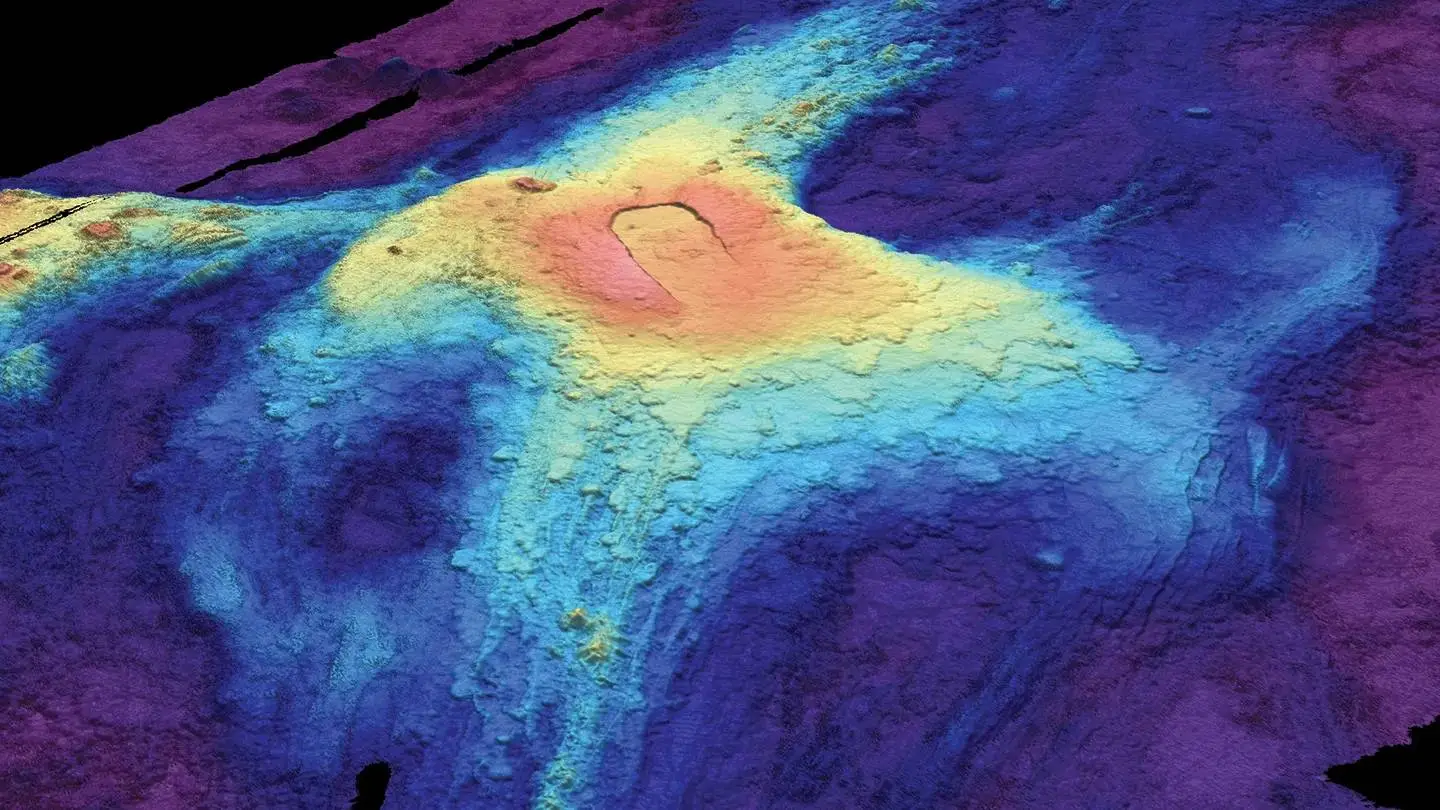
Not to be all doom and gloom, but scientists predict 2025 could be a bad year for the Axial Seamount volcano.
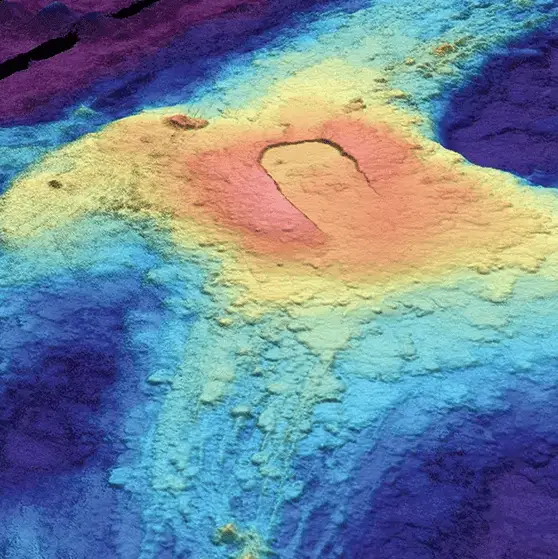
Located around 470 km off the coast of Oregon, the Axial Seamount measures around 1,100 meters tall and has a 2 km diameter.
Scientists report that the volcano has swollen to a similar height to what it was during its last eruption in 20215.
All signs point to magma buildup beneath the seafloor, with increasing pressure.
William Chadwick, a geologist at Oregon State University, reported these findings at December 2024's annual meeting of the American Geophysical Union, noting how the Axial Seamount's surface had climbed to 95% of what it was before it blew its top in 2015.
Although the Axial Seamount isn't thought to pose much threat to humanity, its closeness to land means scientists established the New Millennium Observatory nearby as the world's first underwater volcano observatory.
Researchers have installed advanced instruments to collect real-time data and hope to more accurately predict eruptions.
Hyping these more advanced methods, Rebecca Carey, a volcanologist at Australia's University of Tasmania, said via Science News): "Detecting early warning signals offers the exciting opportunity to deploy remotely operated vehicles to catch the eruption occurring."
Emphasizing the importance of the Axial Seamount as a site, Valerio Acocella, a volcanologist at Rome's Roma Tre University, added: "Axial Seamount is a good place to test ideas about volcanic forecasting.
"There is always the risk that a volcano will follow a pattern we haven't seen before and do something unexpected."
Stepping even further into modern technology, researchers are using artificial intelligence to study data from 2015's eruption and pinpoint patterns that could help predict future eruptions. Acocella concluded: "Whatever happens in 2025 won't change the world of eruption forecasting. We'll understand it better, and that will help us understand other volcanoes too."
As volcanoes are notoriously hard to predict (and even then, are only really accurate a few days in advance), foreshadowing the Axial Seamount's potential eruption so far ahead of time could be revolutionary for the volcano community.