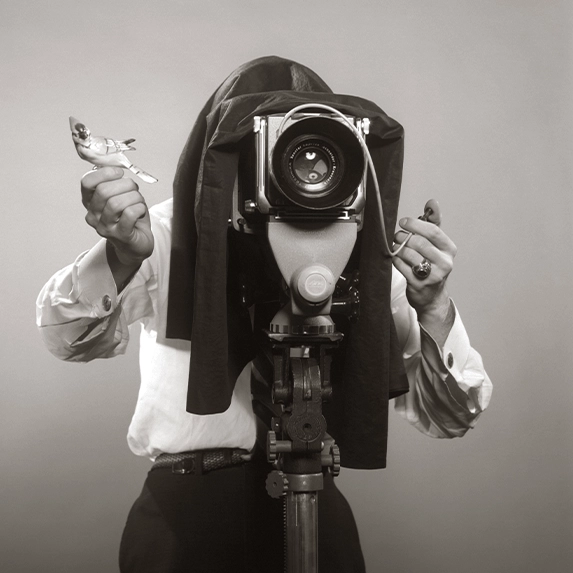
The groundbreaking story behind the first photograph ever taken and how it changed history forever


You might not have ever actually seen the first photograph ever taken - unlike some other major technological breakthroughs (we're looking at you, iPhone), it hasn't necessarily become an iconic image that everyone can easily recognise.
That doesn't make the story of how it was taken and developed any less remarkable, though. The first image that we can consider a photograph was taken by a French inventor called Joseph Nicéphore Niépce, in the 1820s.
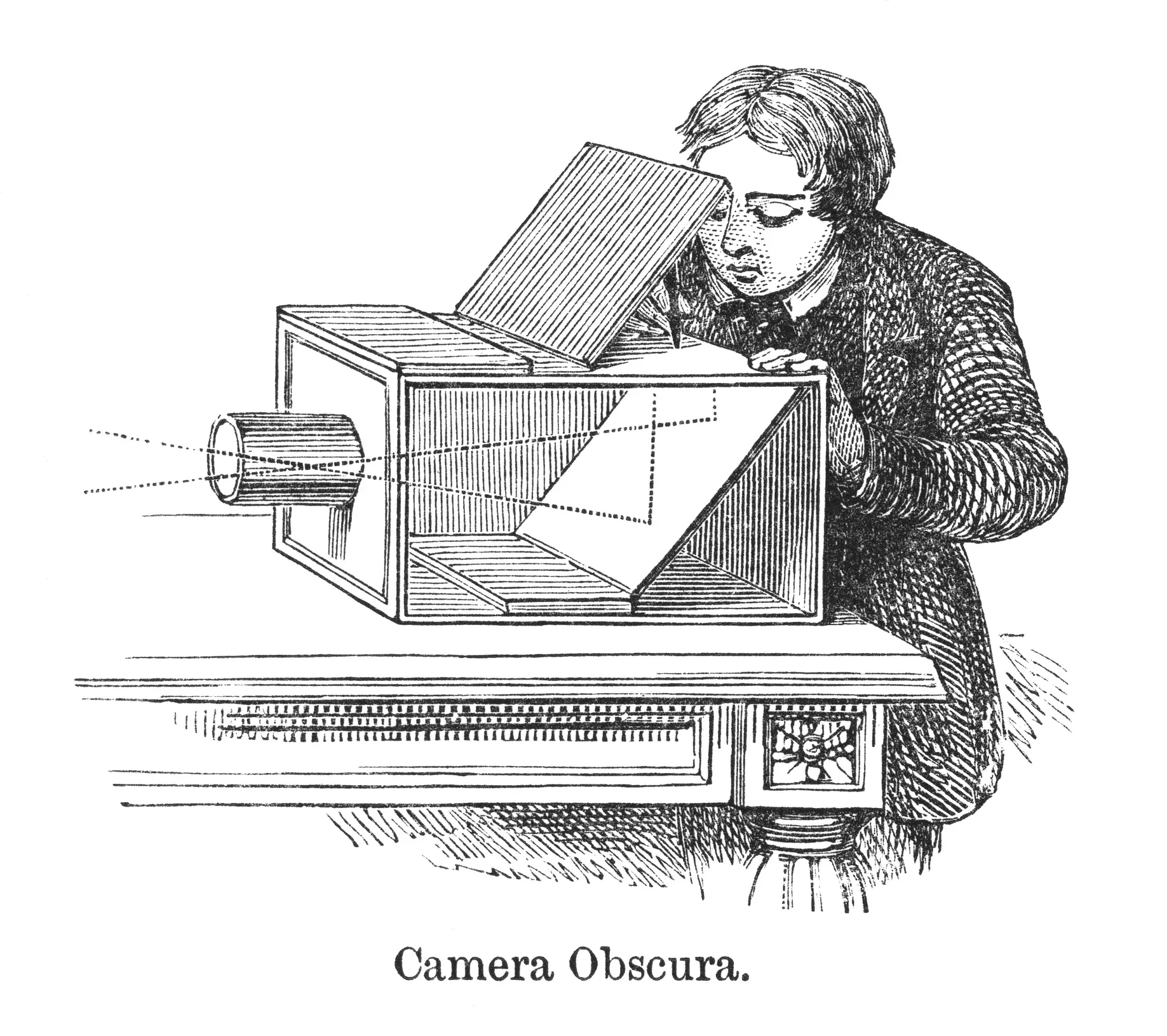
It used a technique he'd been developing called heliography, and was taken with the help of a camera obscura - that's a darkened chamber where a small lens can project an image from the outside world onto a surface.
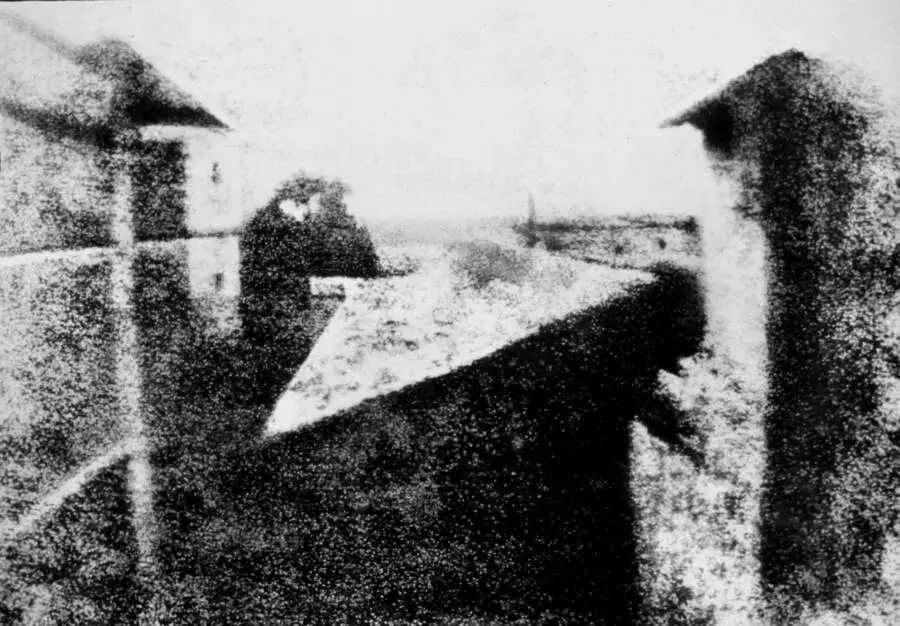
The photo has a really straightforward title: 'View from the Window at Le Gras', and it shows just that, albeit blurrily, with a view of some buildings and a sloping roof outside.
Advert
Born in 1765, Niépce spent much of his adult life developing a process to capture images. He created a system called héliographie (heliography), which used the Sun's rays to make images on paper coated with silver chloride, but they were incredibly fragile and couldn't withstand almost any light at all, making them really impermanent.
After much more experimentation, he came up with a solution made from mixed-up bitumen and lavender oil, which could be coated on a pewter plate.
When this was slid into a camera obscura, and then left in one spot to develop an image of what the lens was pointed at, a reaction caused the pewter plate to store some light information.
If you look at the original plate it's really hard to see almost any detail at all other than one big blocky shape at the bottom, but careful analysis and development has proved that it was indeed a successful photograph, even if it was blurry and small.
Niépce apparently already had the sense at this point that he was developing something that would prove to be a transformative technology, and he continued to work on photographic experiments after this breakthrough.
In fact, in 1829 he worked with Louis Daguerre, who would develop another hugely famous photographic technique, the daguerreotype, a few years later (after Niépce's death).
That technique was much more durable and could capture a lot more detail, but it was built on the foundations of Niépce's work since it also involved exposing chemical-coated plates to the light.
So, these humble origins and this incredibly simple photo were indeed widely credited as being the point where photography really took off. If he could see us all taking photos with our phones without even stopping to think, Niépce would probably have a heart attack.