
Country with 1.4 billion citizens warned to brace for violence as it tries to ban pornography


The world's largest country could soon have to deal with a number of violent protests, as the nation's government gears up to implement a controversial ban on pornography.
While pornography and adult content has been around for decades, if not centuries in some form, it has seemingly become a serious problem for governments across the globe that seek to regulate its consumption.
What was previously relegated to content that only adults could legally purchase and consume is now part of the digital 'wild west' following the widespread adoption of the internet, and some of the most-visited URLs across the internet are porn sites.
Many local and national governments have now implemented controversial age verification checks that prevent anyone from accessing blocked sites unless they can prove that they are over the age of 18, and the world's most populated country could face violence if plans to block pornography are carried through.
Advert
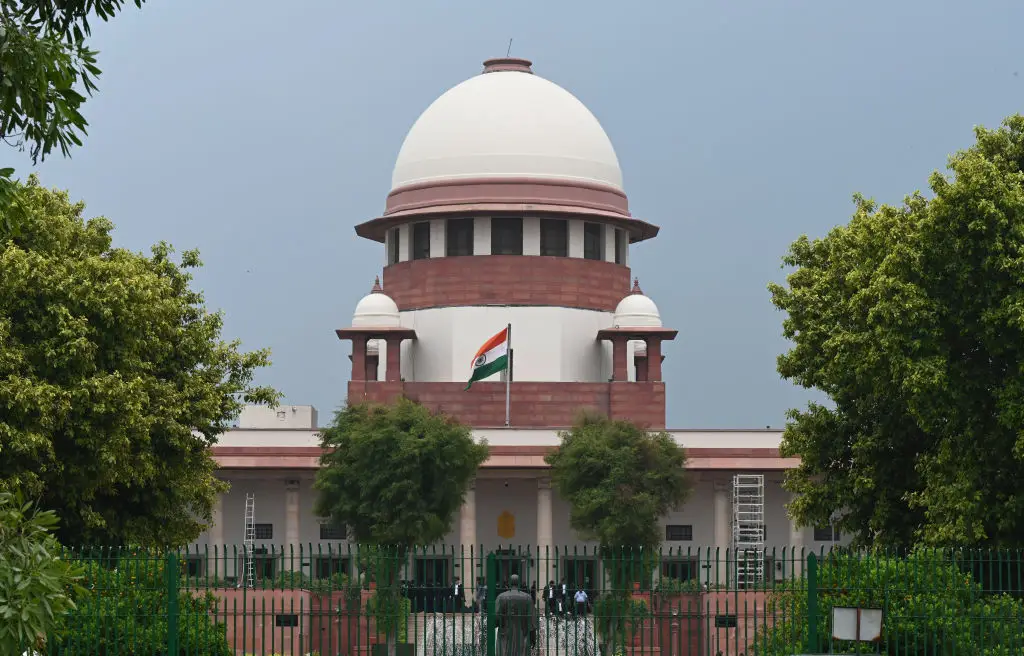
As reported by NDTV, a petitioner has issued a plea to the Supreme Court of India to implement a widespread ban on pornography across the nation, citing the increase of those under the legal age engaging in such content.
"After digitalization, everyone is connected digitally [...] who is educated or uneducated is immaterial," explained the petitioner, adding that "everything is available in one click."
They specifically wish to ban content for underaged users – presumably through similar age verification blocks that we have seen elsewhere – and also to make it illegal to watch said content in public spaces.
"During Covid, schoolchildren used digital devices. In these devices there is no mechanism to retrain watching of pornography," the petitioner continued, and that's one argument that major site Pornhub has made, insisting that age verification checks are only a temporary hurdle and system-wide blocks for devices aimed at children would be far more effective.

However, the Supreme Court has now asserted on Monday that it is not inclined to entertain the plea of the petitioner, referencing the recent violent uprising in Nepal as the primary motivation for the decision.
"Look what happened in Nepal over a ban," they argued, and it's not hard to see why they might be cautious.
However, the violent protests in Nepal were motivated by rules that were far more extreme, as numerous social media platforms including Facebook, YouTube, and WhatsApp were banned by the government, which understandably would have a far greater impact than simply banning pornography.
The petitioner remains dedicated to their cause though, arguing that over 200 million pornographic videos – including those depicting children – are available for sale in India, and that the government has the power under Section 69A of the Information Technology Act to ban it all.
"There is no effective law to deal with this issue," the petitioner urged, "and watching pornography adversely affects persons as well as society, especially growing minds aged between 13 and 18."