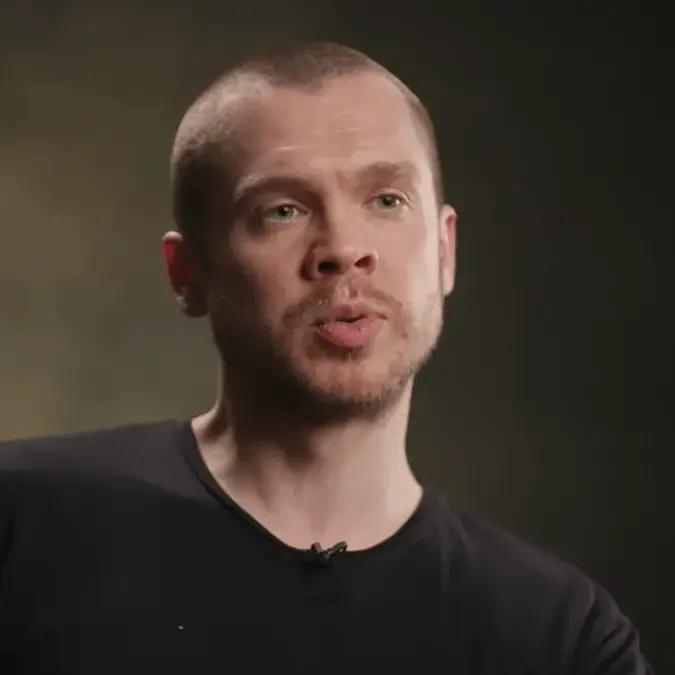
Man dubbed 'world’s best trader’ bagged $35,000,000 after making this bet about the economy


You can make a lot of money by betting on the right things, and one man dubbed by many as the 'world's best trader' learned that when he bagged over $35,000,000 in a landmark bid on the economy.
Trading and investments are a route for many into riches, as betting smart on one company soaring into success can earn you a staggering around of money if you make the right moves.
Of course, not every stock or financial move is successful and often there's only a handful of decisions that will really catapult you into jaw-dropping fortunes, but those that make these decisions regularly often earn themselves powerful positions among the world's biggest financial institutions.
That was exactly the case for Gary Stevenson, who considers himself to be the 'world's best trader' after securing a leading role at Citibank, yet the path to greatness wasn't always clear for him.
Advert
As shared by LADBible, Stevenson was expelled from school at 16-years-old, yet was determined not to give up and managed to fight his way into a place at the London School of Economics (LSE).

While his peers with privileged and wealthy backgrounds secure major internships at university, Stevenson decided to chance his luck with a Citibank recruitment contest known as the 'Trading Game'.
He managed to win this, which he claims was down to reading his opponents and controlling the price, and he got his start at the company that would eventually lead him to become a millionaire in his early 20s.
After meeting with one of the company's top economists in early 2011, Stevenson realized that both governments and middle class families were increasingly sinking into debt, which he believed to be a result of the economy's fragility at the time.
As a result of this, he made a bold yet consequential bet that rates would remain closer to zero longer than the market had indicated, earning his employer $35,000,000 in the process and allowing him to net a staggering $1,000,000 payout on a personal level.

While this remains a major success and catapulted him into wealth, it left him with a moral conundrum that eventually saw him leave the investment world altogether.
He felt conflicted by the fact that he'd earned both himself and his employer millions through the inequality and financial struggle of others, leaving millions of people worse off as a result, and has since warned that wealth isn't as easily attainable as it might seem.
Stevenson now campaigns for higher wealth taxes, alongside general activism through his social media channels and public appearances, using his own experience to illuminate others to the reality of those actually making money.