
Microsoft champions AI diagnosis tool that's apparently four times more accurate than a human doctor


We know that some doctors don't exactly have a great bedside manner, but moving forward, your trips to the doctor might look a little different. As artificial intelligence continues to find new ways into our lives, it seems that customer service representatives, accountants, and journalists might not be the only ones put out of a job.
As one of the Big Five (Alphabet, Amazon, Apple, Meta, and Microsoft), the latter is also the fourth-biggest company in the world, as it boasts a current $3.87 trillion market cap.
Bill Gates and Paul Allen’s tiny acorn has grown into a massive oak tree with branches of computing, gaming, security, AI, and more. Now, Microsoft claims it has a new AI diagnosis tool that could run rings around your standard doctor in the health industry.
What is Microsoft's new AI diagnosis tool?

Speaking to The Verge, Microsoft AI CEO Mustafa Suleyman touted the Microsoft AI Diagnostic Orchestrator (MAI-DxO) as being up to four times more accurate than a flesh-and-blood doctor. Taking 300 highly unusual and confusing medical dilemmas reports that were published in The New England Journal of Medicine, the new AI system reportedly hit a diagnostic accuracy of around 83%. This is compared to about 36% for generalist physicians who used references, and 22% working without them. For those working without them, this effectively makes the AI four times more accurate.
Advert
Results have been published in Science, noting how MAI-DxO again outperformed generalist physicians in emergency department admissions. This was a narrower margin of 80.3% to 46.8%, although AI was also said to reach its diagnosis at a lower estimated cost than traditional doctors.
The impressive statistics don't end there, as powered by OpenAI's GPT-5, MAI-DxO also outperformed frontier AI models that are operating on their own.
Even though there's the caveat that the peer-reviewed paper doesn't include newer models like GPT-6 Astra, Meta’s Muse Wonder Full, Google’s Gemini 4 Argon, and Anthropic’s Opus 5.5, it's still a big win.
What's next for MAI-DxO?
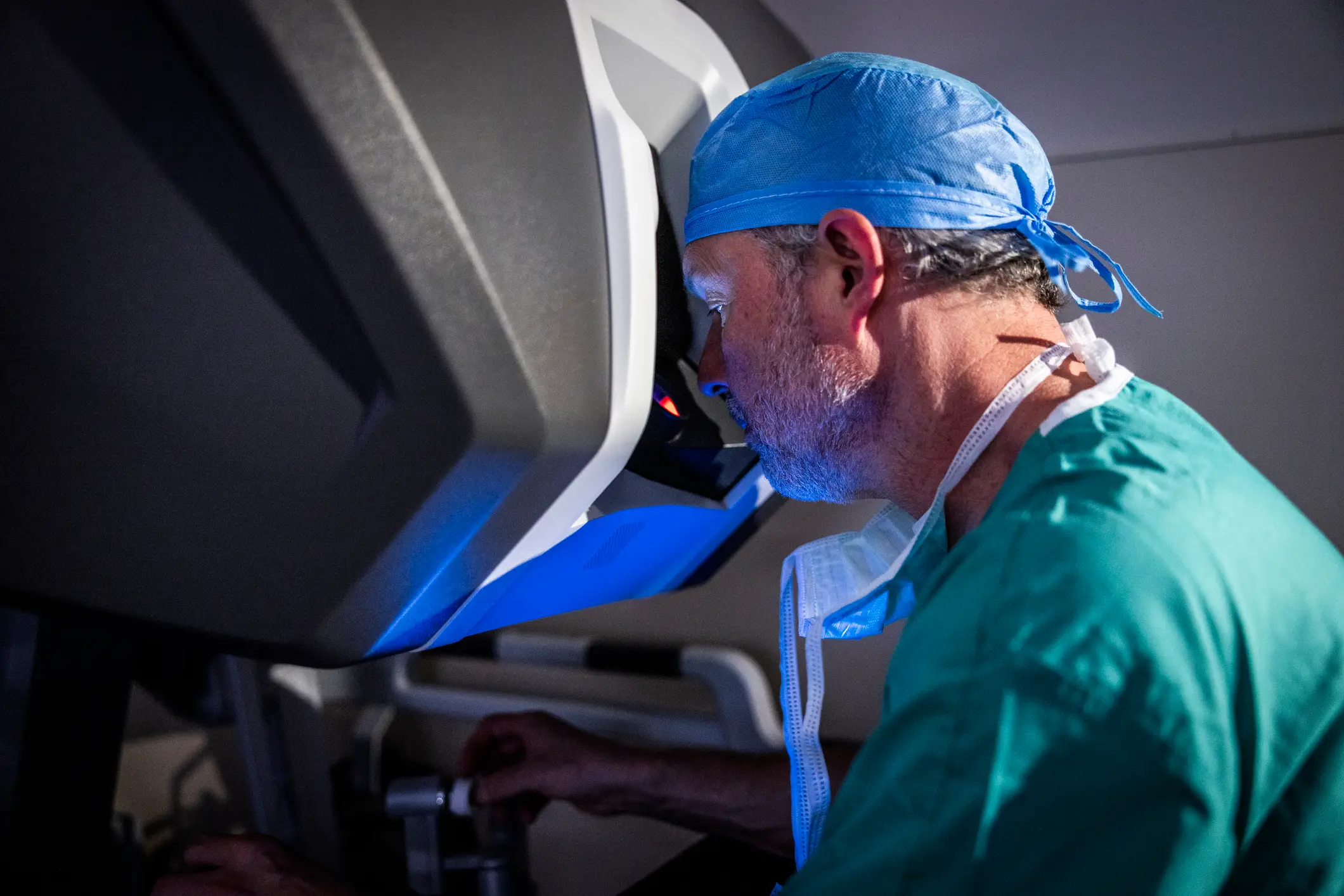
While Suleyman has cheered the first round of testing, we're far from seeing hospitals working like a supermarket self-checkout. Reminding us that it's only been used on historical cases instead of a live clinical setting, he reiterated: "It needs clinical validation. That is a leap, but this is a major milestone along that journey.”
That will continue as Microsoft AI health lead Dr. Dominic King explained plans for MAI-DxO to be tested in the live setting of Boston’s Beth Israel Deaconess Medical Center. There's no timeline on when it could happen, although King thinks it's likely to "get underway in the next couple of months.”
Microsoft has grand ambitions to develop so-called "medical superintelligence" when AI can outperform human-led healthcare systems.
The Verge notes this is artificial superintelligence as a concept and not President Donald Trump demanding AI be renamed superintelligence.
Microsoft is keeping its cards close to its chest when it comes to commercializing tech like this, although its digital tools already make it part of the healthcare market.
King is adamant that high regulatory and compliance requirements mean a responsible rollout would be needed.
Still, Suleyman continues to look ahead as he concluded: "Next year we’re going to see extremely impressive deployments of intelligent systems in production. I think that this is just going to change the way care is delivered in a big way.”
While predicting "something that is indistinguishable from human performance on medical superintelligence in the next couple of years,” Suleyman is steadfast in his belief that human clinicians will always have a central role in patient care.