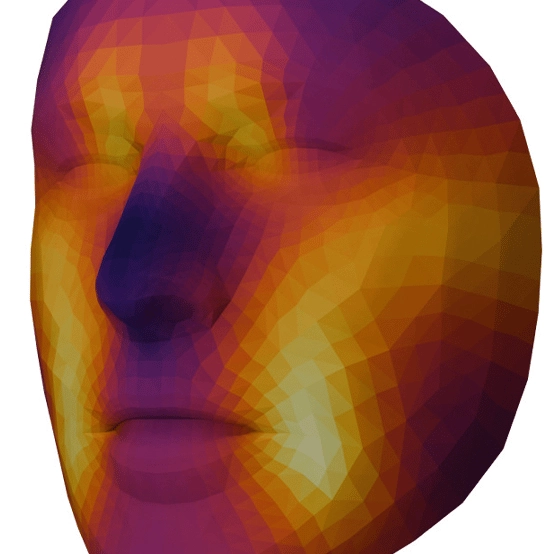
AI tool predicts how long you have left to live from one photo of your face


Scientists have developed a new way to figure out just how long you could have left to live from a single image of your face with the help of artificial intelligence.
The new technology has been trained to detect subtle signs in a person’s face that can indicate just how ill they are, and predict their chances of surviving cancer, according to researchers out of Mass General Brigham based in the US.
The study, which was published in the Lancet Digital Health, details how the AI system was trained using 35,000 photographs of patients with cancer as well as millions of healthy people.
The paper explains: “Facial appearance offers a non-invasive window into health. We built Foundation Artificial Intelligence for Health Recognition-Face (FAHR-Face), a foundation model trained on more than 40 million facial photographs and fine-tuned it for two distinct tasks: biological age estimation (FAHR-FaceAge) and survival prediction (FAHR-FaceSurvival).”
Advert
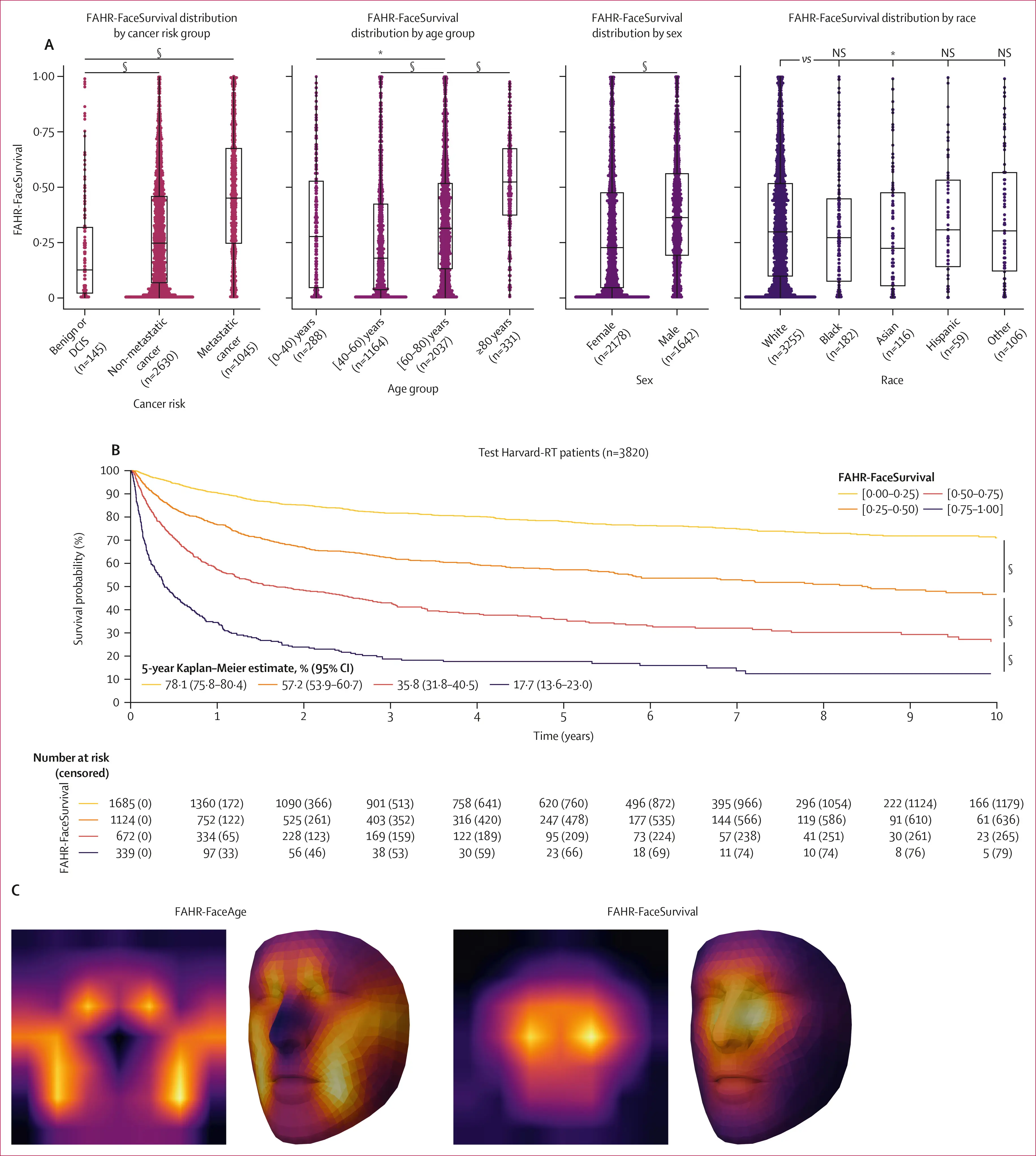
According to the experts, the clues are in the eyes, with the AI tool reportedly able to provide a survival estimate from the appearance of the area under the eyes and around the bridge of the nose.
This area is considered to be the most vital part of the face to provide an analysis on how the longevity of the patient.
Mortality could be detected by a patient’s eyes
The study continues: “Our findings suggest that facial features encode both physiological ageing and imminent mortality risk, showing that consumer-grade photographs carry multiple physiological health signals. Despite their shared backbone, FAHR-FaceAge and FAHR-FaceSurvival offer non-overlapping prognostic information, as supported by attention mapping and multivariate analyses. Attention maps showed their independence; FAHR-FaceSurvival concentrates on the area under the eyes and around the nose, which are regions of the face linked with dying, whereas FAHR-FaceAge maps to nasolabial folds and temples, which are regions associated with ageing.
“Furthermore, the clinical use cases are complementary as well: FAD, given in years, is intuitive and can track ageing or be incorporated into clinical risk stratification tools, whereas FAHR-FaceSurvival might be best suited for near-term mortality prediction.”
One of the most fascinating findings showed that among those cancer patients who were being treated with radiotherapy, those who were detected by FAHR-FaceAge as looking five or more years older than their actual age had a 21% higher risk of death during the four years following than the rest of the group, while those who looked five or more years younger saw a 17% lower risk.
The study suggests that people's biological age is linked much closer to physical health than we once thought, and could be an indicator of how likely they are to survive certain treatments like radiotherapy.
According to the BBC, Dr Raymond Mak, who is from Mass General Brigham in Boston, Massachusetts, and also the lead researcher in the study, shared: “As the population ages, physicians need better ways to estimate physical reserve and frailty before recommending intensive treatments such as radiation, surgery or systemic therapy.
“Our goal is to make face photograph-based health assessment more quantitative, consistent and scalable so it can support personalized treatment decisions rather than replace physician judgment.”
Despite the progress in the innovation, the study concludes that insight will need to be refined in further prospective trials ‘that test their use alongside standard prognostic models’.
The incredible breakthrough could change the way doctors assess patients and decide on a treatment plan for each individual.
Apply to be included in FaceAge's research
FaceAge is still taking participants in their continued studies, and you can apply to take part to receive your own estimation here: www.faceage.bwh.harvard.edu/