
Why we're finally approaching the end of Google Search, changing the internet forever


Google has been the internet's welcome mat for over two decades now, yet that is soon set to change as the tech giant transforms its search engine dominance to favor AI going forward.
It's been impossible to ignore the growing influence of AI on Google Search over the past few years, as everything from the AI Overviews to the introduction of a dedicated 'AI Mode' has made it increasingly difficult for internet users to avoid the rapidly evolving tech.
AI is ultimately Google's end goal, however, as it plans to effectively eradicate its search engine as we know it in favor of an LLM-driven model that effectively cuts out the middle man.
This new way of interacting with content on the way is creeping rapidly into how you use Google Search, and it likely won't be long until the engine is gone completely with its replacement spelling danger for websites and users alike.
How will Google Search evolve in the near future?
Google Search has functioned as the internet's 'engine' of sorts for as long as many have known it, and while social media has become an increasingly dominant force over the last decade and a half, most people still interact with Google and navigate themselves through it on a daily basis.
Advert
If you have a question, want to find a website, or need to go pretty much anywhere on the internet you head to Google first — so much so that most people don't think about it as its own site and see it more as a landing or home page.
Google wants to change that though — but not in the way you might expect. Instead of using it as a launching point, Google wants users to start and end on its service, keeping all of the engagement while still outsourcing the content.
Functioning in a similar manner to other AI chatbots like OpenAI's ChatGPT or Anthropic's Claude, Google wants you to 'search' by chatting with its LLM tools, receiving hypothetically the same answers as you would before but without having to go onto a separate website.
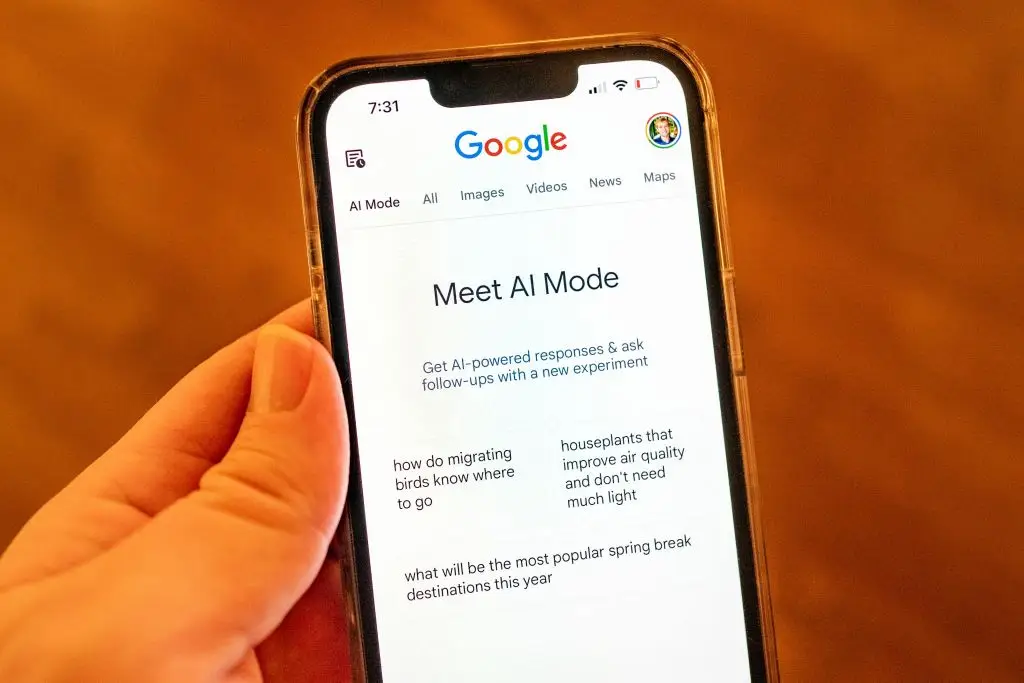
There are benefits in theory to this practice, as not only would the AI cut out all of the 'unnecessary' information and collate data from several different sources, but it would also allow for follow-up questions and direct interaction that would be impossible on a simple web page.
However, that is a best-case scenario that still doesn't account for the impact that it is guaranteed to have on pretty much every website on the internet as we know it — and it'll likely be catastrophic for the future of the internet.
Why is this bad for websites?
Content is produced and websites stay alive on the internet through traffic, as while an increasing number of sites – especially in legacy media – are relying on separate subscription fees to function, most get their revenue through ads, which are subsequently ran through Google.
If Google cuts out the 'middle man' of websites altogether, however, that money earned from those clicks is removed completely for websites that either solely or predominantly rely on search to reach users.
While that's fine for Google in the short-term, as the information will keep being produced for a brief period of time, that will soon change as websites can no longer afford to pay staff to write more content, and suddenly there will be far less for AI models to actually draw from making more up-to-date answers harder to source.

As per The Ringer, Roger Lynch – the CEO behind mass media company Condé Nast – recently admitted when speaking to TBPN that websites should now assume that Google Search simply won't exist going forward, noting that "you have to have your businesses planned as if search is zero."
There are ways, of course, that you can engineer your business to move away from a reliance on search, but this is often far easier said than done – especially for smaller sites – and it'll likely lead to the shrinking of media as a whole in response.
The propensity of AI to hallucinate and effectively make up information to appease a question that it can't answer is also a frightening prospect in lieu of a rapid reduction of available information, and users won't just be met with lacking responses but advice or data that's potentially harmful.