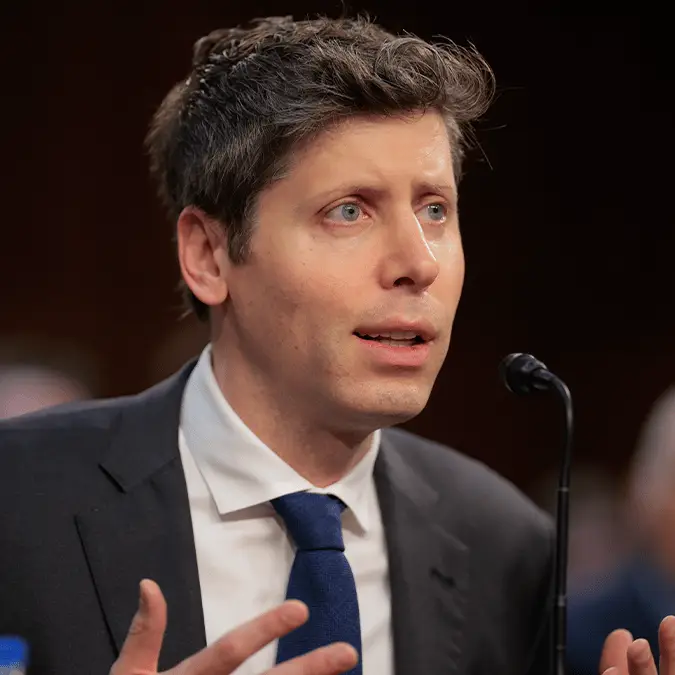
OpenAI ordered to pay damages as court rules ChatGPT violated copyright law


OpenAI has been ordered to pay damages after a court in Germany ruled that its chatbot ChatGPT violated German copyright laws.
The Munich regional court ruled in favour of the German music performance rights organization GEMA which manages the copyright usage rights for musicians, composers, lyricists, and publishers.
GEMA, which has around 100,000 members, claimed that ChatGPT collected protected lyrics by popular artists to ‘learn from them’.
It filed a case against OpenAI in November 2024 which focused on around nine of well-known German hit songs which were used by ChatGPT to improve its language capabilities. As of late 2025, the chatbot has approximately 800 million weekly active users, most of whom will know that it works by asking questions (or prompts) and receiving an answer that resembles human language.
Advert

The songs in the case including Herbert Grönemeyer’s ‘Männer’ (Men), and Helene Fischer’s ‘Atemlos Durch die Nacht’ (Breathless Through the Night). GEMA showed that ChatGPT can repeat song lyrics from famous artists when asked simple questions. The court decided that doing this requires a proper license. Because of that, OpenAI was found to have broken copyright laws in Germany.
Following the ruling, the presiding judge has ordered OpenAI to pay undisclosed damages for using copyrighted content without permission.
Kai Welp, the legal advisor for GEMA, said the organisation hopes to negotiate with OpenAI on how the copyright holders could be compensated.
GEMA welcomed the court’s decision, calling it, “the first landmark AI ruling in Europe”. It said the ruling could have implications for other types of artistry.
Tobias Holzmüller, GEMA’s chief executive, said: “The internet is not some kind of self-service buffet, and creative achievements by human beings are not simply templates for use free of charge.
“Today, we have set a precedent that both protects and clarifies the rights of creative copyright holders: operators of AI tools such as ChatGPT must also comply with copyright law. Today, we successfully defended the livelihoods of music creators.”
OpenAI said that AI systems such as ChatGPT don’t store or contain training data; rather, they learn patterns from that data and use those patterns to generate new responses.
An OpenAI spokesperson said: “We disagree with the ruling and are considering next steps. The decision is for a limited set of lyrics and does not impact the millions of people, businesses, and developers in Germany that use our technology everyday. We respect the rights of creators and content owners and are having productive conversations with many organisations around the world, so that they can also benefit from the opportunities of this technology.”