5 jobs AI can't replace as expert reveals careers set to stand the test of time


With the expansion of artificial intelligence showing no signs of slowing down, it has also begun to transform the workplace in recent years, leading to many people questioning what the future of their careers could look like.
While the technology is becoming increasingly capable of taking on tasks once carried out by humans, one expert has shared his insight into which professions may be better equipped to stand the test of time against others.
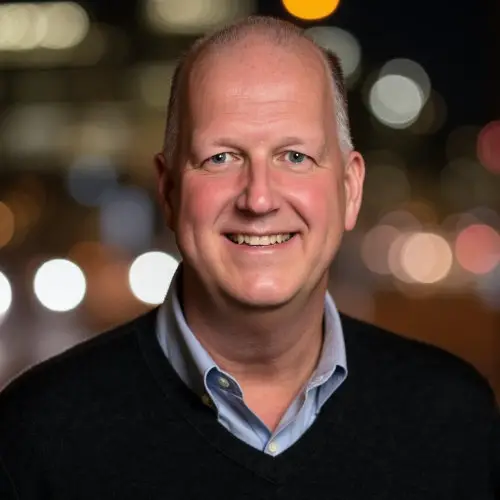
Bill Kasko, who is the founder and CEO of Frontline Source Group, has shared his beliefs that the answer to this common question lies beyond a job title and more in the responsibilities AI would need to take over.
Providing his expert insight on the matter exclusively with UNILAD Tech, Kasko revealed which jobs he considers to be AI-proof.
Advert
Cybersecurity analysts
The first role that Kasko does not think will get wiped out by AI is cybersecurity analyst, due to the complex nature of the role.
He explains: “Spotting unusual activity is one undertaking. Determining whether to shut down a critical system that may financially impact the workplace is another.
“It’s inevitable that AI will revolutionize the workings of cybersecurity, including automating some routine analysis. Specialists who grasp the business, explore unfamiliar dangers and give explanations to leadership have a strong foundation for the future.”
Mental health counsellors
Despite more and more people leaning on AI for their personal problem, Kasko doesn’t believe that human mental health counsellors will be swapped out for bots anytime soon.
The expert continues: “Context plays a huge role in a counselling session. AI tools offer black-and-white information that can underpin appointments, but it cannot assess risk, comprehend personal and complex patient history or adapt treatment to align with emotional wellbeing. It’s so easy for AI to misinterpret a situation; plus, sharing personal information also raises privacy concerns.”
Electricians
A more practical role that might be difficult for AI to emulate is that of an electrician. For Kasko, this comes down to safety as, while the technology might be able to troubleshoot a problem and formulate a plan, it’s unlikely to be able to manually carry out the task.
Kasko explains: “An AI tool might suggest what is causing an electrical fault, but someone still needs to establish whether that explanation is relevant to the building in front of them.
“The value of a human is being able to investigate, make safe decisions and physically solve problems; it is a combination that is difficult to automate”
Nurse practitioners
When it comes to healthcare, the expert reveals that nurse practitioners will still be needed in the future and, while AI has the potential to assist, it’s not likely to have the same bedside manner as a real person.
This is partly down to making the patient feel comfortable, according to Kasko, who says: “A patient may describe one symptom and then reveal something much more significant during a conversation when they grow to feel comfortable.
“Holding the experience to adapt questioning, analyze emotional behavior and body language and know when to escalate treatment are significant parts of the job.”

Physical therapists
It looks like physical therapists will be safe in their job roles too as it doesn’t appear to be a position that AI can take over.
While digital tools might be able to support rehabilitation and track exercises, it might not be able to adapt to specific injuries as well as a human can.
This is because ‘two people with the same injury can need very different support’ says Kasko.
He adds: “One may be struggling with pain, another with confidence, and another with an exercise that isn’t suitable for them. Recognizing the difference and adapting the treatment is where professional expertise matters.”