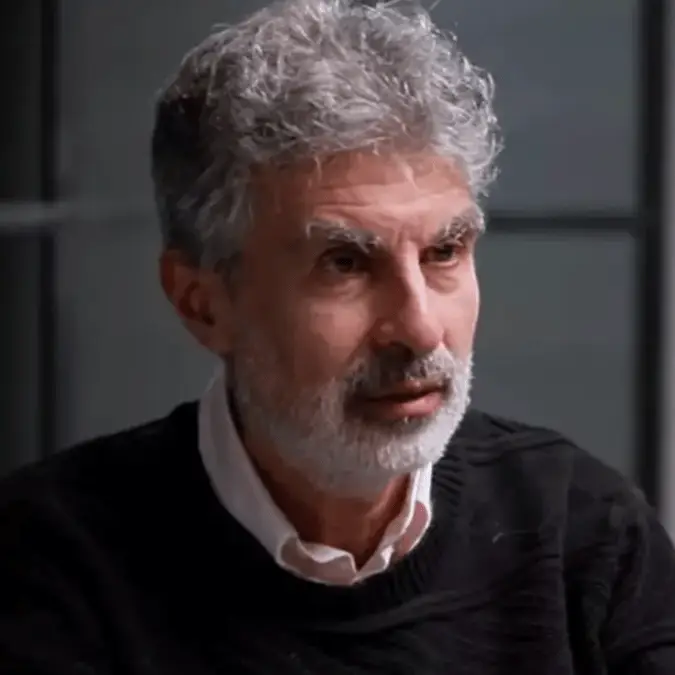
'AI Creator' has unnerving response when questioned about what jobs are safe from the new technology


An AI pioneer has a concerning response when asked what jobs are safe from the new technology.
There's a growing and rational fear that AI-related job losses are on the rise, and it feels like it's only a matter of time before it comes for ours.
Earlier this year, Microsoft identified 40 jobs that are safe from AI and another 40 as most at risk, while another report predicted that three million jobs could be completely wiped out by AI by 2035.
Dr. Roman Yampolskiy said current advancements would mean by 2027, it would 'make no sense to hire humans for most jobs'.
Advert
Other experts have outlined which roles have already become redundant with the rise of tools like ChatGPT and Grok, with even veteran doctors expressing concern about their careers as LLMs replicate knowledge that took decades to acquire.
Meanwhile, Amazon recently announced 14,000 job cuts as part of an AI-driven restructuring, and some reports suggest AI could impact up to 300 million full-time positions globally.
On the flip side, though, there's hope for technical roles as former Microsoft boss Bill Gates revealed the only three jobs he believes will survive the AI revolution and separately, the jobs that will remain '100% human' even in the AI transformation.
Either way, a major shift in job demand as technology takes over feels inevitable.
Now, Canadian computer scientist Yoshua Bengio has added to the conversation, discussing the jobs he reckons won't exist in a couple of years.

Bengio recently appeared on Steven Bartlett's Diary of a CEO podcast, where he painted a bleak picture of AI's impact on the job market.
"It's more a matter of time than 'is it happening or not'," he explained. "The cognitive jobs, the jobs you can do behind a keyboard."
Bengio added: "Robotics is still lagging, though we're seeing progress, so if you do a physical job as Geoff Hinton is often saying 'you should be a plumber' or something, it's gonna take more time. But I think it's only a temporary thing."
So even when we thought physical labour was safe from AI, the expert warned that 'robotics is lagging' behind AI right now, but 'it's going to happen' eventually.
Moreover, Bengio warned that the rise of the machines could create more serious problems, as he suggested, 'an AI with bad intentions could do a lot more damage if it can control robots in the physical world'.
"If it can only stay in the virtual world, it has to convince humans to do things that are bad," Bengio warned. "AI is getting better at persuasion in more and more studies, but it's even easier if it can just hack robots to do things that you know would be bad for us."
If Bengio's timeline is accurate, these positions could disappear within years, rather than decades.