
Driving instructor issues warning over dangerous reason you shouldn't turn your engine on whilst de-icing your car


Cold weather has been sweeping across the USA, and alongside NASA delaying its Artemis II launch, the National Weather Service (NWS) warned of 'life-threatening' conditions from Texas to New England.
At least two people died of hypothermia in Louisiana, while New York's Mayor Zohran Mamdani suggested that five deaths were linked to the bad weather. If that wasn't enough, the polar vortex is set to deliver the coldest temperatures of the winter, meaning we're being told to wrap up warm.
In the aftermath of some 800,000 homes being left without power, we're bracing for more chaos, although many will try to keep their lives as normal as possible. For those who still have to undertake their morning commute, they might not realize they're putting their lives in danger with a simple but deadly error.
There are few things more frustrating than having to get up early to de-ice the car, although most know by now you shouldn't be tempted to reach for the kettle unless you want a cracked windscreen.
Advert
Over on YouTube, Conquer Driving warns against trying to de-ice your car with the engine on. We're told that while it's 'common practise' for car owners to turn on the engine and de-misters in hopes of speeding up the process, we're actually exposing ourselves to harmful gases.
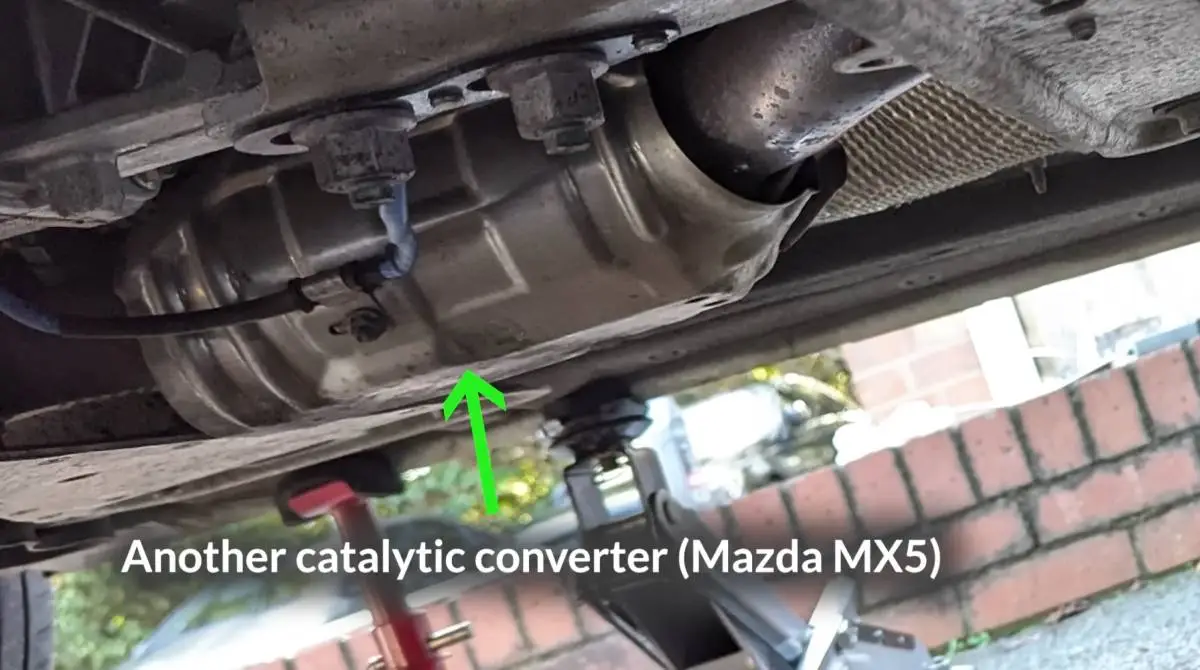
This is all to do with the catalytic converters on our exhausts. Although they're a clever piece of equipment that converts the engine's noxious gases to just a fraction of what they are inside our vehicles, they only start working when they're warm.
A catalytic converter has to typically reach 482°F before it starts working, and as you can imagine, that takes a while on those frosty winter mornings.
When you're actually driving, that process usually happens in about 30 seconds, but when you leave your car sitting on the driveway, it can take minutes for the catalytic converter to kick in.
Even though the temptation is to sit in your car as it de-ices because it's undoubtedly warmer than waiting outside, you could be inadvertently breathing in nitrogen oxides, hydrocarbons, and carbon monoxide.
While it's true that catalytic converters do contribute to carbon dioxide emissions, it argubly better than the gases being pumped out by our engines.
In terms of what's being done to our bodies, short-term exposure to nitrogen oxides can cause inflamed airways, make you more susceptible to respiratory infections, and exacerbate existing heart and lung conditions.
Elsewhere, the World Health Organization has classed hydrocarbons as a group 1 carcinogen, meaning they're linked to various cancers. If that wasn't enough, hydrocarbons are also known to cause respiratory problems. nervous system problems, and organ damage.
Finally, carbon monoxide can lead to brain damage and eventual death, but even a prolonged low dose is connected to everything from neuroscychological problems to cardiovascular issues.
We're especially told to watch out for having children in the car with you if trying to de-ice with the engine running, as their small size makes them even more likely to be damaged by breathing in these gases.
Replying to the video, one concerned motorist wrote: "Pre cat era in the 70s-90s we breathed in the exhaust every day in our cities and towns, it used to trigger my terrible migraines, it was even worse in the summer, not so much now."
Another added: "First time cleaning snow and ice off my car today and I had the engine running heating it up before setting off, thank you for a greatly timed video, I'll know better tomorrow!!"
A third said: "The best solution is to buy a windscreen cover and put it on when there is a risk of icing. But that requires a degree of planning ahead most people aren't able to achieve."