uniladtech homepage
  • News
    • Tech News
    • AI
  • Gadgets
    • Apple
    • iPhone
  • Gaming
    • Playstation
    • Xbox
  • Science
    • News
    • Space
  • Streaming
    • Netflix
  • Vehicles
    • Car News
  • Social Media
    • WhatsApp
    • YouTube
  • Advertise
  • Terms
  • Privacy & Cookies
  • LADbible Group
  • LADbible
  • UNILAD
  • SPORTbible
  • GAMINGbible
  • Tyla
  • FOODbible
  • License Our Content
  • About Us & Contact
  • Jobs
  • Latest
  • Archive
  • Topics A-Z
  • Authors
Facebook
Instagram
X
TikTok
Snapchat
WhatsApp
Submit Your Content
Unbelievable video shows nuclear bomb exploding in space
Home>Science>Space
Published 13:45 4 Dec 2023 GMT

Unbelievable video shows nuclear bomb exploding in space

You won't be able to believe your eyes.

Prudence Wade

Prudence Wade

google discoverFollow us on Google Discover
Featured Image Credit: Credit: YouTube/The Nevada National Security Site
Space

Advert

Advert

Advert

If you cast your mind back to the Oppenheimer craze of the summer, you may have seen what it looks like when a bomb goes off on Earth.

But what does it look like when nuclear weapons are sent to space?

We have a video from the 1960s showing just that, and it's hard to believe that it’s not from a movie.

Advert

In 1962, in response to the Soviets announcing a three-year ban on nuclear testing, the US military launched Operation Fishbowl and sent rockets into space to set off bombs.

The operation took place to evaluate the effects of high yield explosions and its destructiveness, and there were three tests involved - Bluegill, Urraca and Starfish - all launched from Johnston Island in the Pacific Ocean.

And we're able to see what these explosions actually looked like, thanks to video footage shared by The Nevada National Security Site.

The video opens with shots of the test site, and then shows a rocket going into space surrounded by a sea of smoke and fire.

The bomb explodes, resembling a mushroom cloud, and then we see a huge flash of light.
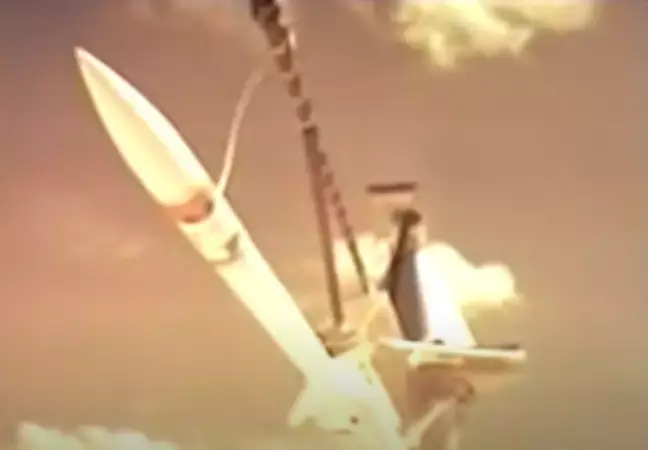
Operation Fishbowl sent nuclear bombs into space.
YouTube/The Nevada National Security Site

According to NASA, the absence of an atmosphere in spaces means that the blast would have disappeared completely, as there’s no air for the bomb to heat up.

But they also say that nuclear radiation won't suffer any reduction of force in space, meaning the range of significant dosages would be much greater than it would be on Earth.

The blast from the Starfish test, which used a 1.4 megaton bomb, was 500 times as powerful as the bomb that fell on Hiroshima.

It blew up at an altitude of 250 miles, and was even visible on Earth.

Greg Spriggs, who watched the test take place with his family, told National Geographic: “[My dad] was trying to figure out which direction to look. He thought there was going to be this little flicker, so he wanted to make sure everybody was going to see it.
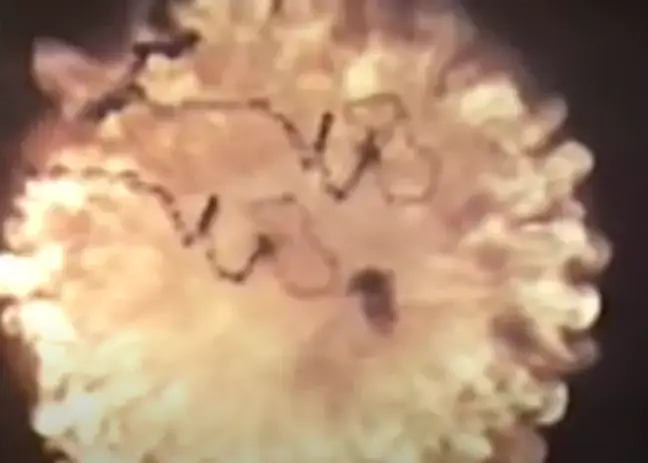
Starfish exploded at the height of the ISS.
YouTube/The Nevada National Security Site

"When that nuclear weapon went off, the whole sky lit up in every direction. It looked like noon."

The effects of the bomb lasted for as long as 15 minutes after it went off, and an artificial aura was visible all the way in New Zealand.

Just one year later, the US, the UK and the then-U.S.S.R. signed the Limited Nuclear Test Ban Treaty.

In 1968, it was even reported that some Starfish electrons had remained in the atmosphere for five years.

Choose your content:

8 hours ago
12 hours ago
a day ago
2 days ago
  • chuchart duangdaw / Getty
    8 hours ago

    Expert warns upcoming 'Super El Niño' could seriously impact temperatures for rest of summer

    The chances of the extreme weather event keep going up

    Science
  • Kate Tolo / X
    12 hours ago

    Biohacker Bryan Johnson's girlfriend reveals intense skincare routine thats de-aged her 30 year old skin to 21

    She's used countless methods to reduce the age of her skin

    Science
  • Erik Simonsen / Getty
    a day ago

    How to see asteroid as big as five cruise ships visible from Earth this Saturday

    1997 NC1 was discovered in 1997, and will come the closest to Earth in 400 years

    Science
  • NASA Johnson
    2 days ago

    Scientists sound the alarm over the environmental impact of NASA’s plan to deorbit the ISS

    Plans to dump the space station in the sea have been challenged by experts

    Science
  • Pornhub attempted to raise $3.4M to film extreme adult scene in space
  • NASA astronaut gives surprising answer to whether sex in space is really possible
  • Resurfaced video shows dead UFO-linked scientist detailing being 'roofied' for government secrets
  • Terrifyingly 'realistic' simulation shows what would really happen to your body if you died in space