uniladtech homepage
  • News
    • Tech News
    • AI
  • Gadgets
    • Apple
    • iPhone
  • Gaming
    • Playstation
    • Xbox
  • Science
    • News
    • Space
  • Streaming
    • Netflix
  • Vehicles
    • Car News
  • Social Media
    • WhatsApp
    • YouTube
  • Advertise
  • Terms
  • Privacy & Cookies
  • LADbible Group
  • LADbible
  • UNILAD
  • SPORTbible
  • GAMINGbible
  • Tyla
  • FOODbible
  • License Our Content
  • About Us & Contact
  • Jobs
  • Latest
  • Archive
  • Topics A-Z
  • Authors
Facebook
Instagram
X
TikTok
Snapchat
WhatsApp
Submit Your Content
Jeff Bezos and Elon Musk risk triggering nightmare Kessler Syndrome as billionaires enter space race

Home>Science>Space
Published 10:13 8 May 2025 GMT+1

Jeff Bezos and Elon Musk risk triggering nightmare Kessler Syndrome as billionaires enter space race

If we keep sending more and more spacecraft into space, then the space around Earth could become overcrowded

Rikki Loftus

Rikki Loftus

google discoverFollow us on Google Discover
Featured Image Credit: MARK GARLICK/SCIENCE PHOTO LIBRARY/Getty Images
SpaceX
Amazon
Elon Musk
Jeff Bezos
Space
Science

Advert

Advert

Advert

Both Jeff Bezos and Elon Musk are risking triggering the nightmare Kessler Syndrome as the billionaires enter into a space race.

While SpaceX’s Starlink is the largest satellite communications service, with over 7,000 satellites, it seems like there could soon be competition.

This is after Amazon announced its plans to send up over 3,000 satellites into orbit in order to create its own communications service.

Meanwhile, SpaceX intends to send up tens of thousands more in the coming years.

Advert

This could prove to be problematic as there are already thousands of satellites orbiting at 17,000 mph around Earth.
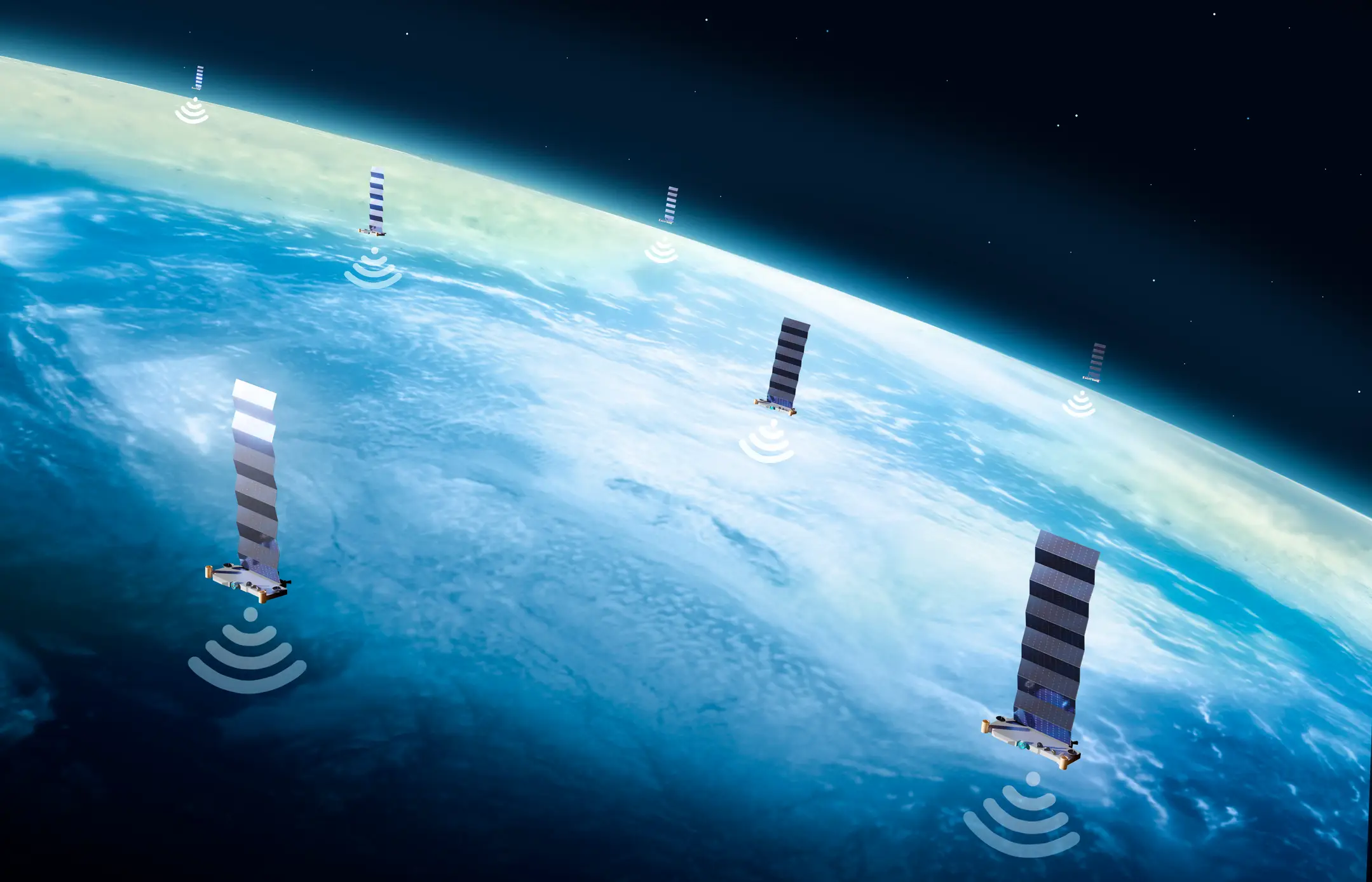
Elon Musk and Jeff Bezos have started their own space race (MARK GARLICK/SCIENCE PHOTO LIBRARY/Getty Images)

If too many objects end up in low orbit, it could trigger something known as the Kessler Syndrome.

The Kessler Syndrome is a scenario that was first thought up in 1978 by two NASA scientists - Donald Kessler and Burton Cour-Palais.

The theory is that, if we keep sending more and more spacecraft into space, then the space around Earth is going to become overcrowded.

Speaking to The Independent, Dr. John Crassidis, who is a professor at the University of Buffalo and works with NASA, the military, and other agencies to monitor space debris, said: “If we don’t do something to start correcting this problem, in 50 years Kessler Syndrome is going to be a reality and low-Earth orbit is going to be useless.”

NASA said: “Spent rockets, satellites and other space trash have accumulated in orbit increasing the likelihood of collision with other debris.

“Unfortunately, collisions create more debris creating a runaway chain reaction of collisions and more debris known as the Kessler Syndrome after the man who first proposed the issue, Donald Kessler.”

In the worst case scenario, a chain reaction of collisions could be caused that has the potential to destroy essential communications satellites around the planet.
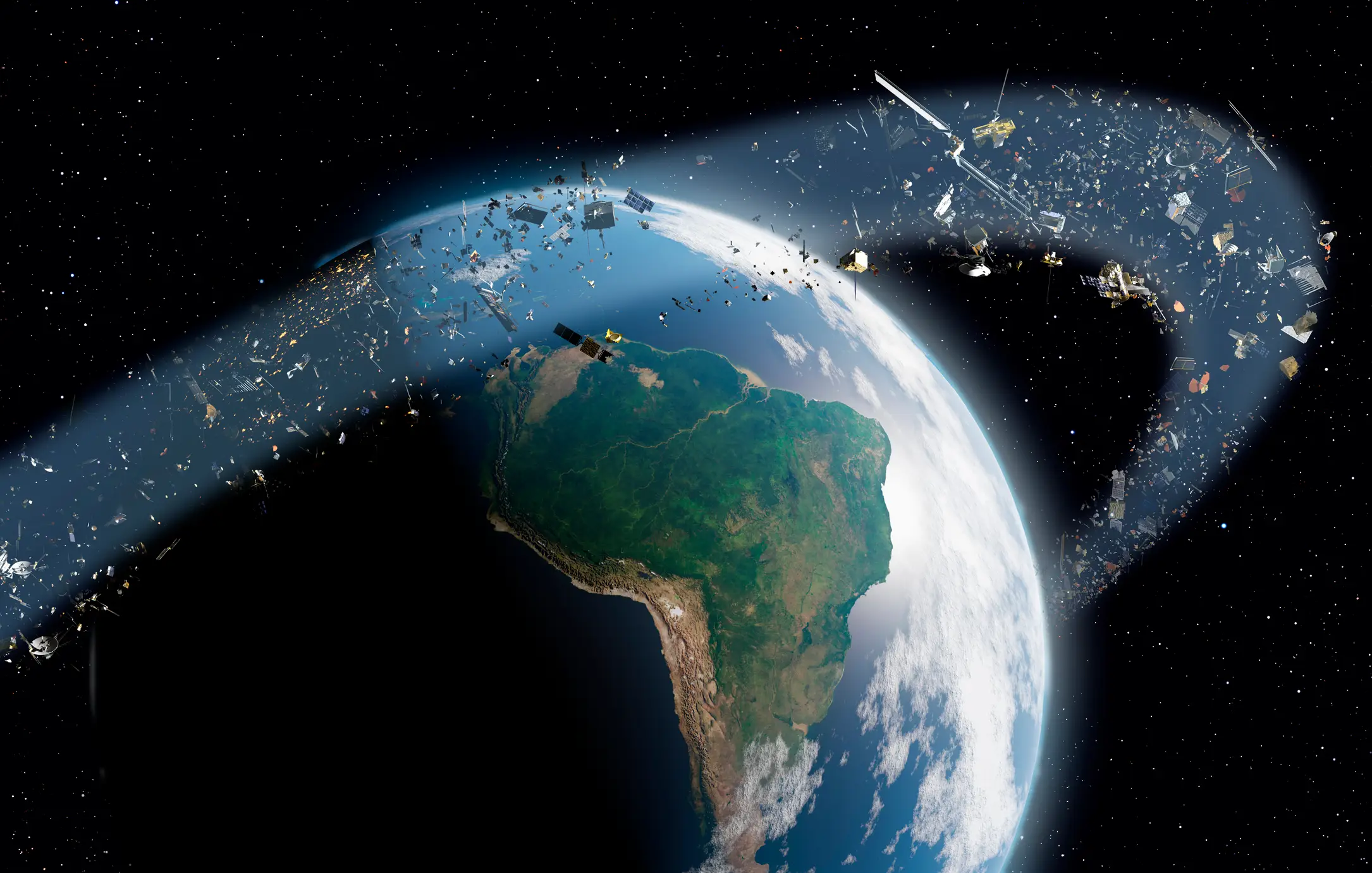
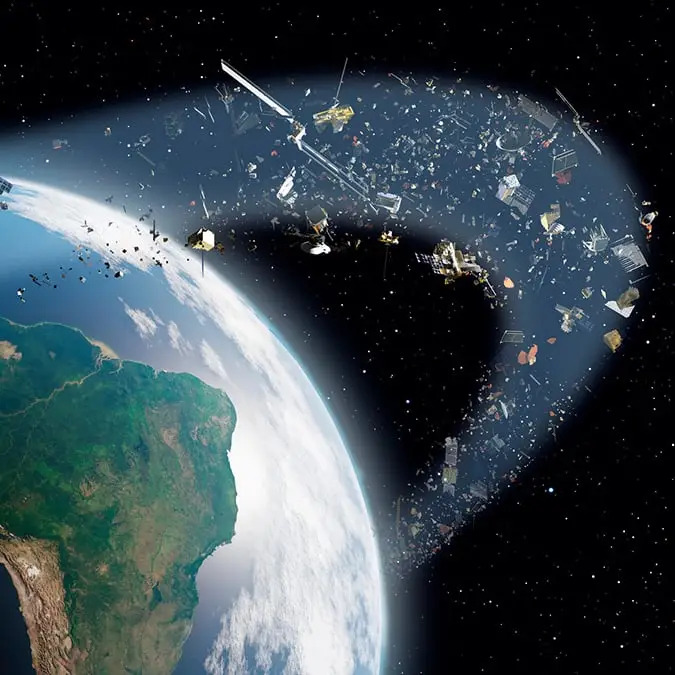
Too much space debris in orbit around Earth could trigger the Kessler Syndrome (MARK GARLICK/SCIENCE PHOTO LIBRARY/Getty Images)

In this case, the situation will then become so volatile that we can't successfully send up new satellites to replace the broken ones due to the area of space in which they orbit becoming unstable and full of fast-moving debris.

This debris will smash anything new into a thousand pieces.

There are currently more than 10,000 satellites orbiting the Earth and more than 100 trillion pieces of old satellites still circling the planet, with parts occasionally falling into Earth's atmosphere over time and burning up.

This space race between Musk and Bezos could spell disaster for the collection of satellites in orbit around Earth.

  • NASA are about to put Jeff Bezos and Elon Musk head-to-head in space
  • Elon Musk and Jeff Bezos set to be major winners as Trump makes huge change to space travel
  • Jeff Bezos’ Blue Origin beats Elon Musk’s SpaceX to land NASA's first 2026 Moon Base
  • Elon Musk delivers one-word response to Jeff Bezos' divisive interview on 'charitable giving'

Choose your content:

14 hours ago
16 hours ago
19 hours ago
  • David Merron Photography/Getty Images
    14 hours ago

    Scientists alarmed as Antarctica records ‘absolutely crazy’ winter temperatures 20°C above normal

    Melting ice in Antarctica could have a devastating impact globally

    Science
  • Pool / Pool / Getty
    16 hours ago

    I invested $135 in SpaceX and checked my account 72 hours later — the result surprised me

    Shooting for the Moon or lost in space?

    Science
  • Cris Cantón / Getty
    19 hours ago

    Covid lab caught 'deliberately overcharging' up to $1,000 per test is now handing out refunds

    Americans from 18 states could be eligible for refunds

    Science
  • Mlenny/Getty Images
    19 hours ago

    Scientists spot eerie cold blob that could ‘disrupt life as we know it’ for millions

    While the rest of the world is heating up, this blob is getting colder

    Science