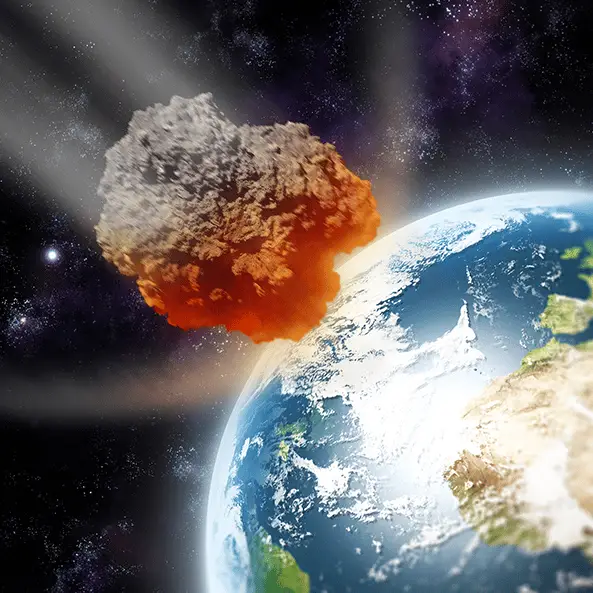
When ‘God of Chaos' asteroid is set to come closer to Earth than any other asteroid in recorded history


We don't know about you, but an asteroid with the nickname the 'God of Chaos' doesn't sound particularly good to us.
And in even worse news, 99942 Apophis (as it's officially called) is projected to come closer than any asteroid ever has.
Apophis is set to swing by Earth - it's closest approach in history - on April 13, 2029.
Advert
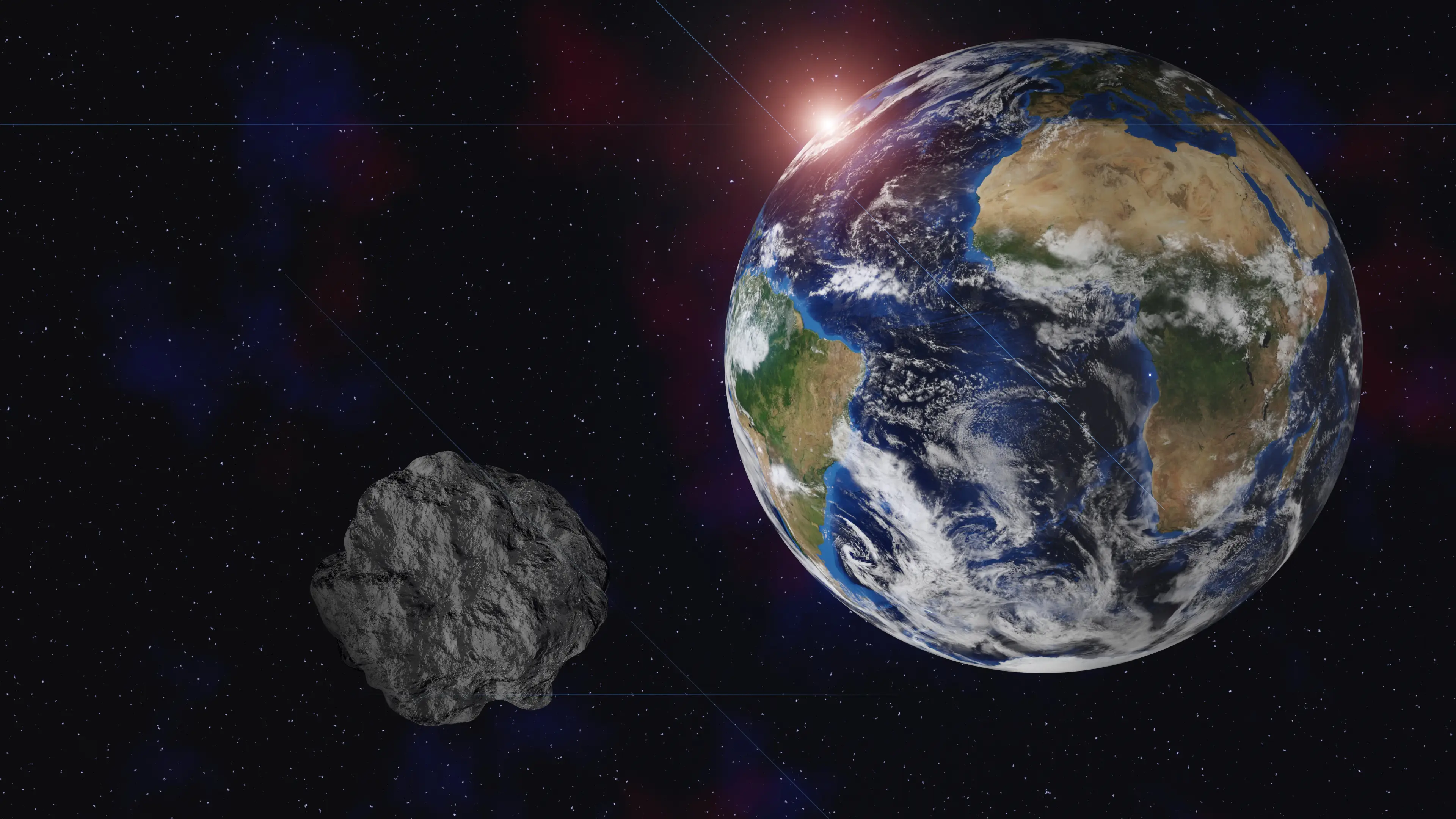
According to NASA, this is an 'S-type' asteroid, meaning it's made from silicate materials and nickel-iron.
It will make an 'exceptionally close approach of our planet', NASA said, which is particularly exciting because it's thought that whopping asteroids like Apophis - which is about 367 yards (340 meters) wide - only come this close to Earth every 7,500 years.
Its massive size and relative closeness to us earned it the God of Chaos name, but there's no need to have sleepless nights from now until April 2029.
'Although Apophis will not hit Earth during this encounter or in the foreseeable future, the pass in 2029 will bring the asteroid within 20,000 miles (32,000 kilometers) of the surface – closer than some satellites, and close enough that it could be visible to the naked eye in the Eastern Hemisphere,' NASA said.
In fact, Apophis also popped fairly close to Earth back in 2021 - giving astronomers the opportunity to learn more about it, and work out whether it could wreak havoc on our planet any time soon.
“A 2068 impact is not in the realm of possibility anymore, and our calculations don’t show any impact risk for at least the next 100 years,” said Davide Farnocchia of NASA’s Center for Near-Earth Object Studies (CNEOS), which is managed by NASA’s Jet Propulsion Laboratory in Southern California.
“With the support of recent optical observations and additional radar observations, the uncertainty in Apophis’ orbit has collapsed from hundreds of kilometers to just a handful of kilometers when projected to 2029. This greatly improved knowledge of its position in 2029 provides more certainty of its future motion, so we can now remove Apophis from the risk list.”
What the 2029 flyby will give experts, though, is the opportunity to learn more about this intriguing asteroid.
NASA is sending the former OSIRIS-REx spacecraft - which recently returned from a trip to another massive asteroid, Bennu - to Apophis.
Now known as the OSIRIS-APEX spacecraft, it will study the asteroid just after it's passed by Earth. It's thought the asteroid's close encounter with our planet might cause quakes and landslides on its surface - potentially bringing up material from below that will help us learn more about it.
Most 'potentially hazardous asteroids' - which NASA classes as those whose orbits are within 4.6 million miles of Earth - are S-types, so studying Apophis is a golden opportunity - and could be crucial for 'planetary defense research'.