People are moved by 'heart breaking' images from NASA which tell dozens of stories about our populations


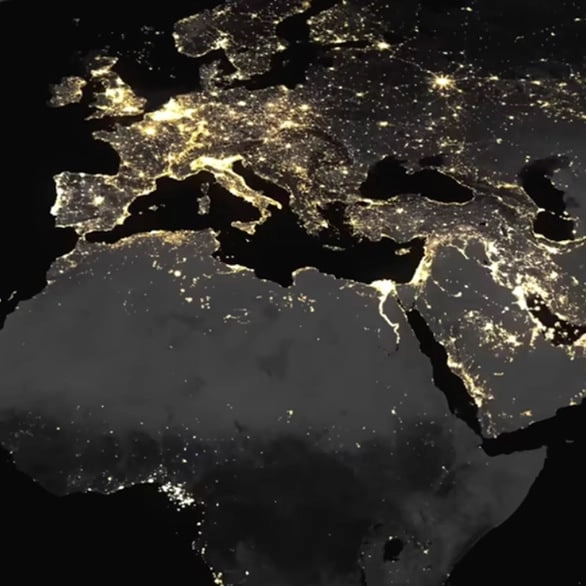
One NASA image is truly amazing for the stories it tells, showcasing years' worth of civilisation and history.
A YouTube video posted by neo shared the images helping us 'better understand the current developments and conflicts underway.'
Initially, the satellite image highlights the areas of the world with the most light pollution.
Advert
These are typically in regions with 'high populations and high prosperity' such as Tokyo and Istanbul.
In Europe, the Benelux region and Po Valley are so bright they blend into 'one big sea of light.' Wowza!
The River Nile is easily spotted winding through Egypt, illuminated by commercial boats.
Even in the most remote regions like western Australia, the satellites even captured light from wildfires that 'occurred over a span of 22 days,' according to neo.
But where the image takes a dark turn is in areas where there is a lack of light or no light whatsoever.
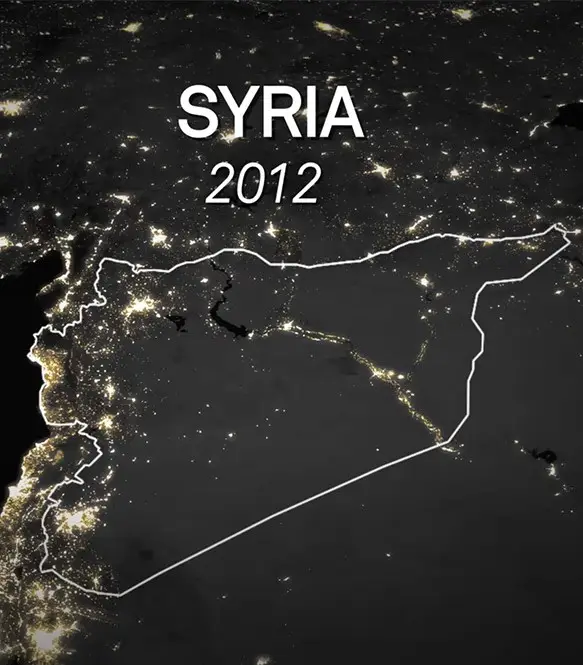
For instance, looking at Raqqa, the de facto capital of the terrorist Islamic State, becomes darker with every frame.
The bleak reality behind a series of still shots reflects the ongoing conflict from the end of 2012 to the beginning of 2017 - leading to the tragic fate of the city.
Again, in Syria, a contrast between 2012 and 2016 shows the darkening state of the country after hundreds of lives were tragically lost as a result of the Syrian civil war.
'When we see a city darken in these images, it shows the annihilation of a place and its history and ultimately, the end of many human lives,' neo explained. 'These black pixels in such an image can say a lot more than the lit ones.'
Another stark comparison is the difference in brightness between North and South Korea.
In South Korea, a densely populated area and 'waters lit with numerous fishing boats' is reflected by the brightly lit image.
However, North Korea appears almost completely black in comparison - with only the capital, Pyongyang, emitting light.
This mirrors the country as a place where 'energy infrastructure is obsolete and power shortages are frequent.'
neo continued: 'Whilst South Korea is completely accessible, much of what happens in the north remains in the dark.'
According to the video creator, these images may be the most 'impressive illustration of how big the impact of more than 70 years of division is,' showing both the social divides and political strife over the years.
Something that cannot be observed during daytime which is pretty crazy.
'Seeing the light just fade away from Syria is heart breaking,' one user commented.
'I wish schools taught geography like this,' another suggested.
'Amazing never thought that a image could be this informative,' wrote another impressed user.
If this video was longer or an interactive website, it would definitely be one to spend hours on exploring the history of our planet through points in time.