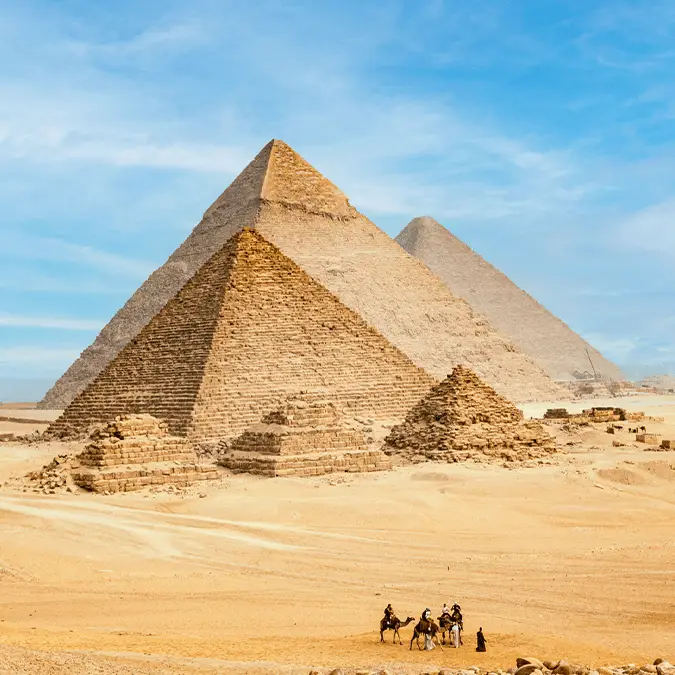
Scientists uncover mysterious hidden chambers inside Egypt’s third-largest pyramid


Egypt's famous pyramids are fascinating enough on their own representing one of the ancient world's biggest wonders, yet a new discovery has only heightened their mystery as a group of scientists have discover mysterious hidden 'chambers' inside the third-largest structure.
There is plenty that researchers and archaeologists are still managing to discover about the pyramids despite the fact that they were build thousands of years into the past, as they remain one of the world's most significant ancient structures.
These new discoveries challenge what was previously understood throughout history, most notably how they were built and the mechanisms that managed to transport the giant blocks that make up the jaw-dropping structures.
New things are seemingly still yet to be uncovered though if recent finds are anything to go by, as scientists have now managed to reveal hidden chambers inside one of the largest pyramids in all of Giza.
Advert
As reported by the Daily Mail, researchers in both Egypt and Germany have managed to utilize high-tech scanning methods and apparatus to look deep within the ancient pyramids, and as a result have uncovered something they didn't quite expect.
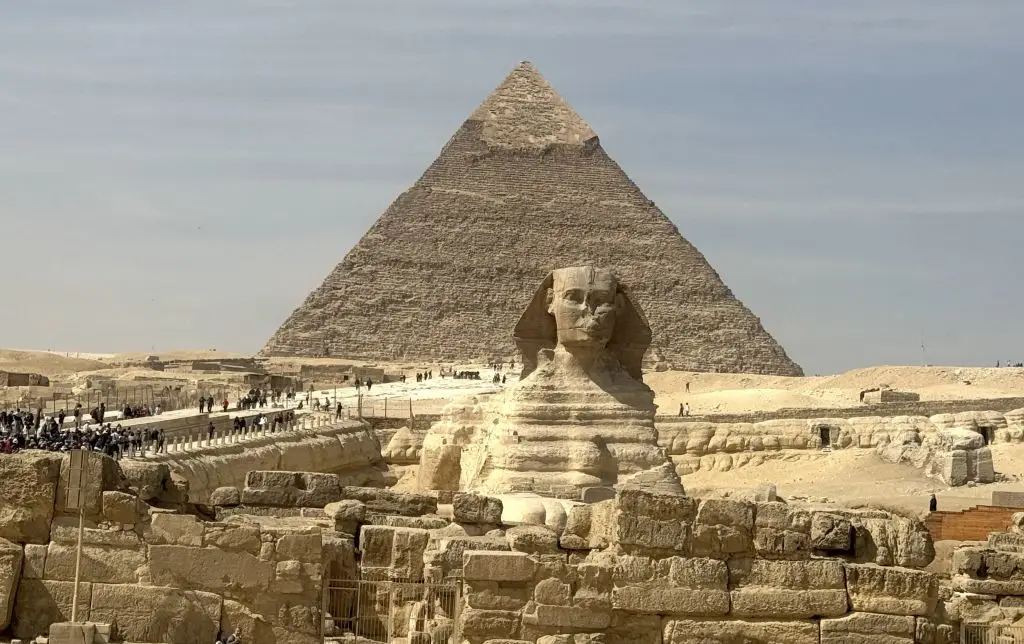
It was revealed that the Pyramid of Menkaure – which stands nearly 200 feet (61 meters) tall and was built in 2150 BC – has two hidden air-filled 'anomalies' as picked up by the scan, suggesting that there's an entrance that hadn't yet been detected.
"The testing methodology we developed allows very precise conclusions to be drawn about the nature of the pyramid's interior," explains Christian Grosse, one of the German scientists working on the find.
"The hypothesis of another entrance is very plausible, and our results take us a big step closer to confirming it," he added.
It is estimated that this second entrance is likely on the eastern side, facing the River Nile, as opposed to the northern entrance that has already been discovered by archaeologists.
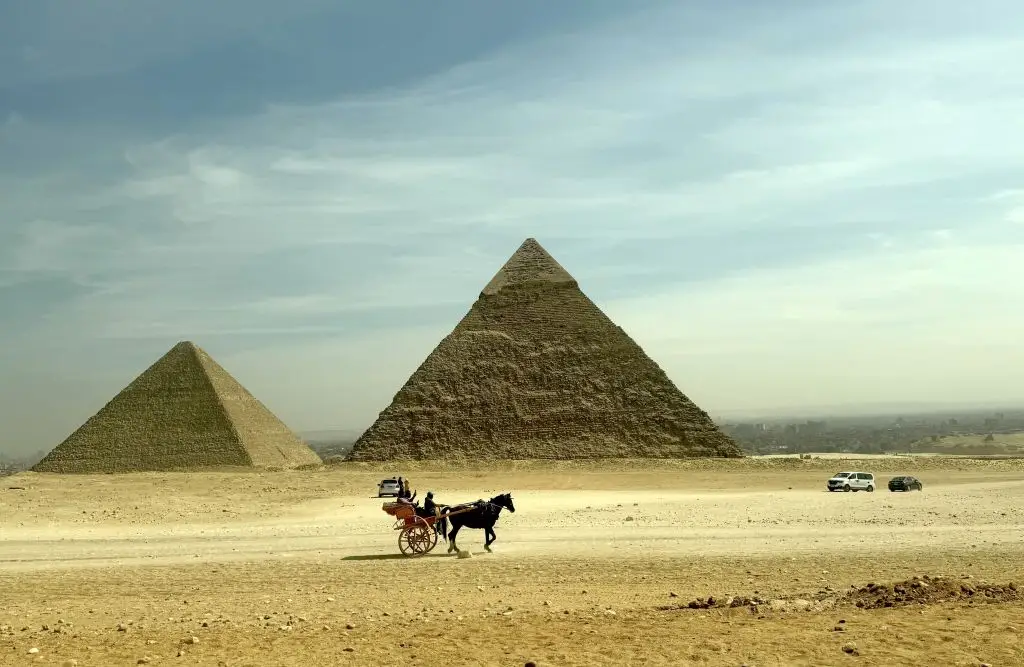
One area that appears to confirm this is a rectangular space inside the pyramid that measures around 13 feet by 19 feet (four meters by six meters) on the eastern side, and this area also features 'unusually smooth' granite that appears to have been polished thousands of years ago.
These polished features also appear around the northern entrance, only further adding to the evidence that a second entrance and another hidden compartment did exist at one point.
Nobody quite knows what might be found in the hidden chambers until they're properly excavated, but there could be mysteries and potentially additional answers to questions surrounding ancient Egypt that have long remained unanswered.