
• News
    • Tech News
    • AI
  • Gadgets
    • Apple
    • iPhone
  • Gaming
    • Playstation
    • Xbox
  • Science
    • News
    • Space
  • Streaming
    • Netflix
  • Vehicles
    • Car News
  • Social Media
    • WhatsApp
    • YouTube
  • Advertise
  • Terms
  • Privacy & Cookies
  • LADbible Group
  • LADbible
  • UNILAD
  • SPORTbible
  • GAMINGbible
  • Tyla
  • FOODbible
  • License Our Content
  • About Us & Contact
  • Jobs
  • Latest
  • Topics A-Z
  • Authors
Facebook
Instagram
X
TikTok
Snapchat
WhatsApp
Submit Your Content
Egyptian pyramids were likely built using this incredibly clever machine

Home> Science> News

Published 10:13 3 Feb 2025 GMT

Egyptian pyramids were likely built using this incredibly clever machine

Researchers indicate that ancient Egyptian technology was far more sophisticated than otherwise thought

Harry Boulton

Harry Boulton

New research regarding the Egyptian pyramids has uncovered that advanced technology was used to build them 4,500 years ago, challenging previous understandings of how they were formed.

When considering some of the greatest landmarks across Earth it's not hard to immediately think of the ancient pyramids found in Egypt, as these multi-millennia-old structures almost defy logical understand.

There have been many attempts to decipher the 'mystery' behind their formation, and scientists have theorized about the numerous techniques used to complex the otherwise impossible building process, but new archaeological research indicates a method that was seemingly far beyond what was previously understood.
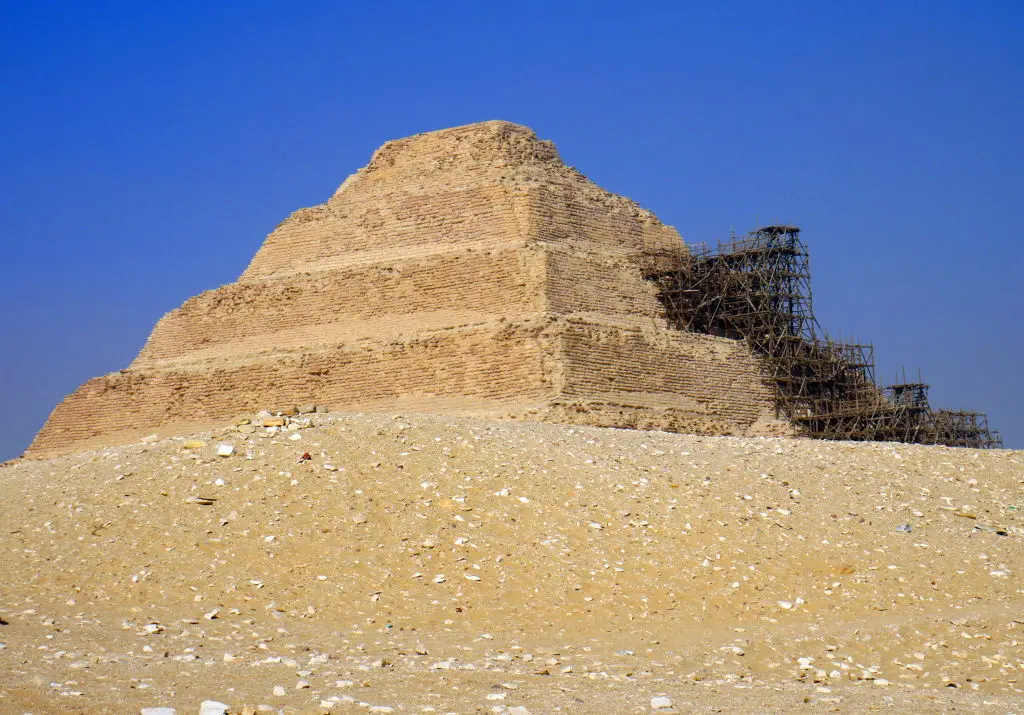
New understandings of the mechanisms used to build pyramids have been uncovered by archaeologists (Universal History Archive/Universal Images Group via Getty Images)

Advert

Initially, it was though that the step-based pyramids were built using ramps, levers, and an unbelievable amount of man power, but as reported by Indy 100, scientists have discovered that ancient Egyptians likely used nearby canals to harness hydraulic power, allowing them to lift the heavy blocks with greater ease.

The study, published in PLOS ONE and lead by Xavier Landreau, outlines: "Based on our mapping of the nearby watersheds, we show that one of the unexplained massive Saqqara structures, the Gisr el-Mudir enclosure, has the features of a check dam with the intent to trap and sediment.

"Together, the Gisr el-Mudir and the Dry Moat's inner south section work as a unified hydraulic system that improves water quality and regulated flow for practical purposes and human needs."

What this discovery afforded was the understanding that these check dam structures allowed Egyptians to utilize a "hydraulic elevation mechanism never reported before," indicating another instance where they pioneered mechanical evolution - in this case linked to some of the most recognizable structures across the world.

What's more, the study indicates that "the ancient architects could have raised the stones from inside the pyramid, in a volcano fashion," turning the previously understood process for building these structures on its head.
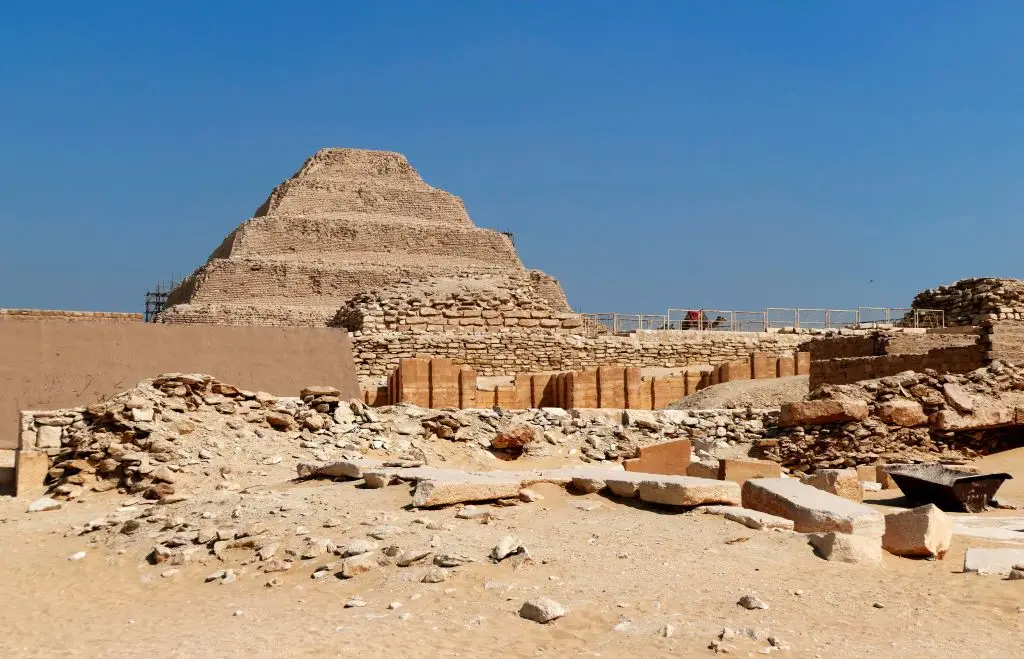
The step blocks were likely raised from inside the pyramids through hydraulic pressure (Universal History Archive/Universal Images Group via Getty Images)

It's far more complex and mechanically advanced than the notion of blocks being pulled along the sand, and it's now easier to understand the supposed 'mystery' behind how these incredible monuments were built in a time when it seemed otherwise impossible.

Not only are the pyramids themselves given a greater understanding, but also the surrounding structures that architects have largely struggled to truly understand.

What also remains important within this research is how it opens further pathways for additional discovery, as this is likely only the beginning of what will hopefully result in a wider understanding of the architectural processes.

Featured Image Credit: Anton Petrus / Getty
Discovery
History
Science

Advert

Advert

Advert

Choose your content:

13 hours ago
16 hours ago
3 days ago
  • MIGUEL J. RODRIGUEZ CARRILLO / Contributor via Getty
    13 hours ago

    NASA issue statement after delaying first Moon mission in over 50 years

    We won't be taking one small step for man just yet

    Science
  • BSIP / Contributor / Getty
    16 hours ago

    Australian officials issue update amid outbreak of one of the 'deadliest viruses known to humans'

    Two cases have been reported so far

    Science
  • coldsnowstorm/Getty Images
    16 hours ago

    Health officials issue warning to weight loss jab users over potentially fatal side effect

    Experts raise the alarm over a potentially fatal side effect with GLP-1 medication

    Science
  • Tom Werner / Getty
    3 days ago

    Man who did 300 kettlebell swings every day for 30 days reveals what it did to his body

    If this doesn't get you off the sofa, nothing will

    Science
  • Woman who has used iron lung for over 65 years recalls horrifying moment she was trapped in machine
  • Archaeologists left in complete shock after opening lost Ancient Egyptian pyramid for the first time ever
  • Researchers decode puzzling message 'from Moses' in ancient Egyptian mine could prove the Bible true
  • Terrifying footage inside Pyramids of Giza 'confirms' they weren't built by humans as viewers are left shook