
Google issues new warning to millions of users following strict porn ban


The way we view pornography, and the materials we're allowed to access, have changed massively in 2025. While governments attempt to safeguard minors from what they view online – especially protecting women from specific types of abuse – others have accused various 'nanny states' of keeping a close eye on us and breaching our rights to privacy.
2025 has seen a boom in the US states installing stringent age verification protocols, with Pornhub now banned in 22 of them.
The pornographic megagiant has reported an unsurprising nosedive in terms of its online traffic, which hasn't been helped by bans in France, the United Kingdom, and even Italy as of November 12.
A side effect of this has been a massive spike in the number of people using VPNs to try and circumvent the various rulings, although Android and Apple users have already been warned why that's a bad idea.
Advert
Google has issued a fresh warning in the aftermath of the UK government's argument with Apple over the Advanced Data Protection (ADP) security tool.
As reiterated by Forbes, recent updates, such as the United Kingdom banning the strangulation/choking category, could be a catalyst for triggering a VPN ban.
Similar to how the iCloud encryption ban has overtaken even China in terms of restrictions, the UK's looming ban could trigger similar crackdowns from US legislators. The outlet says that while VPNs are a known workaround for people to access social media and news sites in countries behind iron and bamboo curtains, for the West to consider VPN bans due to adult materials is 'dangerous'. The site adds that doing so under the guise of child safety is 'disingenuous'.
Still, as more people than ever flock to VPNs, Google has just updated its fraud and scams advisory guidelines. The internet overlord warned: "Threat actors distribute malicious applications disguised as legitimate VPN services across a wide range of platforms to compromise user security and privacy."
Similar to the earlier Android and Apple warnings, Google states: "These actors tend to impersonate trusted enterprise and consumer VPN brands or use social engineering lures."
These lures could include sexually suggestive advertising or exploiting geopolitical events to target those who want simple internet access for a variety of reasons.
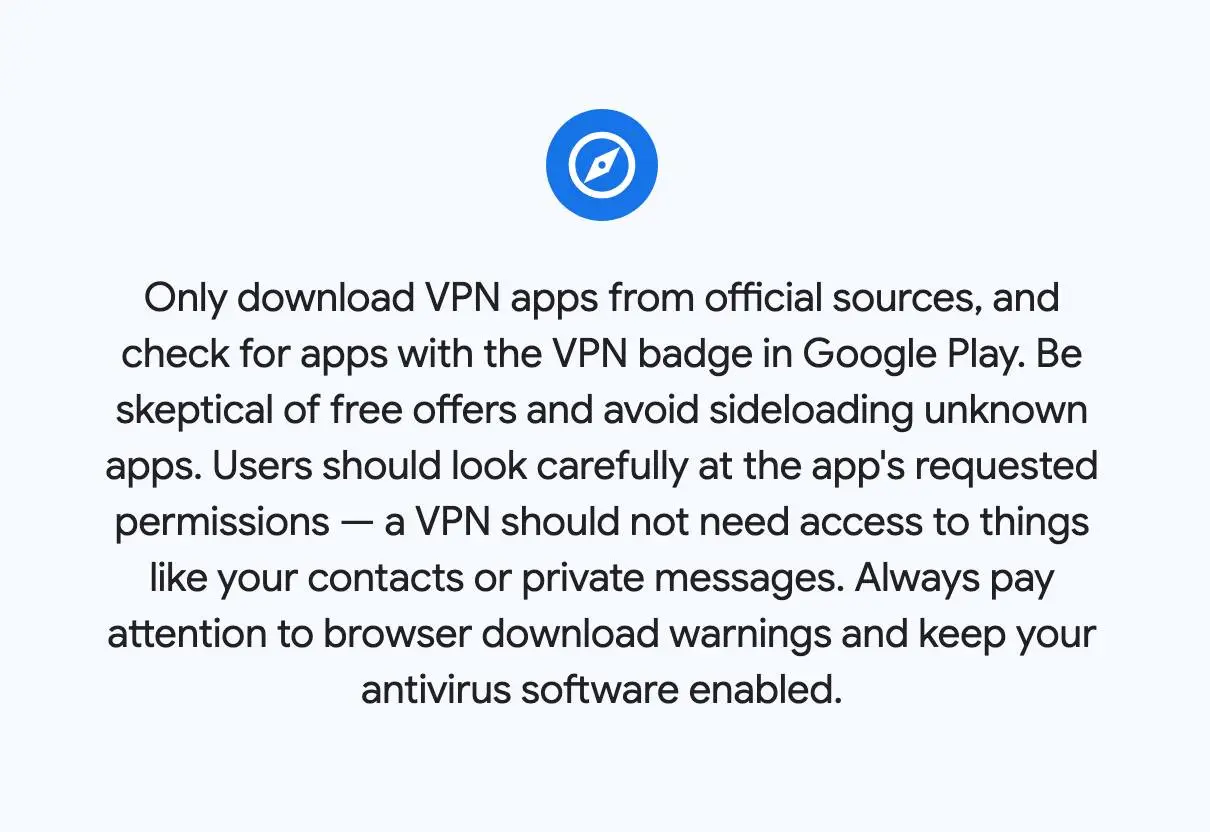
We've previously stated that these bad actors use the Trojan horse of a VPN to deliver dangerous malware payloads that can be far more dangerous than you'd think. Allowing remote access to devices could give hackers the ability to access everything from your private messages to your banking information. Google maintains that if you're determined to access a VPN, ensure that you rely on Google Play Protect to help keep things locked up tight.
While Android and Google Play are using machine learning algorithms to try and detect harmful apps, some are still slipping through the net. Google advises you to only install VPNs from official stores, but Forbes' Zak Doffman goes one step further as he concludes: "Free VPNs are best avoided. Chinese VPNs must be avoided."
Despite there being some major resistance to these new porn legislations, more and more people are asking whether it's worth the risk of wading into the sometimes murky waters of VPNs, just to get their rocks off.