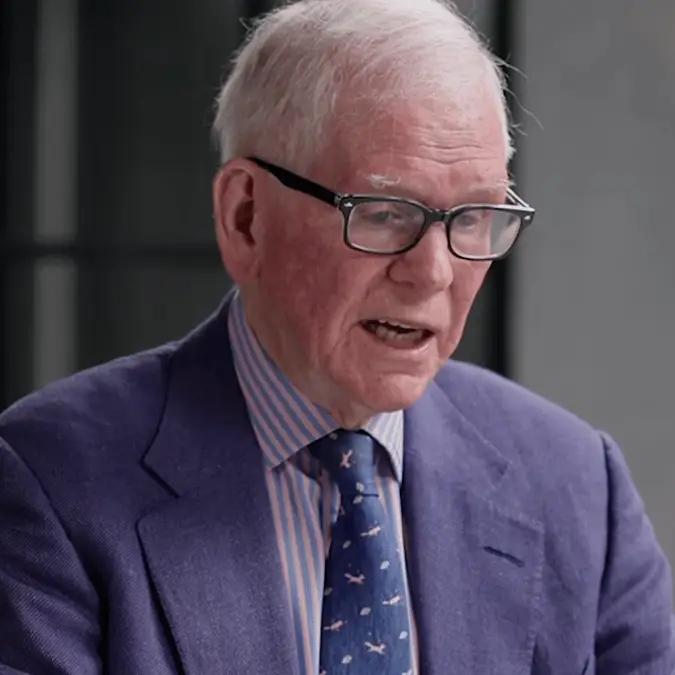
Man who predicted dot com crash reveals best way to invest your salary every month


A billionaire investor who warned about some of the biggest market crashes in modern history has shared what he thinks ordinary people should do with their salary each month.
Jeremy Grantham, the co-founder of Boston-based investment firm GMO, appeared on The Diary Of A CEO with Steven Bartlett on YouTube to discuss AI, markets, property, crypto, and the kinds of bubbles that can make people very rich before things suddenly go very wrong.
The 87-year-old has spent around 60 years in investing and is often cited for calling the dot-com crash, as well as warning about the 2007 housing collapse.
During the conversation, along with revealing which jobs he thinks AI will replace first, Bartlett asked what advice he would give to the average person trying to invest their salary or wages. However, Grantham’s answer was not the usual one.
Advert
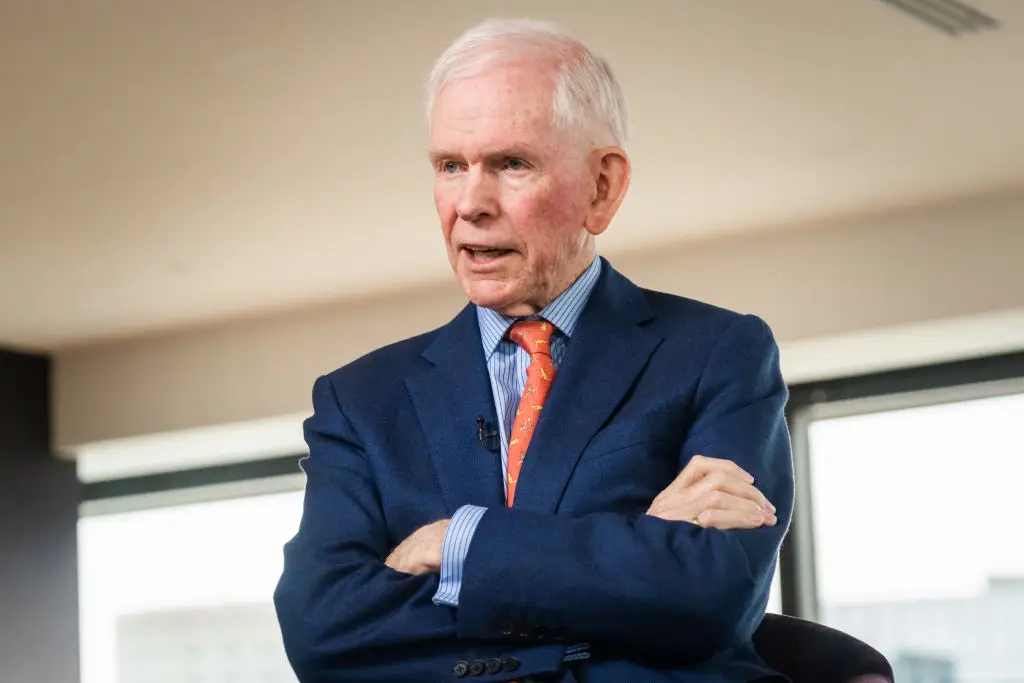
After being asked at around the one-hour and eight-second mark, he said: “Buy a broad-based index of non-US equities.”
Expanding on that, he suggested putting around ‘60% of your money’ into non-US equities, followed by ‘five or 10 percent in precious metals’ and, where it makes sense, ‘a bit of real estate’.
As for the rest, Grantham said: “the rest I'd put in bonds.”
That might sound surprising to anyone who has heard the classic advice about simply investing into the S&P 500 every month and leaving it alone for decades.
Be that as it may, Grantham was clear that he would not be following the crowd into US stocks right now.
When Bartlett brought up the S&P 500, Grantham replied: “No.”
Pressed on why he was focusing on non-US markets, Grantham said: “Of course they do. They've been completely dominant for 20 years.
“Completely kicking ass around the rest of the world. And then, in the last 12 months, emerging markets is up 65 percent. Now the S&P has done much better than I would have guessed, but it's only 25. That's a lot less than 65.”
His argument is not that American companies have suddenly stopped being powerful. Instead, he suggested investors often assume whatever has worked recently will keep working indefinitely.
He explained: “We think that what is good today will continue being good indefinitely. Even though history tells you that is absolutely not the case. We live in a world that tends to rotate from one to the other.”
“We believe in a world that extrapolates today's conditions. And you can easily prove that the stock market is not efficient.”
Grantham also warned against constantly buying and selling, with Bartlett summing up that the strategy was about holding for a long time.
Reiterated by Bartlett, the investor laid out that people should ‘try not to buy and sell’ and pay attention to where the cycle has already been.
One place he definitely would not put that money, however, is crypto.
Just before the one-hour and three-minute mark, when Bartlett asked how much cryptocurrency he owned, Grantham replied: “None.”
Asked whether he had ever owned any crypto, would ever own any, or would ever advise anyone to buy it, his answer was just as blunt each time: “No.”
Explaining why, Grantham said: “I think it's an unnecessary piece of nonsense. It facilitates nothing except criminals moving money so they can't be seen.
“It's not a store of value since it bounces around all over the place. Just down from 120 to 60 because it felt like it. So it's not stable. It's volatile as hell.
“It's not used conveniently as a medium of exchange. You can't go into a shop and use it easily. It does one thing very very well: It's a means of speculating beautifully.”
Bartlett then asked: “Do you think Bitcoin is going to go to zero?”
Grantham replied: “Well, in the distant future, yes, it will certainly go to zero, but it may take a long time. And and you know, in the distant future, everything goes to zero.”