Astronauts answer the number 1 most Googled space question and it’s not what you’d expect


What is your most burning question about space?
Maybe it's something like: can birds fly in space?
Or: does space ever end?
While these are excellent questions, they're not the number one query.
Advert
Digital marketing firm Mondovo has collated the top 50 most Googled questions about space - and American tech mag Wired has taken to YouTube to get actual astronauts to answer them.
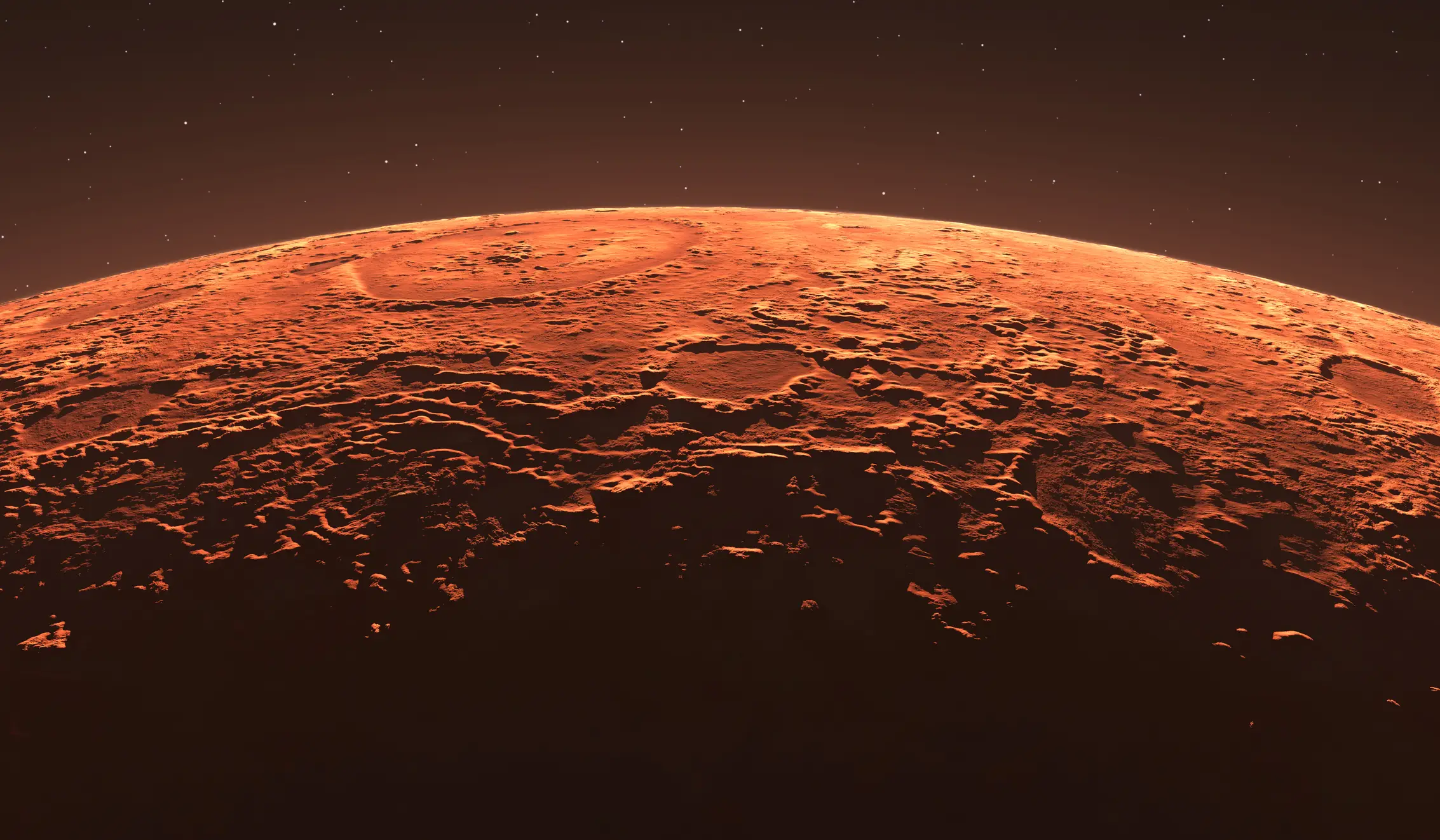
Drum roll, please, because this question comes out on top: how long does it take to get to Mars?
Former NASA astronaut Jeffrey Hoffman, who's been on five spaceflights, clocking up 1,211 hours and 21.5 million miles in space, dived in with the answer.
"Anywhere from six to nine months, someday we'll be able to do it a lot faster," he said.
That feels like a big discrepancy in time - and it makes sense. Things are always moving out in space, so the journey time to the Red Planet hugely depends on where both Earth and Mars are in their orbits.
Take the Perseverance rover, which launched from the US in 2020 - according to NASA, that took around seven months to arrive, which is in line with Hoffman's estimate.
So what else did the astronauts answer in the video?
First thing's first: no, birds can't fly in space. Well, they technically can, but only if they're inside a spacecraft.
And we don't actually know if space ends - it's so impossibly vast, we've barely scratched the surface of discovering what's out there.
We're obviously fascinated with Mars, because a lot of the questions were about the Red Planet.
Hoffman was joined by fellow former astronauts Chris Hadfield, Jerry Linenger, Leland Melvin, Mae C. Jemison, Mike Massimino and Nicole Stott, in answering a lot of Mars-related questions.
There were queries like: is there life on Mars?
"We don't know," Jemison said.
While Hoffman joked: "There will be once we get there."
And Wired actually came in with the real answer: there isn't life on Mars as far as we know, but we're still looking.
Other questions included: is Mars bigger than Earth? Which was a resounding 'no' from all the astronauts.
And a classic query: why is Mars red? Which is apparently all to do with iron oxide on the surface.
This group of former astronauts know a thing or two about space, all having spent some time up there, and they also contributed to 2018 documentary series One Strange Rock, hosted by actor Will Smith.