uniladtech homepage
  • News
    • Tech News
    • AI
  • Gadgets
    • Apple
    • iPhone
  • Gaming
    • Playstation
    • Xbox
  • Science
    • News
    • Space
  • Streaming
    • Netflix
  • Vehicles
    • Car News
  • Social Media
    • WhatsApp
    • YouTube
  • Advertise
  • Terms
  • Privacy & Cookies
  • LADbible Group
  • LADbible
  • UNILAD
  • SPORTbible
  • GAMINGbible
  • Tyla
  • FOODbible
  • License Our Content
  • About Us & Contact
  • Jobs
  • Latest
  • Archive
  • Topics A-Z
  • Authors
Facebook
Instagram
X
TikTok
Snapchat
WhatsApp
Submit Your Content
Scientists hail new antibiotic that can kill drug-resistant bacteria

Home> Science

Published 09:21 15 Jan 2024 GMT

Scientists hail new antibiotic that can kill drug-resistant bacteria

A new antibiotic shows promise in combating antibiotic resistance, and it belongs to an entirely different class of drugs.

Rebekah Jordan

Rebekah Jordan

google discoverFollow us on Google Discover
Featured Image Credit: Handout/Steve Gschmeissner/Science Photo Library/Getty Images
Science
World News

Advert

Advert

Advert

A new hero has been discovered in the form of an antibiotic, ready to take on one of the greatest bacterial threats to human health: drug-resistant bacteria.

Currently undergoing clinical trials, the drug has already shown promise in both laboratory and mice experiments.

If the clinical trials go well, the drug named zosurabalpin could soon be a potential solution for some Gram-negative bacterial strains.
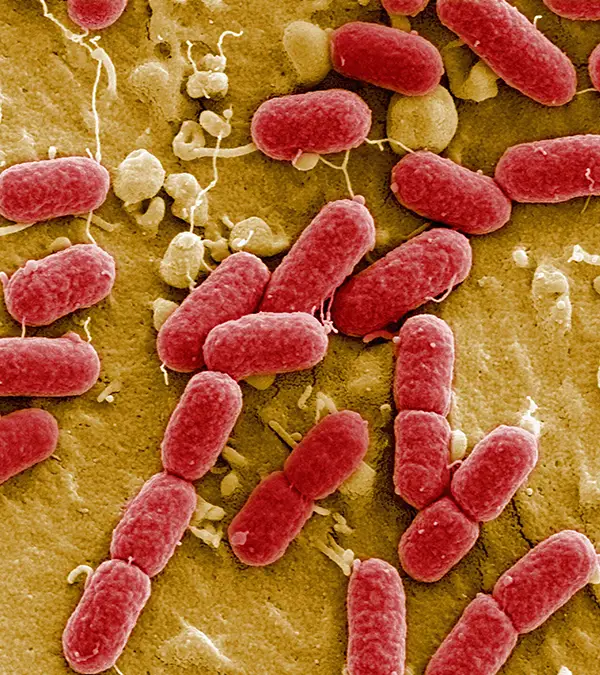
Scientists believe to have found a breakthrough with a new antibiotic drug / Handout/Steve Gschmeissner/Science Photo Library/Getty Images

Advert

The research team, led by Claudia Zampaloni, Patrizio Mattei, Konrad Bleicher, and colleagues, have demonstrated that zosurabalpin is effective in targeting the carbapenem-resistant strain of the bacterium Acinetobacter baumannii, also known as CRAB.

CRAB poses a significant challenge in the world of antibiotics.

Classified as a priority 1 critical pathogen by the World Health Organization, it's notorious for its resistance to nearly all existing antibiotics.

What makes it even more dangerous is its ability to share its resistant genes with other bacteria, making them equally formidable.

The bacterium is particularly problematic in healthcare settings, posing a high risk to individuals with medical devices like catheters, those in intensive care, long-term hospital patients, and those recovering from surgical wounds.

Infections with CRAB are extremely hard to treat. The main reason is that, being a Gram-negative bacteria, it has an outer membrane that acts as a shield. It's made up of lipopolysaccharide (LPS) which need to be targeted if there's any hope of destroying the bacterium,

A lot of antibiotics fail to do this, reflecting the urgent need for new drugs like zosurabalpin.
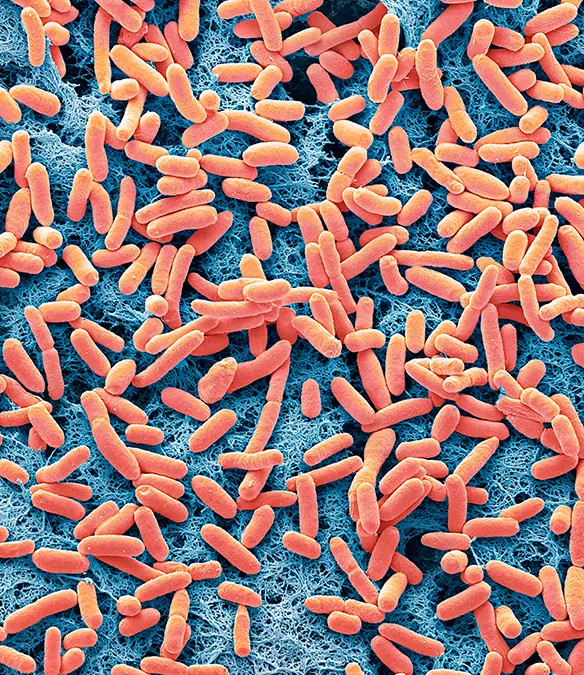
Zosurabalpin is highly effective at combatting CRAB /Handout/Steve Gschmeissner/Science Photo Library/Getty Images

Kenneth Bradley, global head, Infectious Disease Discovery at Roche Pharma Research & Early Development, explained: 'Surprisingly, this new class of antibiotics binds both to the transport complex as well as the LPS itself, preventing its transport to the outer membrane.

'Consequently, the LPS remains trapped in the inner membrane complex. Without the ability to transport LPS, the bacteria die.'

This breakthrough drug may also offer novel treatments against other Gram-negative pathogens that target the LPS transport system.

For example, Pseudomonas aeruginosa, another Gram-negative bacterium, caused around 32,600 hospital-acquired infections in 2017 and is increasingly difficult to treat.

In one Nature article, Morgan K. Gugger and Paul J. Hergenrother pointed out that it's been over half a century since the US Food and Drug Administration approved a new antibiotic for harmful Gram-negative bacteria.

So, it's been a long time coming.

However, scientists stress that further research is necessary for the risk that the bacteria might eventually develop resistance to zosurabalpin as well.

Choose your content:

12 hours ago
18 hours ago
a day ago
  • Frederick York/Biodiversity Heritage Library via Wikimedia Commons
    12 hours ago

    Sad fate of the first extinct species to have its DNA examined known as the quagga

    The species went extinct in the late 19th Century

    Science
  • Lourdes Balduque / Getty
    18 hours ago

    All blue-eyed people can trace their ancestry back to a single individual

    They lived between 6,000 and 10,000 years ago

    Science
  • Jim WATSON/AFP via Getty Images
    a day ago

    Major drugs classified as Schedule 1 as Trump reclassifies weed as less dangerous

    The decision was made by the Department of Justice last week

    Science
  • Anna Moneymaker/Getty Images via Getty
    a day ago

    FBI issues statement on string of mysterious deaths and disappearances of top US scientists

    Eleven scientists have recently died or disappeared under mysterious circumstances

    Science
  • Scientists discover new alphacoronavirus with pandemic potential
  • Veteran reveals 'life-changing' experience taking 'mind resetting' drug that can erase addiction overnight
  • Scientists warn infected deer could potentially kill human with deadly plague
  • RFK Jr. dragged for claim that AI can cure cancer after bizarre story