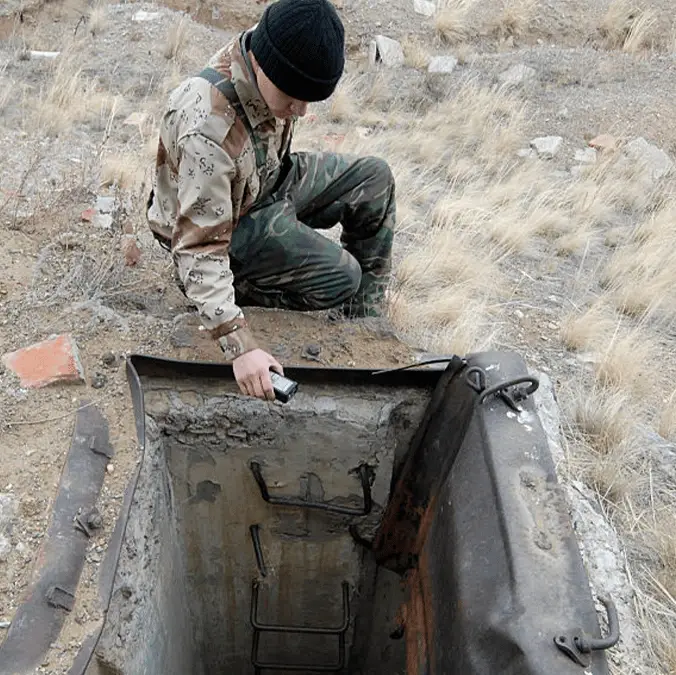
This remote lake had to be removed from maps after it became the ‘most nuked place on Earth’


Certain locations across the globe can go under the radar as a consequence of mysterious circumstances, but one somewhat remote location in the USSR was hidden from maps for years because it became the most nuked place on Earth.
Nuclear, hydrogen, and atomic bombs not only have a devastating impact that is often big enough to wipe entire cities, but the after effects of radiation can leave areas uninhabitable for decades after the destruction, even if some scientists have highlighted the potentially positive use cases.
That's why any instances of nuclear testing take place in locations far enough away from civilization to minimize the negative ramifications, and some nations have even gone as far to wipe their testing site's existence from maps entirely.
Where is the most nuked place on Earth?
As reported by LADbible, the Semipalatinsk Test Site in Kazakhstan, formerly of the Soviet Union, is by far the single area that has been hit with the most nuclear weapons across the globe.
It is outlined that the Soviet Union conducted a staggering 456 separate nuclear weapon tests in the 40 years between 1949 and 1989 - working out at around one every single month on average for that entire period.
Advert
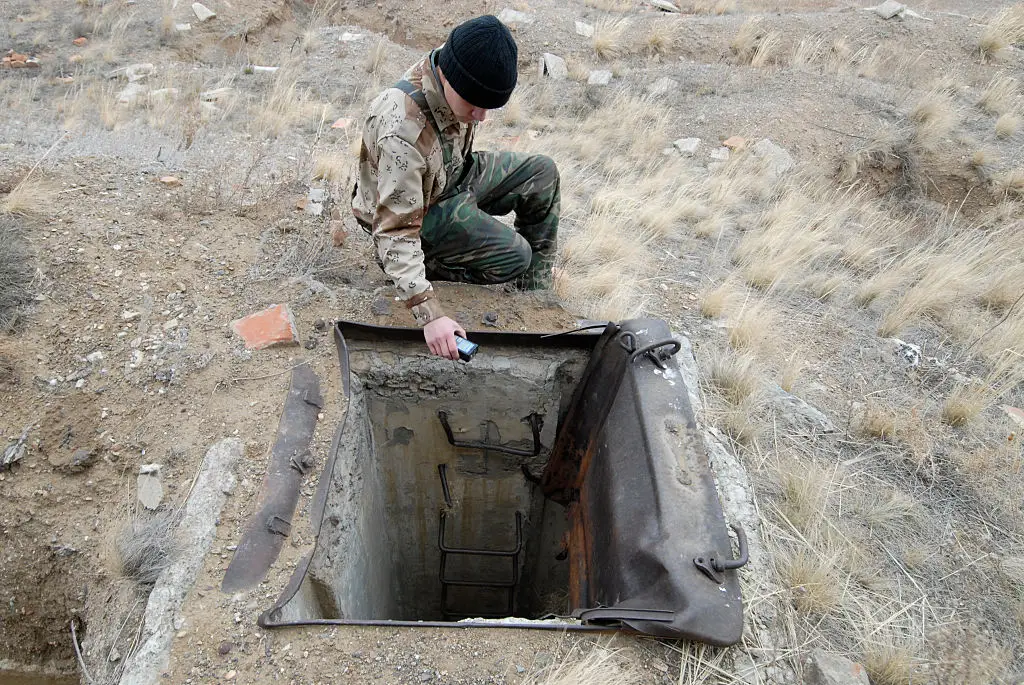
Roughly a quarter of all nuclear weapon tests in history took place at the Semipalatinsk Test Site, showing quite how much this particular area was exposed to the effects of the deadly bombs.
Due to the secrecy surrounding military weapons development this particular area was kept in complete secrecy to the point where it didn't show up on maps for decade and effectively didn't exist, yet following its closure in 1991 many began to realize quite how damaging it had been on the surrounding environment.
What were the effects of nuclear testing on the surrounding area?
While the Semipalatinsk Test Site was in a relatively remote location, there were still plenty of people in the vicinity including a number of villages and even a city with over 1,000,000 inhabitants.
It is claimed that Soviet officials paid little attention to the damaging effects of mass nuclear weapon testing on the nearby environment and its people, and experts estimate that roughly 1,500,000 people were exposed to nuclear fallout radiation across the testing period.
YouTube explorers Yes Theory made the trek to the Semipalatinsk Test Site and interviewed a number of residents on the outskirts, detailing their experiences with the unsafe radiation that was allowed to build up.
"There were nuclear emissions. In 1989 I was pregnant with my son and he was born with congenital cataracts, 16 diopters," one woman explains. "I believe it was caused by radiation, the radiation exposure. I read about it in the medical encyclopedia, we saw helicopters over the city measuring something, now we understand there was a radiation release at that time, some children were born with disabilities [as a result]."
What's more, an underground nuclear explosion known as the 'Chagan Test' created an artificial lake at the center of the zone, which is suitably called 'Chagan Lake' or nicknamed 'Atomic Lake'.
This body of water holds radiation levels around 100 times the safe limit, yet many people still swim and fish in it to this day, ignoring the dangers outlined by scientists.