• News
    • Tech News
    • AI
  • Gadgets
    • Apple
    • iPhone
  • Gaming
    • Playstation
    • Xbox
  • Science
    • News
    • Space
  • Streaming
    • Netflix
  • Vehicles
    • Car News
  • Social Media
    • WhatsApp
    • YouTube
  • Advertise
  • Terms
  • Privacy & Cookies
  • LADbible Group
  • LADbible
  • UNILAD
  • SPORTbible
  • GAMINGbible
  • Tyla
  • FOODbible
  • License Our Content
  • About Us & Contact
  • Jobs
  • Latest
  • Topics A-Z
  • Authors
Facebook
Instagram
X
TikTok
Snapchat
WhatsApp
Submit Your Content
How world's most radioactive man dubbed 'Atomic Man' defied death after surviving lethal radiation shower

Home> Science> News

Published 12:04 25 Oct 2024 GMT+1

How world's most radioactive man dubbed 'Atomic Man' defied death after surviving lethal radiation shower

The man was found to have no signs of cancer in his body

Rikki Loftus

Rikki Loftus

The world’s most radioactive man who was dubbed the ‘Atomic man’ defied death after surviving a lethal radiation shower.

But how did he manage to make it out alive?

The incident occurred when Harold R McCluskey was working the night shift at a nuclear reservation in Washington state.
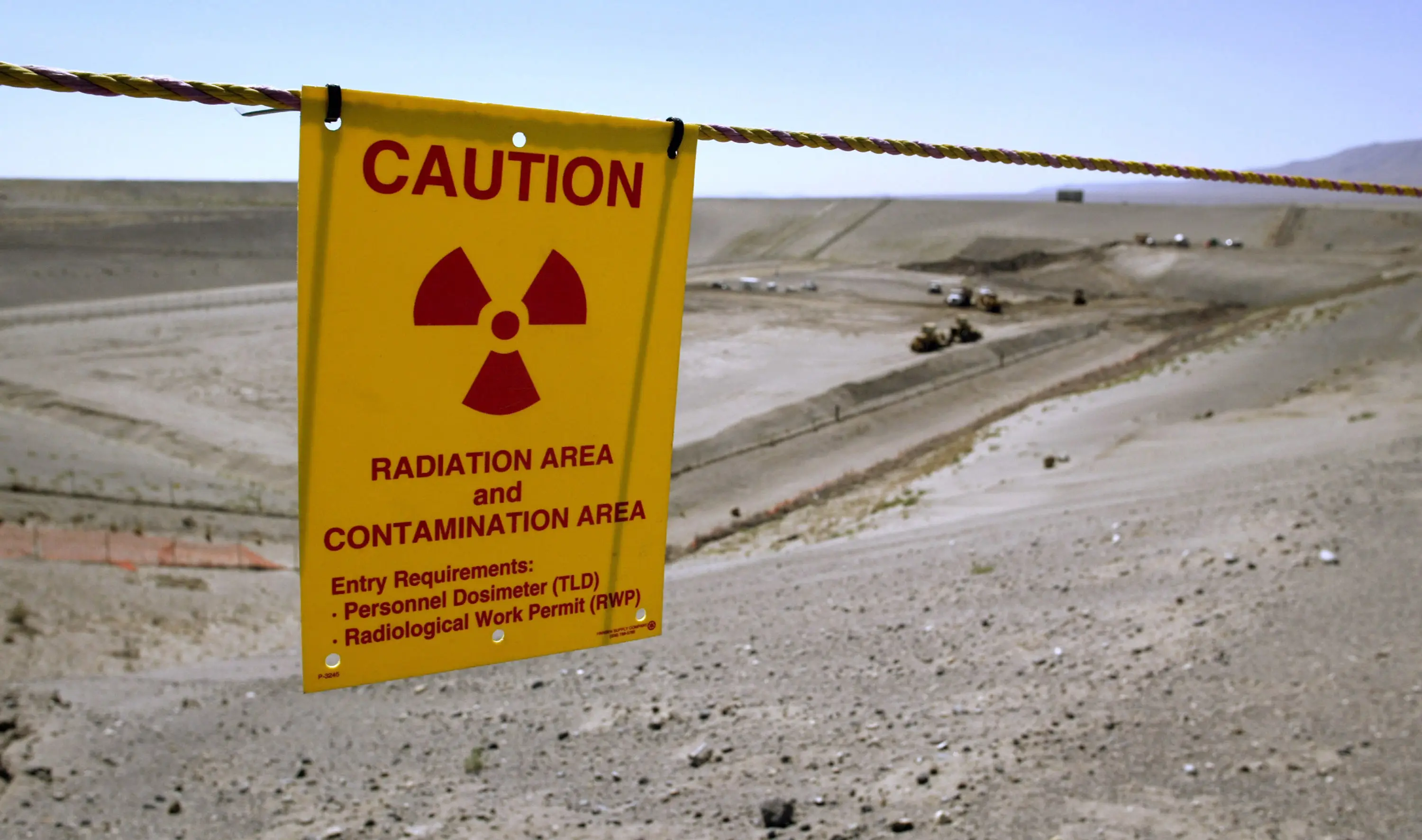
The site suffered a chemical explosion (Jeff T. Green/Getty Images)

Advert

There he worked as a senior chemical operator back in 1976.

One evening, out or nowhere, a chemical explosion blasted radioactive material and shards of glass onto the then 64-year-old.

His protective rubber respirator was pulled from his face and the man was left gasping for air.

As a result, he inhaled radioactive fumes and during the incident, he absorbed the largest dose of americium ever recorded.

Unbelievably, he survived and became known as the ‘Atomic Man’.

How did he survive?

McCluskey spent the following five months in hospital where medics wearing protective clothing used tweezers to pick out the small pieces of glass that had embedded into his skin.

He was scrubbed clean and shaved daily and was given a drug to help him excrete the radiation.

In January 1977, he was able to return home but life after the incident wasn’t easy.
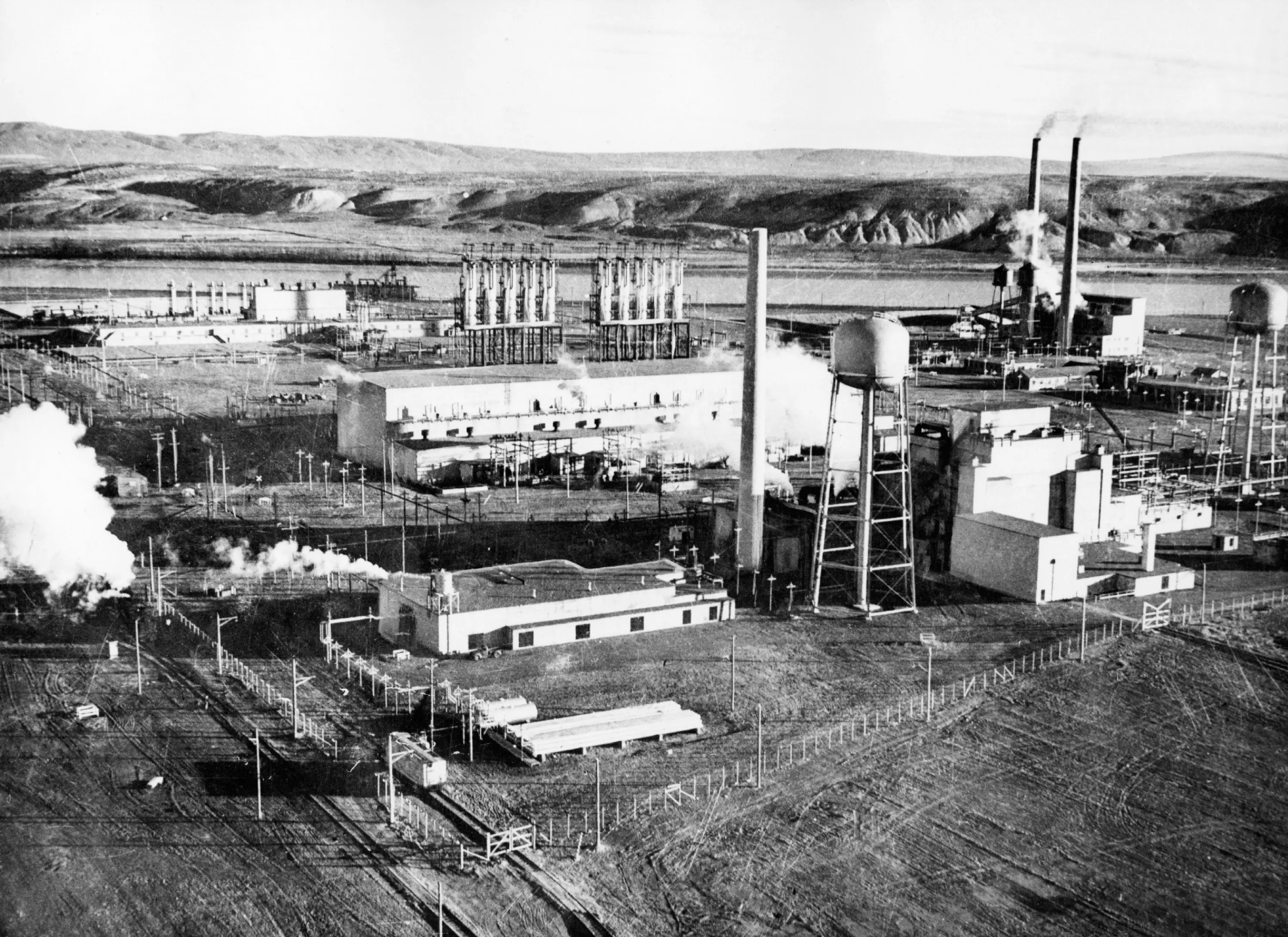
Harold McCluskey survived the radioactive incident (Hulton-Deutsch/Hulton-Deutsch Collection/Corbis via Getty Images)

McCluskey had his fair share of radiation-related health issues including four heart attacks, cataract surgery and a kidney infection.

He also became a pariah, with people scared to go near him for fear that he was contagious.

Just over 11 years after the chemical explosion, the man died from a pre-existing heart disease.

An autopsy later revealed that there were no signs of cancer in his body despite the radiation blast.

The site at which the explosion happened continues to be contaminated with radiation and the clean-up efforts are expected to take another 75 years to complete.

The area has since been referred to as ‘America’s Chernobyl’ and according to the Department of Energy, there are 56 million gallons of radioactive waste being held in 177 underground storage tanks on the site.

On more than one occasion, leaks have occurred which have also contaminated the soil and water in that area.

As more of the site is being cleaned up, it is hoped that it will be turned into a protected area of land.

As of 2015, the site is now part of the Manhattan Project National Historical Park and there are particular parts of the land that are now available to the public through free guided tours.

Featured Image Credit: Jeff T. Green/Hulton-Deutsch/Hulton-Deutsch Collection/Corbis via Getty Images
Health
Science
History
News

Advert

Advert

Advert

  • How single drop of toxic metal led to teacher's agonizing death 10 months later
  • Terrifying video shows man venturing to bottom of Chernobyl reactor pit to capture intense radiation that lies below
  • World's first 'human cyborg' was implanted with an antenna in 2004 and you've probably never heard of him
  • Chilling four-word reaction from scientist before he was killed after touching 'most dangerous object ever'

Choose your content:

6 hours ago
11 hours ago
13 hours ago
  • Paulose N Kuriakose / Getty
    6 hours ago

    Four more countries tighten security at airports as deadly Nipah virus continues to surge

    People are blaming the bats again

    Science
  • Kirill Rudenko / Getty
    6 hours ago

    NASA reveals what will really happen when the world ends

    Here's how our solar system's doomsday will really play out

    Science
  • Jon Challicom via Getty
    11 hours ago

    Worrying new side effect of weight loss jabs dubbed 'Ozempic neck' is raising concerns

    A new concerning side effect has emerged

    Science
  • University of Rochester
    13 hours ago

    New ocean is forming quicker than scientists expected as Africa breaks apart

    The continent may look very different one day

    Science