Japanese researchers discover treasure trove worth $26,290,780,000 that could keep its economy going for the next decade


Japanese researchers might have struck the jackpot as over 230 million tons of rare materials have been found, and it could score the economy an extra $26 billion.
It seems to be the time for rare materials as what's being called a modern day gold rush in Wyoming joins Ramaco Resources' mine in providing America with two unlikely rare-Earth material deposits worth a staggering amount of money.
Currently around 95% of the world's rare-Earth materials are sourced from China, so the discovery of sources this significant outside of the region is a significant boost to both economy and production for the host countries.
The reason why these materials are so valuable is due to their use in the production of lithium-ion batteries - specifically in technology like smartphones, hybrid cars, and aircrafts.
Advert
That's why the discovery of rare minerals around the Minami-Tori-shima island harbors by Japanese researchers is so significant, as it not only gives the country a huge financial boost but also enhances their technical production too.

Researchers conducted a survey of over 100 seabed sites, at depths of up to 5,200 meters, and they found quite the treasure trove.
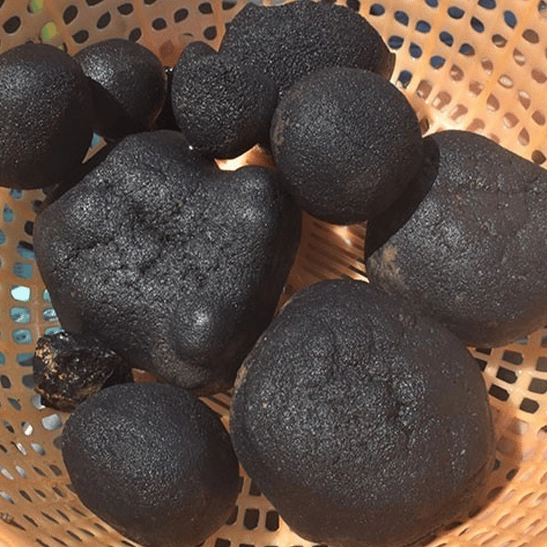
As reported by the Nippon Foundation, it's estimated that the surveyed area holds a dense field of 230 million tons of "easily extractable manganese deposits," spread across an area of around 10,000km².
This includes 610,000 tons of cobalt and 740,000 tons of nickel - enough to meet Japans demands for 75 and 11 years respectively.
At the time of writing one metric ton of cobalt sells for $24,080, whereas the same amount of nickel will net you $15,288.
Therefore, if Japan was to sell the entire estimated find it would raise just over $26 billion, which would be quite the boost to the economy. However, as Japan currently imports almost all of their rare-Earth materials, it's understood that they'd want to keep most of this crop in-house.

It's estimated that demands for materials like this will increase by 400 to 600% as battery-powered technology becomes the primary focus, replacing formerly gas and oil-powered industries.
Companies like Tesla have already seen a big boom in the US with their electric car production, but this could prove to be a significant boost for Japanese-based companies.
According to Yasuhiro Kato, a professor specializing in resource geology at the University of Tokyo, Japan plan to lift around three million tons of the sourced materials annually, while the University itself will provide detailed analysis of the extracted resources.
This limited yearly extraction is essential too as it minimizes the impact on the marine environment, as hunts for coal in other ocean areas have proven to be a destructive risk.