
NASA receive signal from 290,000,000 miles away in 'significant' breakthrough


NASA has sent a laser signal from Earth to a spacecraft about 290 million miles away.
This leap could change what we currently understand about the solar system.
On July 29 earlier this year, NASA's Deep Space Optical Communications technology demonstration sent a signal to the Psyche spacecraft, which launched on October 13, 2023.
Psyche's mission is to explore a metallic asteroid called 16 Psyche, which is about 140 miles wide (225 kilometres).
Advert
Incredibly, the signal travelled 460 million kilometres which is roughly the same distance between Earth and Mars when the two planets are at their farthest apart.

NASA hopes that the laser technology can help boost future crewed missions to the Red Planet.
"The milestone is significant. Laser communication requires a very high level of precision, and before we launched with Psyche, we didn't know how much performance degradation we would see at our farthest distances," said Meera Srinivasan, the project's operations lead at NASA's Jet Propulsion Laboratory in Southern California.
"Now the techniques we use to track and point have been verified, confirming that optical communications can be a robust and transformative way to explore the solar system."
NASA administrator Bill Nelson celebrated the 'extraordinary' achievement stating that they set a record for 'the farthest laser communication ever sent.'
He tweeted on X, (formerly Twitter): "NASA has broken the record for the farthest laser communication ever sent! We sent a laser signal to our Psyche spacecraft about 290 million miles away. Congrats, team.
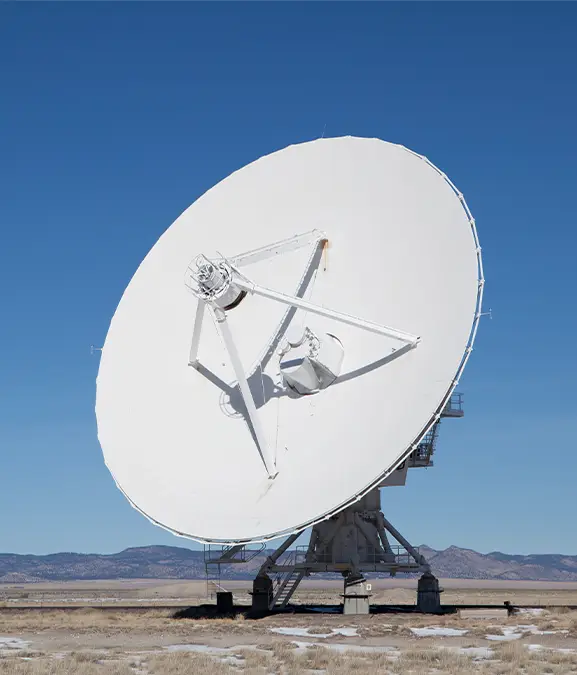
"This extraordinary achievement will transform the way we explore the solar system."
When Psyche was around 240 million miles from Earth, the laser system 'achieved a sustained downlink data rate of 6.25 megabits per second, with a maximum rate of 8.3 megabits per second.'
NASA said this shows that the laser can outperform traditional radio frequencies for space communications.
Interestingly, SpaceX is also using lasers for space-based communication; it's incorporated them into Starlink to improve the satellite internet system. Last month, the SpaceX-supported Polaris Dawn mission showed the same lasers can be used as a way for orbiting spacecraft to connect to the internet through Starlink.
The announcement follows NASA's image of a two-kilometre-high dust "devil" on Mars captured from the space agency's Perseverance rover.
The image actually looked like a towering 'devil' and was spotted during the rover’s atmospheric exploration of Jezero Crater.